Old buildings, modern lighting
Historic district review is really about one question: does it change the facade
Preservation review boards are protecting how a building reads from the street during the day, not judging what happens to it after dark. Lighting that stays invisible in daylight generally clears that review far more easily than lighting that visibly alters the facade.

What historic district review actually protects
Preservation guidelines typically focus on visible alterations to a facade, roofline, trim and masonry, the elements that give a historic building its character from the street. A review board is generally less concerned with what a building does at night than with whether daytime alterations are visible and reversible.
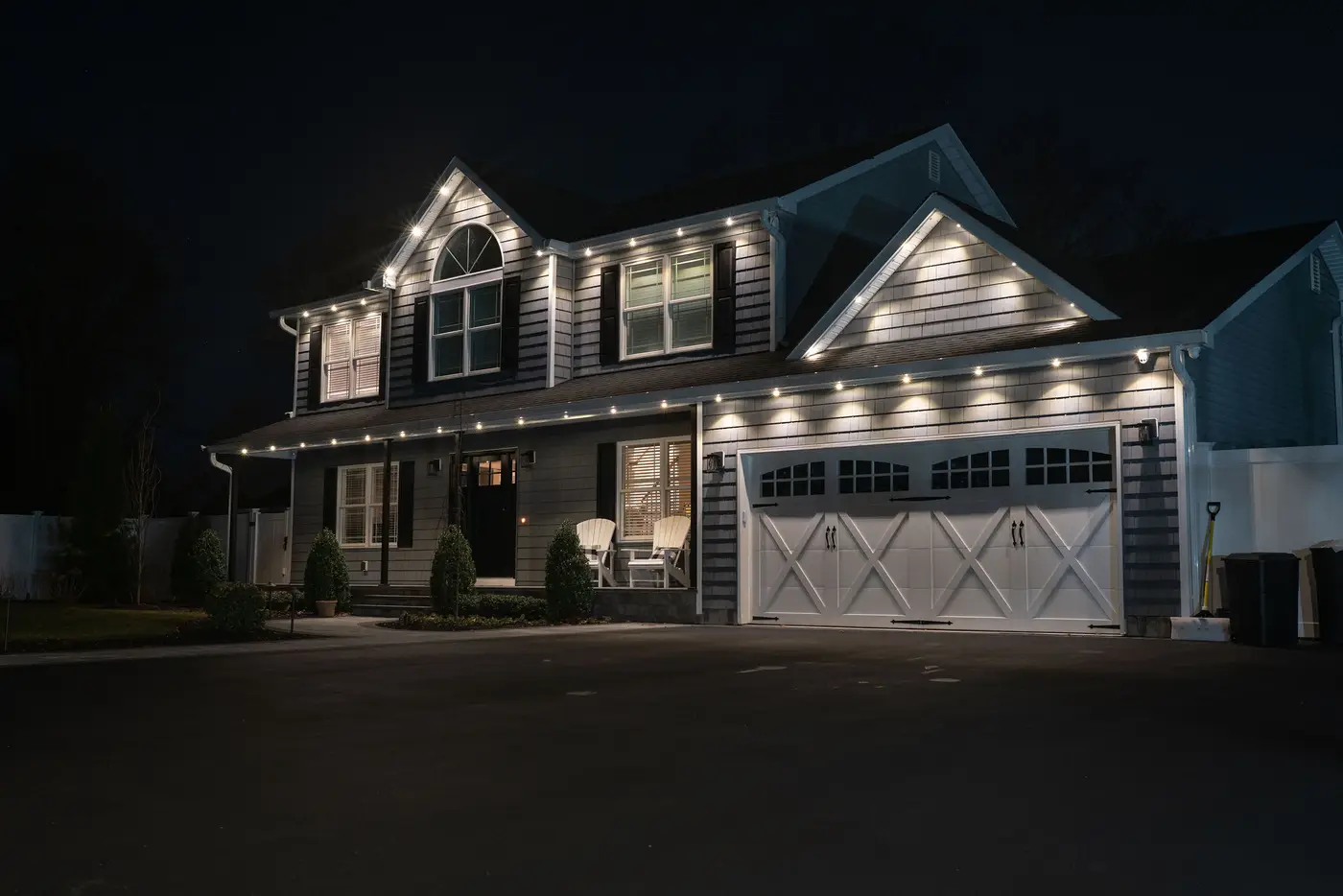
That framing matters for lighting. A fixture bolted prominently to a historic cornice is a different conversation than track color-matched to the existing trim and mounted flush against it, since one visibly changes the building's daytime silhouette and the other does not.
Why mounting method matters as much as appearance
Historic structures, particularly ones with older stone or brick facades, are often more sensitive to invasive mounting methods than a newer home would be. A staple or a drilled hole through original trim work is a different level of concern to a preservation board than a track fastened at engineered points designed for a lighter physical footprint.
This is one reason our crews never use staples on any job, historic or otherwise, and why permanent track is fastened rather than nailed indiscriminately across a facade. thraxel.com/blog/christmas-light-safety-no-staples/ covers the mounting distinction in more detail.
Original trim on a building of a certain age is sometimes irreplaceable in kind, milled to a profile that is not stocked anywhere anymore, which raises the stakes of any mounting decision well beyond what a standard suburban install would ever need to consider.
Where color-matching does real work
Older homes often carry trim colors and materials that are not standard modern stock, which makes color-matching more involved than a typical suburban install. Getting that match right is part of what keeps track invisible by day on a facade with a lot of visual history already built into it.
Stone and brick facades common in historic districts also change how uplighting reads. A wash of warm light against original masonry looks different than the same fixture against vinyl siding, and that is a design conversation worth having before installation, not a detail to fix afterward once fixtures are already in place.
- Trim and track color matched to the specific facade, not a standard swatch
- No staples or invasive fasteners on any historic structure
- Track mounted flush rather than standing proud of original cornice or trim
- Uplighting angled to complement masonry texture rather than flatten it
What to bring to a preservation review
A design mock-up of the actual building, delivered within 24 hours of a consultation, is useful evidence for a review board deciding whether an alteration changes the facade's daytime appearance. It shows the specific building rather than a generic lighting concept, which tends to move a review along faster than a written description alone.
The honest caveat
Not every historic district treats exterior lighting the same way, and some review boards have stricter rules than others depending on the district's designation and local ordinance. This is worth confirming with your specific board before assuming approval, and Thraxel's landscape and permanent installs remain permit-aware for exactly this reason.
A property individually listed on a historic register can carry stricter review than one that simply sits inside a broader historic district boundary, so the level of scrutiny is not always uniform even along the same street.
Where this shows up in our footprint
Older downtown blocks and river-town main streets across Armstrong County carry a mix of historic and non-designated buildings on the same block, which means the review requirement can genuinely vary building to building even within a short walk. Confirming your building's specific status is the first step, not an afterthought once a project is already underway.
A local building department or historical society can usually confirm a specific address's designation faster than a general online search, and it is worth that call before scheduling a consultation if there is any uncertainty about a building's status.