No staples, ever
Christmas light safety starts with what never touches your roof: staples
A staple through a light strand goes through the shingle underneath it too. That is the whole problem in one sentence, and it is why Thraxel crews never carry a staple gun on a roofline job, seasonal or permanent.
What a staple actually does
A staple driven through a light cord and into a shingle does two things at once. It pins the wire in place, and it opens a hole in the roofing material that was never designed to have one. The strand comes down in January. The hole stays behind long after the lights are gone.
Staples also flatten and sometimes nick the wire jacket underneath the cord's plastic insulation. A pinched conductor can arc inside the housing over a season of freeze and thaw, and you would never see it happen from the ground, since the visible damage is on the roof, not on the strand itself.
Multiply one staple by the length of an average roofline, thirty or forty of them across a season, and the cumulative hole count on a house that has been decorated the same way for a decade is a lot more significant than any single puncture looks on its own.
What we use instead
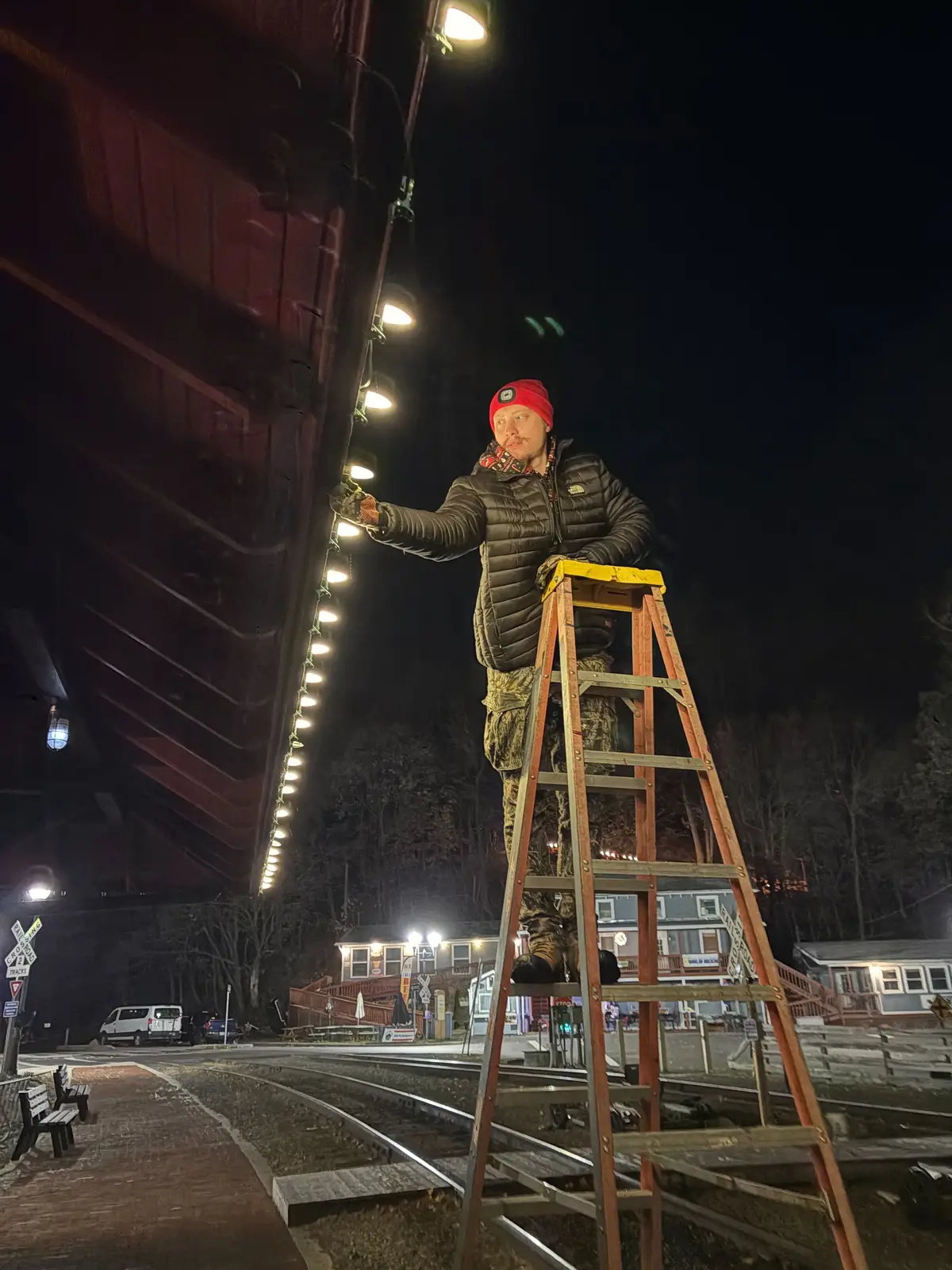
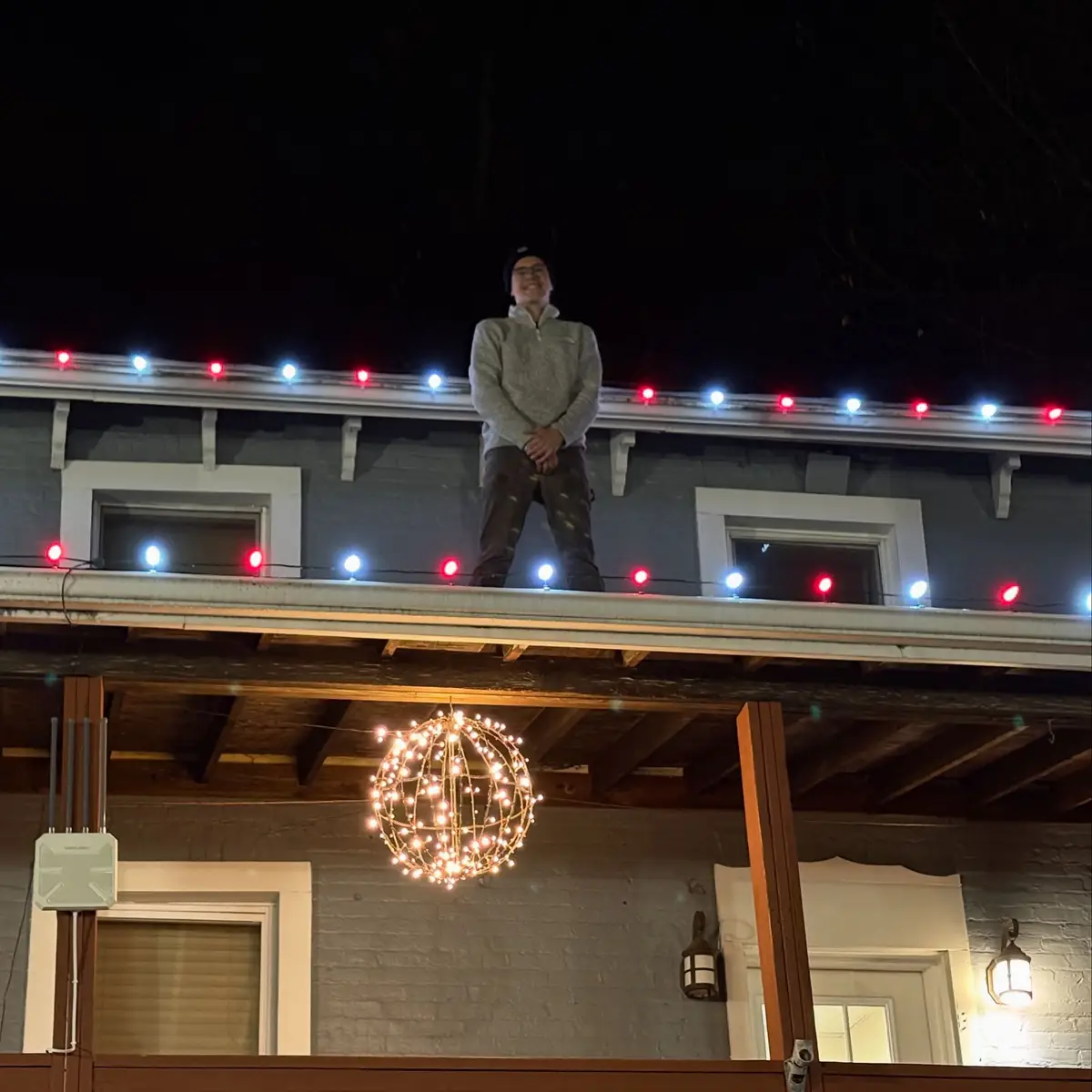
For seasonal Christmas installs, our crews use all-weather clips built to grip a gutter lip, a fascia edge or a shingle tab without piercing anything. Nothing goes through the roofing material, and nothing is left behind when the lights come down in January as part of the seasonal takedown.
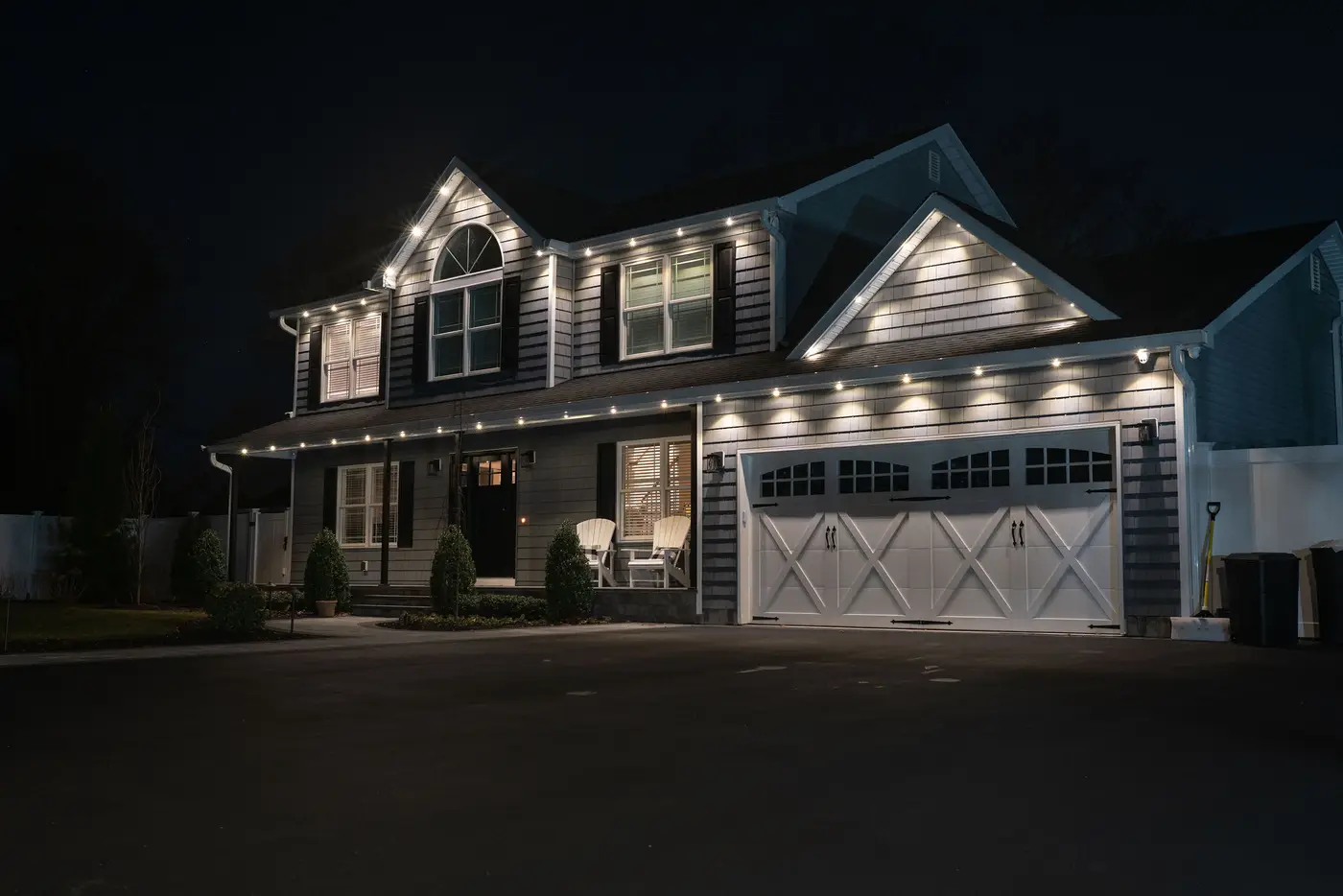
For a permanent system, there is no annual attachment at all. Color-matched aluminum track is fastened to the fascia at engineered points once, tucked tight against the trim, and the wiring runs inside the housing rather than pinned across open shingles year after year the way a seasonal string would be.
The difference in method is small to describe and large in practice. A clip releases in seconds and leaves the roofing surface exactly as it found it. A staple has to be pried out, and prying out a staple usually does more damage to the shingle than driving it in did in the first place.
- Seasonal: gutter and shingle clips, zero roof penetration
- Permanent: track fastened once to fascia, not stapled to shingles
- Both: no exposed staple heads left to rust or back out
Why it matters more here than in a mild climate
Armstrong and Butler County winters run through repeated freeze and thaw cycles most of the season. Any puncture in a shingle widens a little each time water gets into it and refreezes, since ice expands as it forms and pushes outward against whatever material is around it.
Wind is the other factor. A shingle that has been perforated several holiday seasons in a row loses some of its grip strength right where the tab meets the roof deck, and that is exactly where a gust catches it first during a late-winter storm system moving through the region.
Combine both and a roof that gets staples every November is aging faster in those specific spots than the rest of the roofline around it, which is not something a homeowner notices until a shingle actually lifts or a leak shows up somewhere unexpected.
The costs homeowners do not see coming
Most shingle manufacturers write penetration language into their warranty terms somewhere, often in a section few homeowners ever read closely. Staples driven for decorations are the kind of unauthorized penetration that can complicate a claim years later, long after anyone remembers a string of lights went up that particular November.
There is also the simple cost of finding out. A slow leak traced back to a decade of staple holes is a bigger repair than most homeowners expect from what looked like a routine holiday task, and by the time it shows up as a ceiling stain, the original cause is easy to miss entirely.
- A slow leak that shows up as a ceiling stain months after the lights come down
- Voided or complicated shingle warranty language
- A wire jacket nicked at the staple point, which we sometimes find on older homes we take over
How our crews are trained on this
Every install technician learns the clip-and-track approach before their first roofline job, not as a suggestion but as the only method they are allowed to use on any Thraxel property, residential or commercial. It is slower in a couple of spots than a staple gun. We schedule for that difference up front.
Crews only work when weather allows a safe, careful install rather than a rushed one, which matters as much for the roof as it does for whoever is standing on the ladder that day, since a rushed job is exactly when a staple gun starts to look like a shortcut.
If you are hanging your own lights this year
Buy gutter and shingle clips from a hardware store rather than reaching for the staple gun in the garage. They cost a little more per hundred feet and take about the same time to place once you get a rhythm going across a typical roofline.
If a previous owner or a past season left staple holes in your roofline, that is worth mentioning at a free consultation. It does not usually change what we install, but our crew wants to know what is already up there before track goes on, since existing damage can affect where a fastening point lands.