The rules under the surface
Every township writes its own outdoor lighting rules, and most homeowners never see them
Outdoor lighting ordinances are set at the township or borough level in Pennsylvania, not statewide, which means the rules for a fence line light in one township can differ from the rules for the same fixture two miles away.

What a local ordinance typically covers
Township lighting ordinances usually address a handful of specific things: how far a fixture must sit back from a property line, how bright a fixture can be measured at the property boundary, whether certain fixtures need to be shielded or downward-facing, and sometimes hours during which decorative lighting can run.
The specifics differ enough between municipalities that a rule of thumb learned from a neighbor's project, or from a general internet search, is not a reliable substitute for checking the actual ordinance that applies to a given address.
Some townships also fold lighting language into a broader zoning code rather than a standalone ordinance, which can make the relevant section harder to find without knowing exactly where to look in the municipal code.
- Setback distance from property lines
- Brightness limits measured at the boundary
- Shielding requirements to reduce glare onto a neighbor's property
- Operating hours for certain fixture types
- Separate rules for commercial signage and facade lighting
Why this comes up more with landscape lighting
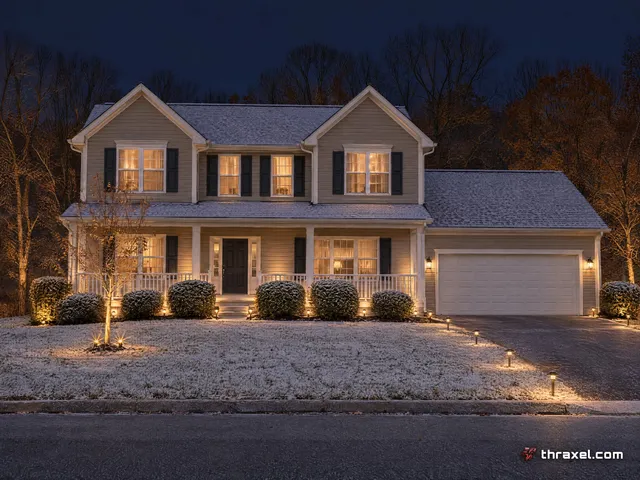
Path lights, uplighting near a property line, and fixtures aimed toward a fence or a neighbor's yard are the layouts most likely to touch an ordinance, since they involve light aimed outward rather than a roofline pointed at your own house.
A firepit or patio zone tucked well within a property rarely raises the same questions as a fixture placed close to a shared boundary, which is part of why layout planning happens before installation, not after a complaint or a code inquiry arrives.
How Thraxel handles this
Landscape lighting installs at thraxel.com/landscape/ are permit-aware from the start, meaning the paperwork gets handled before any ladder or shovel comes out rather than discovered as a problem afterward. That includes checking whether a specific township requires a permit for the scope of a given project.
This does not mean every job needs a permit. Many residential lighting installs do not rise to the level that requires one. It means the question gets answered up front rather than assumed either way, so a homeowner is not surprised by a requirement partway through the project.
Commercial projects tend to carry a higher likelihood of needing a permit than a residential yard, simply because of scale, so a restaurant or plaza lighting job usually gets that question resolved earlier in the design process than a single-family patio would.
Where this varies most across our footprint
Townships in Butler, Indiana and Westmoreland County each maintain their own zoning and lighting provisions, and a rule that applies in one municipality is not automatically the rule next door. Commercial and HOA-governed properties tend to carry additional layers on top of the base township ordinance, which can further affect what a specific site is allowed to install.
This is one reason a national online price calculator or a generic install guide cannot answer the ordinance question for your specific address. A local installer familiar with the townships in the service area can, since it is a question tied directly to where a property actually sits.
What homeowners should ask before a landscape project
Will this fixture placement need a permit in my township? Are there brightness or shielding requirements near my property line? Does my township limit operating hours for decorative lighting? A serious installer should be able to answer these directly during a consultation, not defer them entirely to the homeowner to research alone.
The bottom line
Township lighting rules are real, they are local, and they are usually manageable with a little planning. The goal is not to avoid them, it is to know what they say before a fixture goes in the ground rather than finding out afterward from a neighbor or a code enforcement notice in the mail.
A little research up front, or a consultation with an installer who already knows the local townships, saves far more time than untangling a permit issue after fixtures are already installed and wired in.