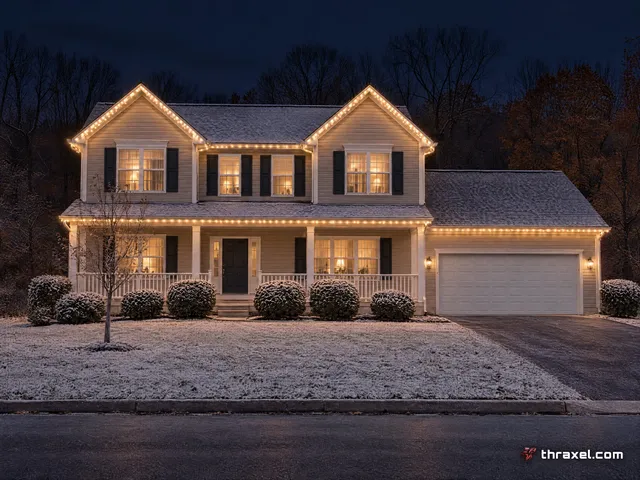
Commercial lighting
Commercial permanent lighting: what a property owner actually needs to know
Permanent commercial lighting is the same RGBWW pixel system we put on homes, scaled to a building that has to look open, safe and current every night of the year. Here is how the decision breaks down for owners and property managers across Western Pennsylvania.
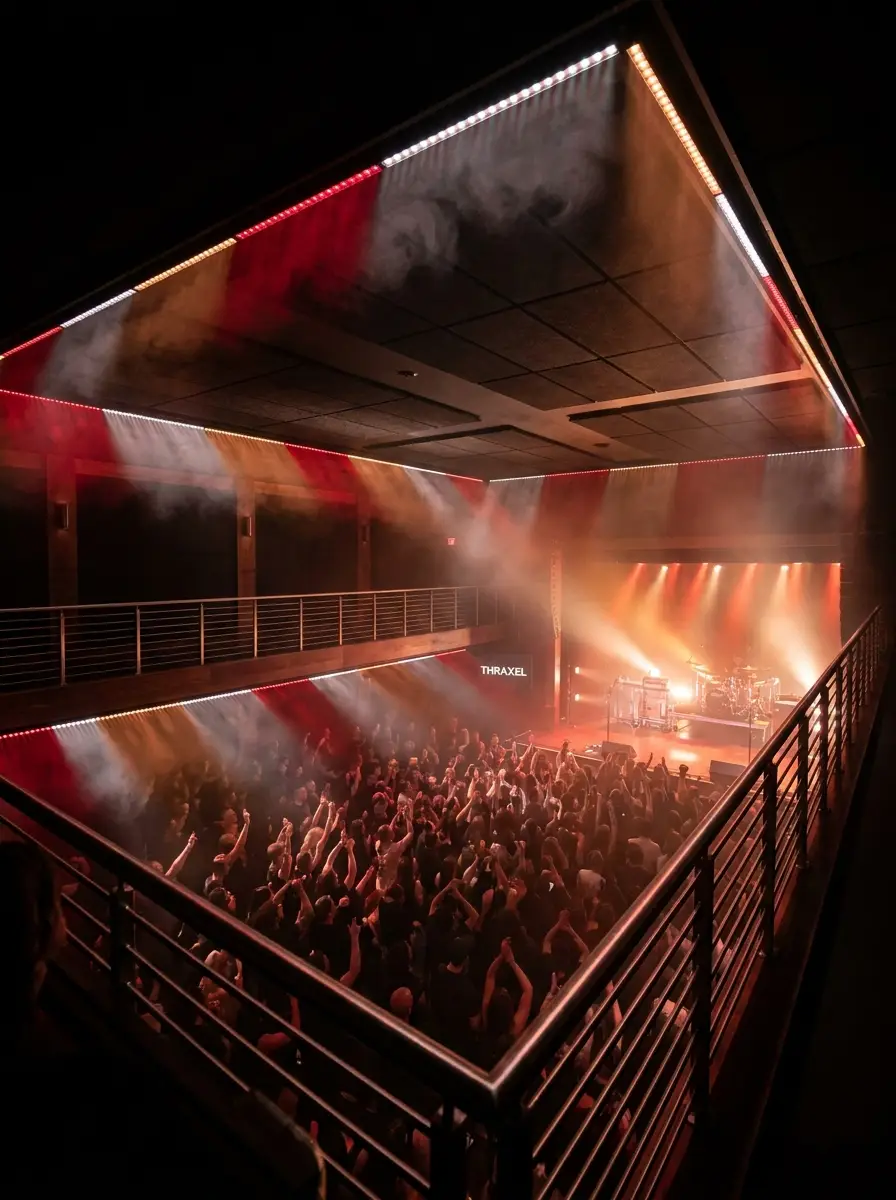
What commercial permanent lighting is
Strip the marketing away and a commercial permanent lighting system is four things: color-matched aluminum track mounted to the fascia, parapet or facade, RGBWW pixels inside that track, a controller, and an app. The track stays up permanently. The pixels sit dark until a scene is scheduled or triggered. Nothing is hung in November and nothing gets pulled in January.
The RGBWW part matters more on a commercial building than on a house. RGB-only systems mix red, green and blue to fake white, and on a large facade that mix reads slightly pink or slightly blue from the parking lot. Our pixels carry a dedicated 2700K warm-white diode, so the everyday look is a true warm white and the 16 million colors are there when you want them.
We install this on venues, restaurants, hotels and resorts, showrooms, office parks, plazas, HOA communities and railbike routes. The pixel, the track and the app do not change between them. What changes is run length, zone count and the power plan. The product page is at thraxel.com/permanent/.
Where it pays for itself on a commercial property
Answer first: it pays for itself in the places where you are currently spending on seasonal decor, labor, lifts and repairs every single year, and in the nights your building currently disappears after dark.
A restaurant or plaza that hires a crew every November, rents a lift, and then pays again for takedown is spending real money on something that lasts six weeks. A permanent system replaces that recurring line with one install backed by 3 years on parts and 1 year on labor. The Christmas scene becomes one tap. So does Halloween, the Fourth, and black and gold for a Steelers Sunday.
Power is not the objection people expect. Each pixel draws roughly 0.3 watts. A typical residential run of 168 LEDs costs about $52.80 a year at six hours a night, and commercial runs scale from there in proportion to pixel count. Compare that to the incandescent strings still hanging on half the storefronts in any river town.
- Recurring seasonal install and takedown labor goes away
- Lift rentals and ladder time on a two-story facade go away
- Emergency repair calls in mid-December go away
- The building is lit and current 365 nights a year instead of 40
What we ask before we quote
Every commercial quote starts with a free on-site walk. We measure each run, look at where power lives, identify the mounting surface (fascia, parapet cap, EIFS, brick, standing-seam metal) and ask how the building is used at night. A drive-through needs different zoning than a wedding venue. A hotel wants the entry canopy separate from the roofline.
Within 24 hours you get a render of your actual building, not a template, with the proposed zones lit in the scenes you asked about. Owners use it to sell the idea to partners, landlords and boards. That one step has saved more projects than any spec sheet.
We also bring the demo case. Four live RGBWW strips, 128 LEDs, in a hard case we set on the sidewalk and run from the app. Managers tend to stop asking about brightness once they see it against their own facade.
Zones that work on commercial buildings
Rooflines and parapets are the obvious first zone, but they are rarely the only one. The zones that make a commercial building read as open and finished are usually lower: entry canopies, columns, signage and facade accents, and the landscape and walkway lighting that guides people from the car to the door.
Each zone runs independently in the Thraxel Lighting app, so a plaza can hold the roofline in warm white while the entry pulses red for a grand opening. The app also talks to Alexa, Google Home, Apple HomeKit and Control4, which matters for hotels and venues that already automate the building.
- Eaves, roofline and parapet caps
- Entry canopies, columns and porticos
- Signage and facade accents
- Patios, pool decks and pavilions
- Fence lines, docks and waterfront edges
- Landscape beds, trees and pathways
When permanent is the wrong buy
We will tell you not to buy this if the building is about to be re-clad, if the lease ends inside two years and the landlord will not cooperate, or if the only thing you want is a glass C9 bulb look for six weeks. For that last case our seasonal Christmas program at thraxel.com/christmas/ is the better fit and the same crew runs it.
It is also the wrong buy if nobody on staff will ever open the app. A permanent system that sits on Everyday Warm forever is still a good system, but it is not using what you paid for. We train a manager during the final walkthrough and leave the scene list written down for the next one.
How to start
Large commercial and rail-tourism projects go through AJ at 240-730-4064. Everything else in the footprint goes through Thraxel at 724-859-4390, who quotes and installs every job personally. Pennsylvania is home turf and every 16xxx ZIP is on the daily route, with Maryland, West Virginia, Ohio and New York reachable for the right project.
You can also submit the building at thraxel.com/quote/ and pick the commercial property type. Bring a photo of the facade at night if you have one. Nothing sells the render like seeing how dark the building looks right now. For what happens after install, read thraxel.com/blog/commercial-lighting-service-plans/.