Permits, plainly
Do you need a permit for exterior lighting in Pennsylvania?
For most residential roofline and landscape lighting, the honest answer is probably not, because the systems run on low voltage from a plug-in transformer. The moment a project adds a new circuit, an outlet or a lit sign, the answer flips. We sort that out for you before install day.

The dividing line is voltage
Permit rules in Pennsylvania are administered at the municipal level, which means a township, borough or city, or a third-party inspection agency working for one. The specifics vary from Kittanning to Cranberry, but nearly all of them draw the same line: work on the home's line-voltage electrical system needs a permit and usually a licensed electrician, and low-voltage lighting fed from a listed transformer generally does not.
Our permanent roofline system and our landscape fixtures both fall on the low-voltage side of that line. The controller plugs into an existing exterior outlet, and the pixels and fixtures run at low voltage from there. In many townships that puts the install in the same category as a plug-in appliance, with no permit required.
Where it changes is when the house does not have a suitable outlet where the controller needs to live. Adding one is line-voltage work. That is a job for an electrician, it is commonly permitted and inspected, and we coordinate it rather than pretend it is not required.
Residential projects that usually need nothing
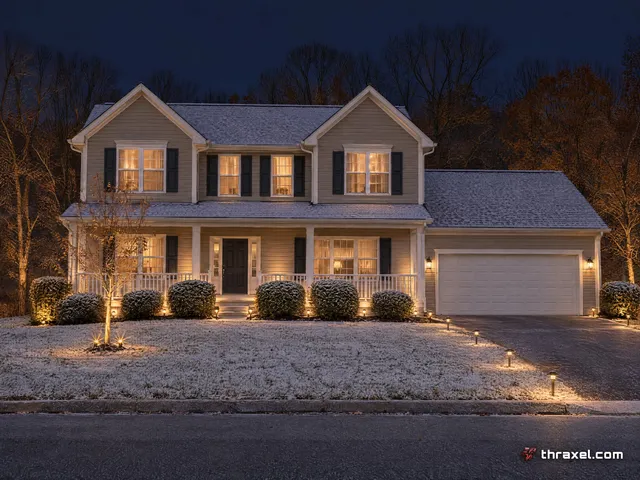
Roofline track fed from an existing GFCI outlet. Path lights, uplights and wall washers on a low-voltage transformer. Tree wraps and dock lighting on marine-rated low-voltage runs. In most municipalities we work in, none of these trigger a building or electrical permit, because there is no change to the structure's wiring and no new load on the panel.
Two caveats. First, some townships still ask that you notify them of exterior work even when no permit applies, and a handful require a simple zoning check for anything visible from the road. Second, historic districts and HOAs run their own review process that has nothing to do with the permit office. Both are covered in thraxel.com/blog/township-ordinances-and-outdoor-lighting/.
When we are unsure about a particular township, we call. A five-minute phone call to the code office beats a stop-work notice, and code officers across Armstrong and Butler County have been consistently straightforward with us.
Projects that usually do need a permit
New exterior receptacles, a dedicated circuit for a large landscape transformer, hardwired fixtures on line voltage, and any trenching that crosses a utility easement. Commercial signage and facade lighting in most municipalities need a sign or zoning permit even when the electrical side is low voltage, because they regulate the sign, not just the wire.
Pole lights, bollards on a commercial walkway and lit parking areas often fall under site-plan review. For a restaurant, plaza or venue, expect the township to want a photometric plan showing that light stays on the property. That is normal, it is not a reason to skip the project, and it is why we start commercial jobs with the paperwork instead of the ladder.
The difference between low-voltage and line-voltage systems, and why it matters for both permits and safety, is explained further at thraxel.com/blog/low-voltage-vs-line-voltage-exterior-lighting/.
- New outlets, circuits or panel work: electrical permit, licensed electrician
- Hardwired line-voltage fixtures: electrical permit in most townships
- Lit signage or facade lettering: sign or zoning permit
- Commercial site lighting: often site-plan review with a photometric plan
- Trenching near easements or utilities: call before you dig, every time
What permit-aware means at Thraxel
We do not hand homeowners a list of offices to call. Part of every quote is figuring out which, if any, approvals apply, and getting them moving before the crew is scheduled. If an electrician is needed for a new outlet, we tell you at the consult, not on install morning. If a township wants a form, it gets filed. The ladders come out after the paper is done.
That approach came from landscape work, where trenching and transformers raise more questions than roofline track does. It now covers everything we install. Our landscape program, including the astronomical timers and the maintenance plans, is at thraxel.com/landscape/.
Permits protect you, too. A permitted, inspected outlet is documented in the township file, and that record matters when you sell, when you refinance, and when an insurance adjuster asks who did the wiring.
Why the certifications matter to the inspector
When an inspector does look at a low-voltage lighting install, the first thing they check is whether the components carry a recognized safety listing. Ours are UL, ETL and CUL certified, the housing is IP67 marine-grade silicone, and the wire is 16-gauge. Those facts are on the spec sheet we include with every quote, and they answer most inspection questions before they are asked.
Unlisted lighting kits sold online are where trouble starts. Inspectors have failed installs over unlisted transformers, and insurers have declined claims over them. It is one more reason the price of a kit is not the price of the project.
The short answer for your house
If you have an outdoor outlet near where the controller would go, a permanent roofline install in most Pennsylvania municipalities needs no permit. Landscape lighting on a plug-in transformer is the same story. Add a new outlet, a sign or a commercial parking lot and something will need to be filed, and we will file it.
We install across every 16xxx ZIP daily and cover the rest of Pennsylvania plus Maryland, West Virginia, Ohio and New York. To find out what your specific township wants, book a free consult at thraxel.com/quote/ and Tyson will check the code office as part of the visit.