Lit and livable
Security lighting does not have to make your house look like a checkpoint
Most security lighting fails at the second half of its job. It lights up the yard fine and makes the house look like a loading dock. Here is how to get coverage without the harsh look.

The problem with a single floodlight
A single bright motion floodlight over a garage does technically light up an approach, but it also throws a hard-edged pool of light with a deep shadow just past its reach, which is worse for actually seeing someone than even, softer coverage across the whole area would be.
It also has a well-known side effect: it makes a house look defensive rather than lived-in. A property covered in harsh security floodlights reads as guarded, which is not the impression most homeowners actually want to give their street.
Layering security with everyday lighting
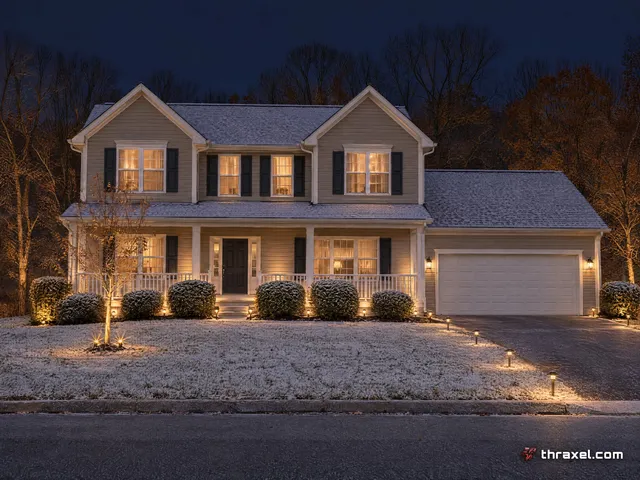
The better approach uses the same permanent system already covering the roofline, entry and landscape as the baseline security layer, since a consistently lit exterior deters an approach far better than total darkness with one bright triggered spot. Motion-activated fixtures then supplement specific blind corners, a side yard, a gate, a spot the ambient lighting does not fully reach.
This way the house looks warm and occupied every night on the astronomical timer's normal schedule, and the motion lighting is a secondary alert layer rather than the only thing standing between a dark yard and full visibility.
- Ambient roofline and landscape lighting as the nightly baseline
- Motion-triggered fixtures on side yards, gates and blind corners
- Entry lighting bright enough to identify a visitor at the door
What security lighting can and cannot do
Lighting is a deterrent and a visibility tool, not a substitute for locks, cameras or an alarm system. We are honest about that on every consult, since overselling lighting as a complete security solution does not serve a homeowner well. What it does reliably do is remove the cover of darkness that makes an approach easier and give a homeowner or a neighbor a clear view of anyone at the door.
Entry points deserve the most attention
Front and back doors, any ground-floor window that is not visible from the street, and side gates are the spots that matter most for security lighting specifically. These do not need to be the brightest lights on the property, they need to be consistent and positioned so a person's face is actually visible, not just their silhouette.
A garage or driveway approach benefits from the same edge lighting used for wayfinding, which does double duty as security coverage since a well-lit driveway removes the dark approach a floodlight alone tries to solve after the fact.
Dark-sky and neighbor-friendly design
Good security lighting still points down or across, not up into the sky or across a property line into a neighbor's window. Aimed correctly, the same fixtures that deter an approach also avoid contributing to light pollution or becoming the reason a neighbor complains.
This matters in HOA neighborhoods especially, where lighting that reads as excessive or glare-heavy can run into review issues even when the intent is purely safety. Thraxel installs are permit-aware and HOA-friendly by design, since the track and fixtures are effectively invisible by day and the light output is planned rather than a bare bulb bolted to a wall.
Where motion sensors make the most sense
Motion-triggered fixtures work best where a sudden change in light is genuinely useful information, a side gate that should not be opened at 2 a.m., a walkway along the back of the house that is not otherwise lit, a spot where a package gets delivered. In those specific locations, a light snapping on is meant to draw attention.
Everywhere else on a property, a fixture that is always on a low, warm setting does more for both security and everyday livability than a motion sensor would, since it removes the guesswork of walking toward a dark zone waiting for a sensor to trigger.
Building the plan
A security-minded lighting plan starts with the same free on-site consultation as any other project, walking entry points, blind corners and the driveway approach together rather than treating security as a separate add-on. A design mock-up comes back within 24 hours showing exactly what the coverage looks like.
Call or text 724-859-4390 if a specific corner of your property has always felt like the dark spot, and Tyson will look at whether ambient coverage, a motion fixture, or both solve it.