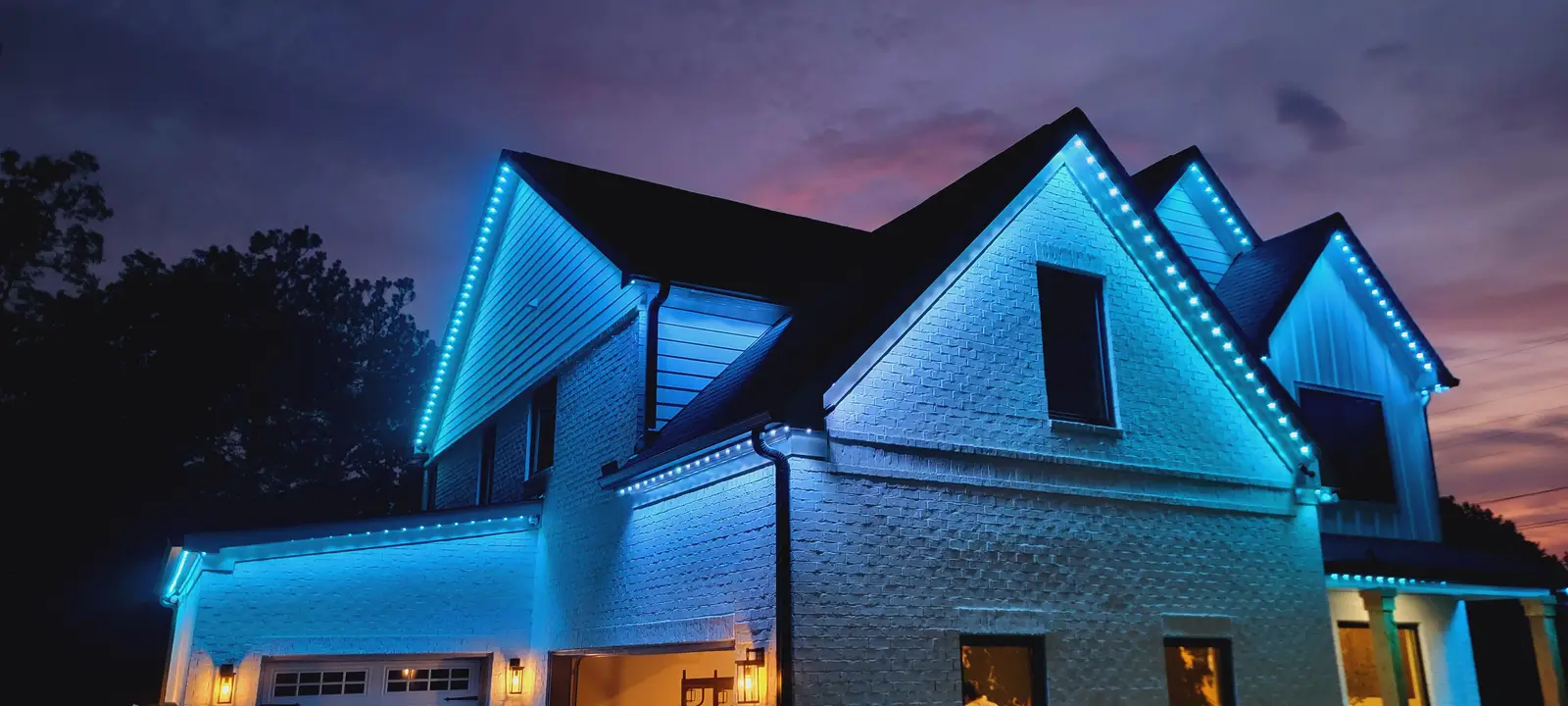
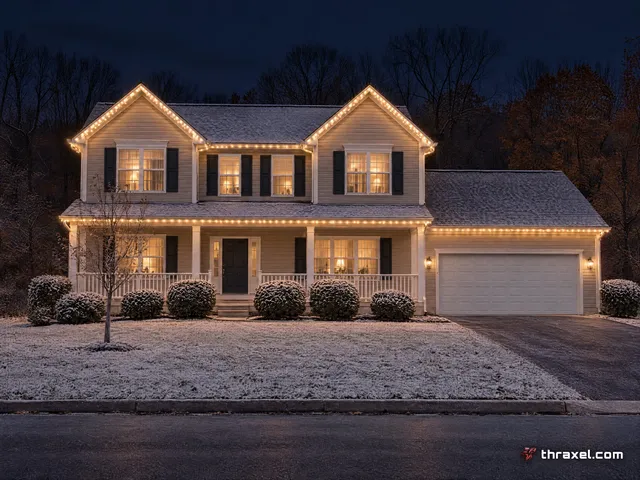
Passes the daylight test
The reason permanent lighting clears HOA review is what you cannot see
An HOA board is not reviewing what your house looks like at 8 p.m. in December, it is reviewing what your house looks like every other hour of the year. Lighting that disappears by day tends to sail through for exactly that reason.

What an HOA is actually looking at
Most architectural review committees are evaluating daytime appearance, roofline consistency, exterior colors, and whether an addition to the house reads as a fixture or as equipment. A string of colorful bulbs stapled along a gutter for two months a year fails that daytime test by design, because it is meant to be seen.
Permanent lighting is built around the opposite goal. The track disappears into the trim during daylight, so the thing an HOA is actually reviewing, the house itself, does not visually change at all, whether it is a Tuesday afternoon in June or the morning after a big display ran the night before.
Why color-matched track is the detail that matters
The aluminum track that houses the pixels is color-matched to your fascia or trim and mounted tight against it rather than standing proud of the roofline. From the street, it reads as a trim detail, not a lighting product, which is exactly the impression an approval committee is looking for when it reviews an application.
This is different from seasonal lighting, which is visible by design and usually comes with an HOA-mandated removal date. Permanent track has no deadline because there is nothing to remove and nothing that looks out of place sitting there in July, unlike a string of bulbs left up past a community's posted removal window.
The mounting detail matters as much as the color match. Track that sits flush against the fascia casts almost no shadow line during the day, which is the visual cue that would otherwise give away that something has been added to the roofline at all.
The track record so far
Permanent lighting has passed every HOA Thraxel has worked in across Western Pennsylvania. That is a track record, not a guarantee for any specific community, since architectural guidelines vary by neighborhood and can be updated by a board at any time without much notice.
- Reads as trim by day, not as a visible lighting product
- No removal deadline, since there is nothing seasonal to take down
- Color-matched to the home's existing fascia or trim tone
- Approved in HOA-governed communities across Butler and Allegheny County so far
What to bring to an architectural review
Thraxel provides a design mock-up of the actual property within 24 hours of a consultation, and that render is useful for more than picking colors. It gives a board something concrete to review, a specific image of the specific house, rather than an abstract description of a lighting product in general terms.
Pairing that render with the daytime track color and mounting detail usually answers the committee's core question before it is even asked: what will this look like when the lights are off, which is the question that decides most approvals either way.
Where this matters most in our footprint
HOA-governed communities in Cranberry Township, Wexford and similar Butler County neighborhoods represent a meaningful share of our permanent lighting installs, and the invisible-by-day question comes up in nearly every consultation in those areas before the color and scene conversation even starts.
Newer developments tend to carry the most detailed architectural guidelines, since they were often written with a specific streetscape in mind, which makes the daytime-appearance argument for permanent lighting even more relevant there than in an older, less regulated neighborhood.
What we tell homeowners on a consult
If your HOA has been the reason you have held off on exterior lighting, it is worth a conversation before assuming the answer is no. Bring the render to your board, show the track detail, and let the daytime appearance make the case rather than describing it secondhand across a meeting or an email chain.
Boards generally respond faster to a specific, concrete request than a vague one, so having the render, the track color and the mounting method ready before the meeting is worth more than a well-argued verbal pitch on its own.