What we find on takeovers
The roof damage from DIY lighting usually has nothing to do with staples
Staples get the attention, but bent gutters, scuffed shingles and foot traffic in the wrong spots cause just as much damage over the years. Most of it happens quietly, one November at a time, until a homeowner asks why a gutter section sags.
Gutter clips that are tightened too far
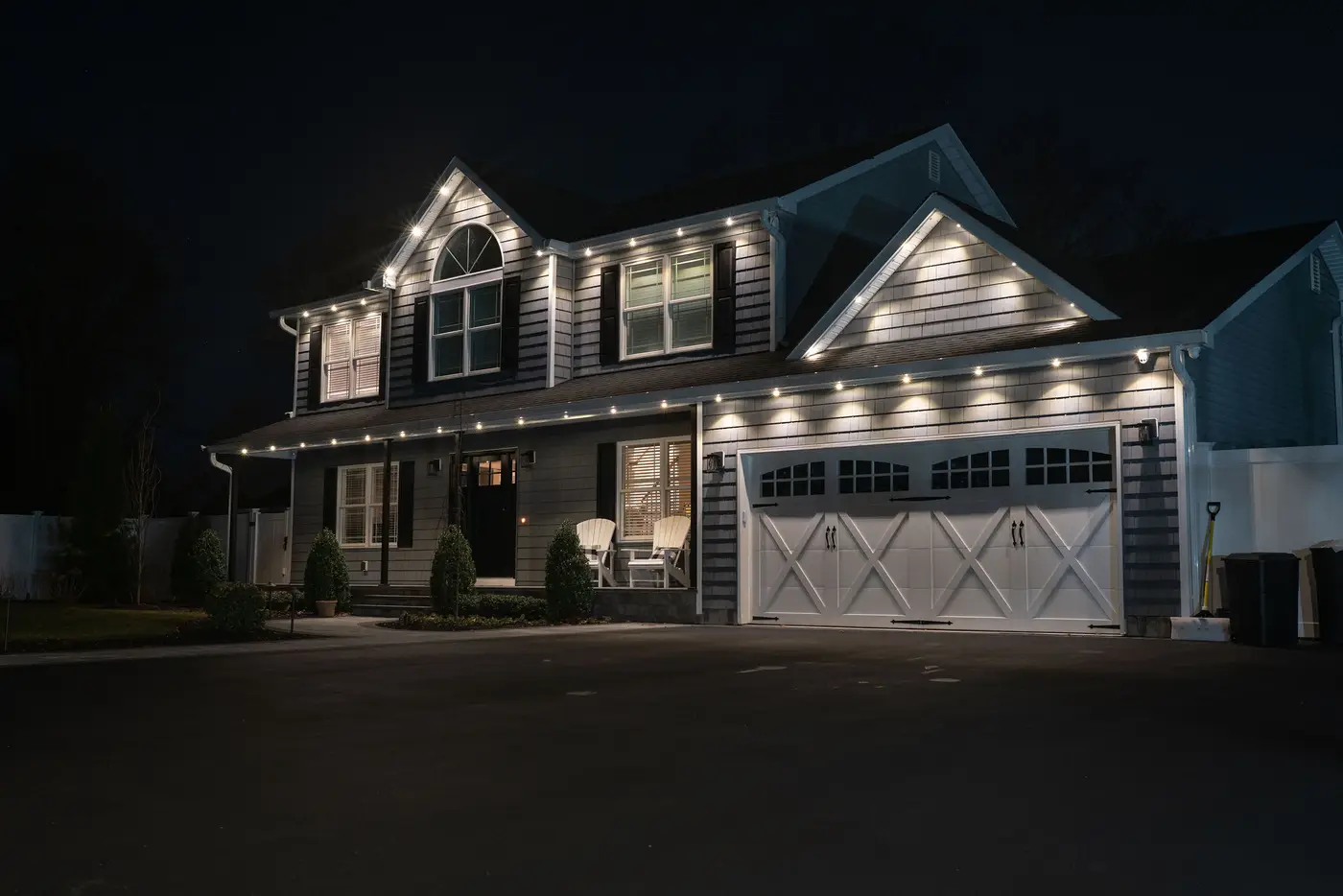
Standard gutter clips are meant to grip lightly and release easily. Cranked down too hard, year after year, they can bend the lip of an aluminum gutter or work a small dent into the same spot every time the clip goes back on. It rarely shows from the ground until the damage has compounded.
Over several seasons those repeated dents can affect how well the gutter sheds water, especially at a low point where debris already tends to collect, turning a cosmetic issue into a drainage one without anyone noticing the connection between the two.
Foot traffic on the shingles themselves
Walking a roofline to hang or check lights wears the protective granules off asphalt shingles a little at a time, especially at the exact path someone walks every single year without varying it. Those granules are what shield the shingle from UV breakdown, so losing them speeds up aging in that specific strip.
The risk compounds in valleys, the V-shaped seams where two roof planes meet, which are also where ice dams tend to form first. Foot traffic there right when the roof is coldest is a combination worth avoiding entirely, not just minimizing.
A worn path is often invisible from the street and only becomes obvious from a drone photo or a roofer's inspection years later, which is part of why it goes unaddressed for so long in most cases.
What we see when we take over a house
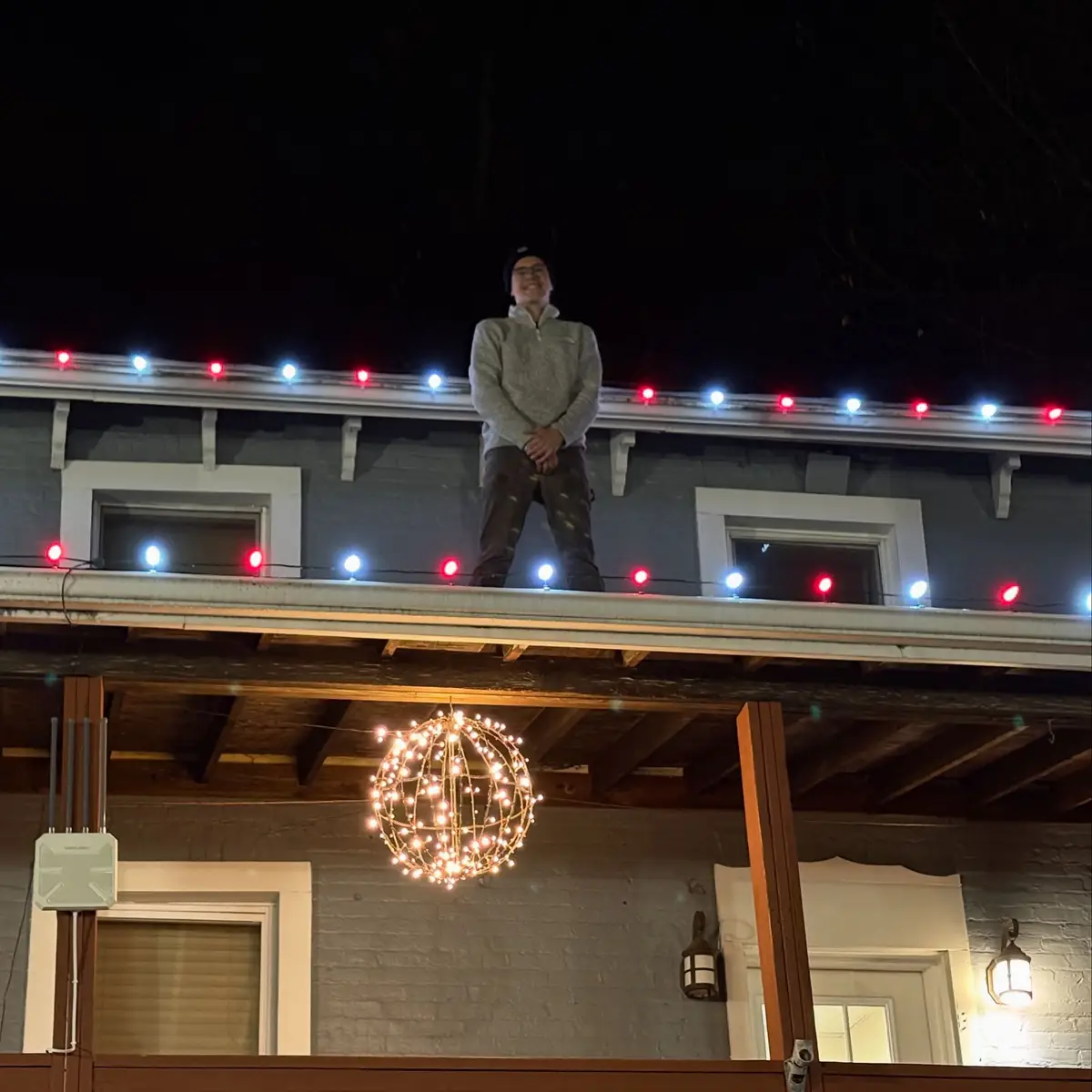
On homes where we install after years of DIY decorating, a pattern shows up often enough that it is not a coincidence: a slightly bowed gutter section right where the ladder always went, and a worn strip of shingle granules along the most-used walking path.
None of these findings change what we install. They simply inform where the crew places anchor points and how the existing roofline is assessed before track goes on, since a compromised gutter section needs a different plan than a sound one.
- Gutter sections dented at the same spot every year from clip pressure
- Granule loss along a repeated foot-traffic path
- Fascia boards with old nail or staple holes stacked close together
- Ladder feet marks pressed into softer roofing edges
How permanent track avoids all of it
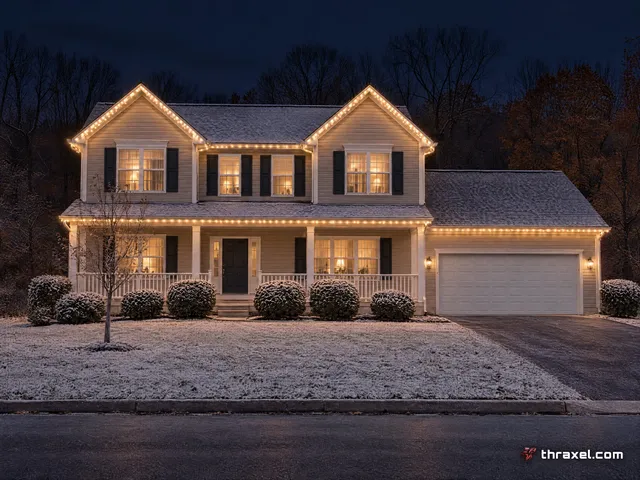
Color-matched aluminum track is fastened once, at engineered points, and then no one walks the roofline again for the rest of the system's life. Scene changes happen from a phone. There is no annual clip cycle to bend a gutter and no repeated foot path to wear down shingle granules year after year.
The full spec on how the track mounts and stays invisible by day is at thraxel.com/permanent/, and it is worth reading if the gutter on your house already has a soft spot from a decade of holiday lights going up and coming down.
For homeowners weighing the two approaches, the roof itself is often the deciding factor once they see what a decade of seasonal decorating has already done to it, even before any cost comparison enters the conversation.
If you decorate yourself this year
Use light-duty clips rated for the exact gutter or shingle type on your house, and check tension by hand rather than by feel with a ladder underneath you. Rotate your walking path slightly year to year if you have to be on the roof at all, and avoid valleys entirely when there is any frost.
If a gutter section already looks slightly bowed, get it checked before another season of clips goes on top of the existing stress, since it is a lot cheaper to catch early than to repair once it has failed outright.
A quick walk around the exterior with binoculars from the ground, checking for sagging sections or granule buildup in the downspouts, catches most of what matters without anyone climbing anything at all.