Ice on the eave
Ice dams, icicles and the lights on your roofline
An ice dam is a ridge of ice that builds at the edge of a roof and traps meltwater behind it. It is the single most destructive winter event for a roofline, and it lands right where the lights live. Here is what it does to each kind of lighting.

How an ice dam forms on a Western PA roof
Heat escapes through the attic, warms the upper roof deck, and melts the snow sitting on it. That water runs down under the snowpack until it reaches the eave, which hangs past the heated part of the house and stays below freezing. It refreezes there, layer on layer, until a ridge of ice forms along the gutter line.
Once the ridge exists, everything behind it pools. Water backs up under the shingles, finds the nail holes, and shows up as a stain on a bedroom ceiling in February. The icicles hanging off the gutter are the visible part. The dam behind them is the expensive part.
Western Pennsylvania is built for this. Older homes in Kittanning, Indiana and Johnstown have decades-old insulation, and our winters spend weeks bouncing across the freezing mark. A sunny 34-degree afternoon followed by a 20-degree night is the exact recipe.
What an ice dam does to clip-hung Christmas lights
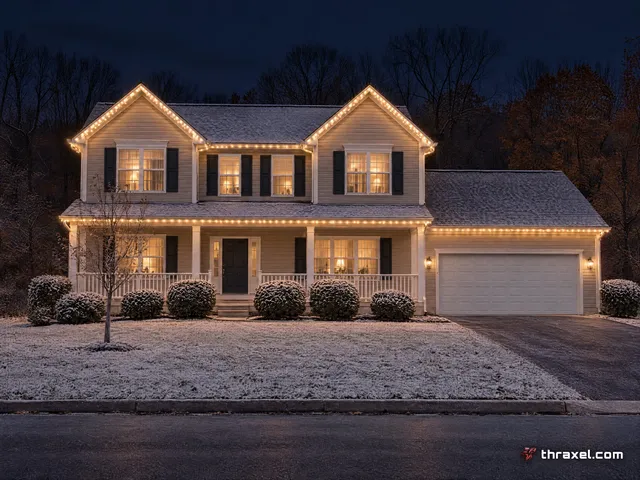
Seasonal C9 strings ride the gutter lip or the shingle edge on plastic clips. That is precisely where the dam grows. The string gets encased in ice, the clips get pried loose as the ice expands, and the wire ends up frozen into a block that nobody can free until March.
The lights usually keep working inside the ice, since a modern LED bulb does not mind being cold and wet. The damage shows up later, when the ice lets go. A slab sliding off the eave can tear a string loose, snap a socket, or pull a section down into the yard.
This is why our seasonal program includes in-season maintenance at no charge. A string pulled down by ice is a 24 to 48 hour fix in our schedule, not a January ladder trip for the homeowner. The full program is on thraxel.com/christmas/.
Why permanent track sits above the problem
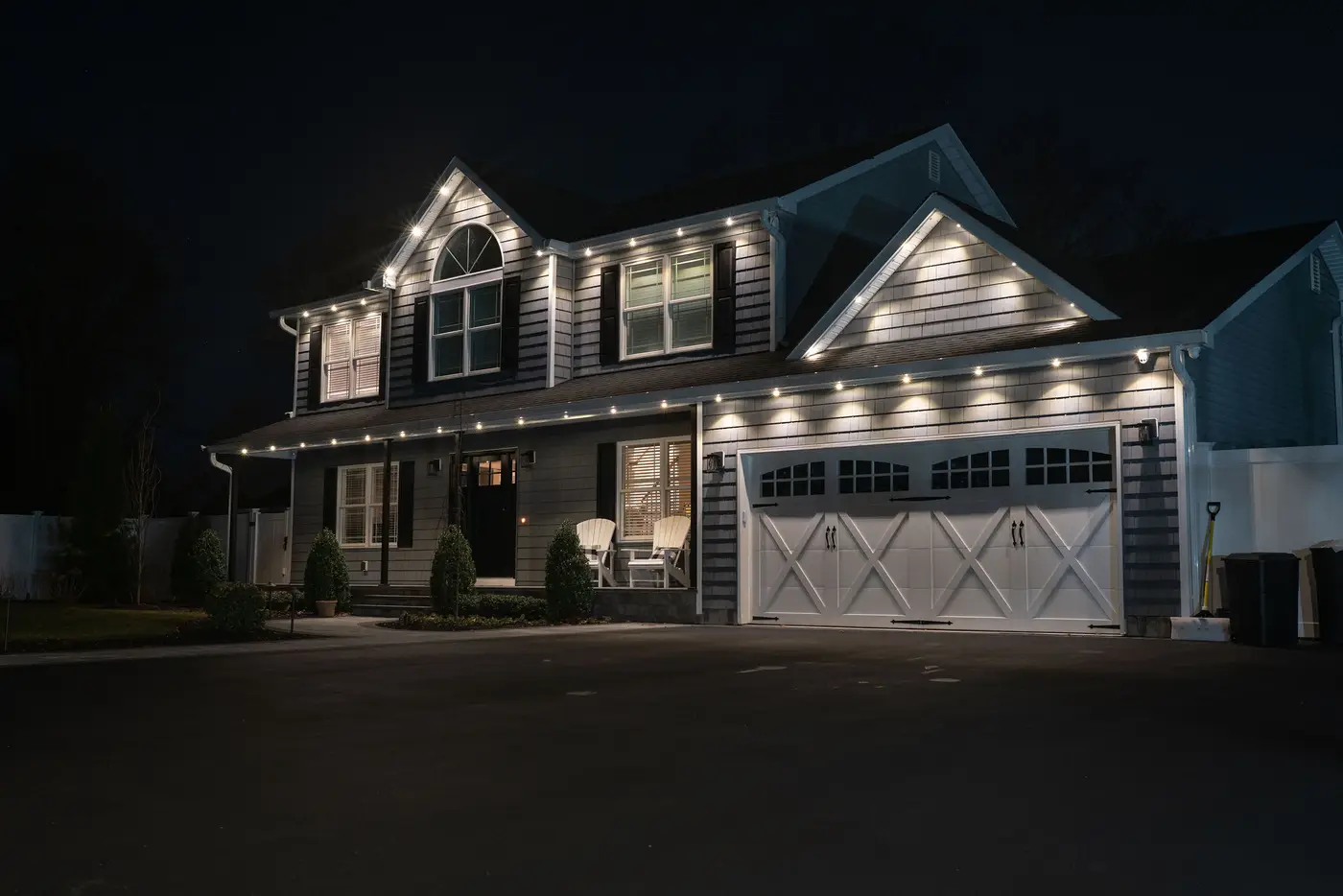
Permanent lighting mounts to the fascia board, not the gutter. The fascia is the vertical trim under the roof edge, and the dam forms in front of it, in the gutter and on the shingle lip. The track is tucked up tight against that board, behind and above the zone where ice actually accumulates.
The track itself is aluminum, color-matched to the trim, and continuous. Ice cannot pry it loose the way it pops individual plastic clips, because there are no individual clips. The pixels inside are sealed in IP67-rated silicone that water cannot get into, and the 16-gauge wire has enough body to resist being sheared by a moving slab.
Nothing hangs below the track. Icicles form on the gutter lip a few inches lower and drop straight down without touching the run. On most homes the icicles actually catch the light from the pixels behind them, which is a look people ask us to recreate on purpose.
- Mounted to fascia, not gutter, so the dam forms in front of the track rather than on it
- Continuous aluminum track, no clips for ice to pop
- Sealed silicone pixels, sealed connectors, nothing for meltwater to enter
- Heavier 16-gauge wire that resists shear from sliding ice
Where ice can still reach a permanent system
A dam large enough to overflow the gutter and climb the fascia is possible on a badly insulated roof. When that happens the ice can press directly against the track. We have not seen it break a run, but it is the one scenario where the mount sees real load, and it is why we never fasten track to a gutter that is going to move.
The other risk is the homeowner. Chipping ice off a gutter with a hammer, or dragging a steel roof rake down the eave, will catch the track long before the ice would have hurt it. If ice is building around your lights, leave it, and read our winter overview at thraxel.com/blog/will-permanent-lights-survive-pa-winter/ before doing anything with a tool.
Any part damaged by ice inside the first three years is a warranty part, and labor is covered for the first year. The system is built to stay up through ice and snow. We stand behind that in writing.
Stopping the dam before it starts
We install lighting, not insulation, so take this as neighborly advice rather than a trade opinion. Ice dams are an attic problem. More insulation on the attic floor, sealed air leaks around can lights and the attic hatch, and proper soffit-to-ridge ventilation keep the roof deck cold so the snow stays frozen until it melts evenly.
Roof rakes work if you use them gently from the ground and stop a few feet short of the eave where the lights are. Heat cables along the gutter are a common fix on older homes; they do not interfere with track-mounted lighting as long as they are routed below it, and we can plan around them at the consult.
If your house grows big dams every year, tell us during the free consultation. We will route the track higher on the fascia, keep the power feed on a wall that never ices, and note it on the render so the plan reflects your roof rather than a generic one.
What to do if ice is building around your lights right now
Do not chip, pull or pry. Check the app first. If the pixels behind the ice still respond, nothing is wrong and the ice will let go on its own. If a section has gone dark, send Thraxel a photo at 724-859-4390 and we will decide together whether it can wait for the thaw or needs a same-day visit.
For seasonal customers the answer is even simpler: it is covered. Anything that fails between install and January 4 gets fixed on our schedule at no cost. That is what white-glove means when the eave is wearing a foot of ice.