Being a good neighbor
Most neighbor complaints are about direction and timing, not the lights themselves
A bright display is rarely the actual complaint. Light aimed straight into a neighbor's bedroom window, or a display still running at 1 a.m. on a weeknight, is what generates the call to an HOA board or a knock on the door.

The two complaints we hear about most
Glare is the first. A fixture aimed outward rather than at your own house, especially anything at eye level near a shared property line, can shine directly into a neighboring window and become an ongoing irritation long after the novelty of a bright display wears off for everyone involved.
Timing is the second. Lights that run all night rather than shutting off at a reasonable hour affect a neighbor's sleep, their own window views, and in some cases the light spilling onto their property without their say in the matter at all.
A distant third is color choice on shared streets, particularly strobing or rapidly cycling effects that some neighbors find more distracting than a steady display, even at a similar overall brightness. This one is more about taste than any objective standard, and it is worth discussing directly with a neighbor if it comes up.
Why direction matters more than brightness
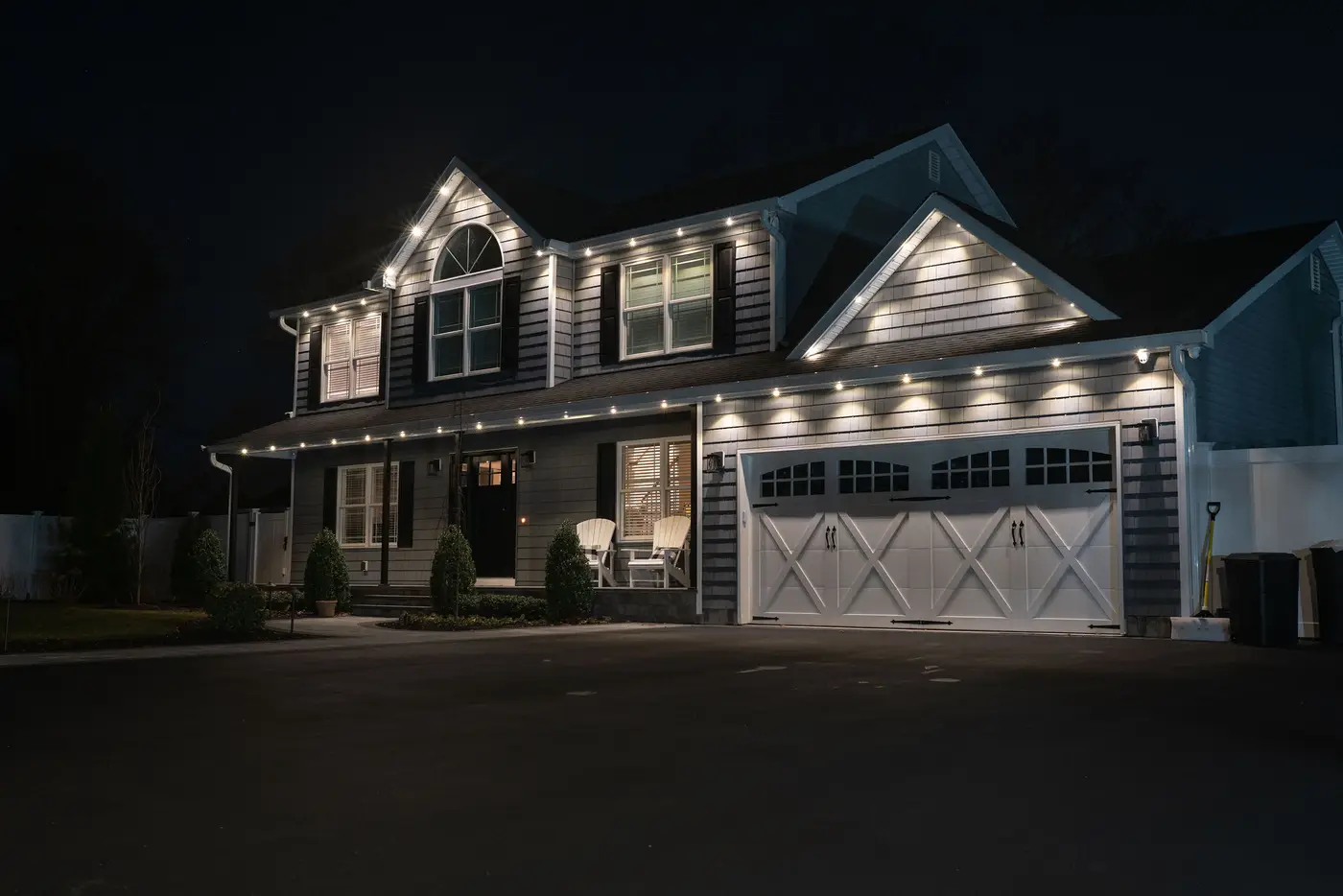
Two displays with identical brightness can generate very different reactions depending on where the light is actually pointed. A roofline traced upward and inward toward the house itself is a very different experience for a neighbor than a fixture aimed sideways across a shared yard toward their windows.
This is part of the layout conversation on every install, not an afterthought fixed after a complaint arrives. Fixture angle gets planned against the property line, not just against how the display looks from the street in front of your own house on the night it goes up.
The fix most homeowners are missing: a working timer
A simple timer that shuts a display off by a set hour resolves most late-night complaints without changing anything about the display itself. Permanent systems take this further with astronomical timers that adjust automatically with sunrise and sunset through the season, so scenes turn on and off without anyone remembering to flip a switch.
A display that turns off at a consistent, reasonable hour every night is a small courtesy that costs nothing and removes the single most common complaint we hear about from HOA boards across every community we work in.
For a seasonal display specifically, a mechanical or smart plug timer is an inexpensive add to any setup and takes less time to install than the lights themselves usually take to hang.
What we plan for on install day
Fixture placement and angle near a shared property line get factored into the layout for both seasonal and permanent jobs, and permanent systems are set up with scheduling in mind from the start so a homeowner is not manually managing shutoff every night of the season.
On tighter lots where houses sit close together, this planning step matters even more, since a fixture that reads as subtle on a wide suburban lot can feel much brighter to a neighbor whose window sits twenty feet away instead of fifty.
If a complaint has already come in
A five-minute adjustment to fixture angle or a scheduled shutoff time resolves the vast majority of neighbor complaints without removing the display entirely. It is worth trying that first, and worth having a conversation directly with a neighbor before it escalates to an HOA board or township complaint.
For permanent systems, this is often a one-tap fix through the Thraxel Lighting app rather than a physical adjustment to hardware, which is one advantage of scene control over a fixed seasonal layout that has to be climbed up to and re-angled by hand.
The general rule
Light your own house, not your neighbor's yard, and give the display a bedtime. Those two habits prevent most of the friction that ever comes up between neighbors over holiday lighting, permanent or seasonal, in every community we have worked in across our five-state footprint.
A quick heads-up to an adjacent neighbor before a display goes up, especially a large one, tends to prevent complaints altogether, since most people are more understanding about a display they were told about in advance than one that simply appeared overnight.