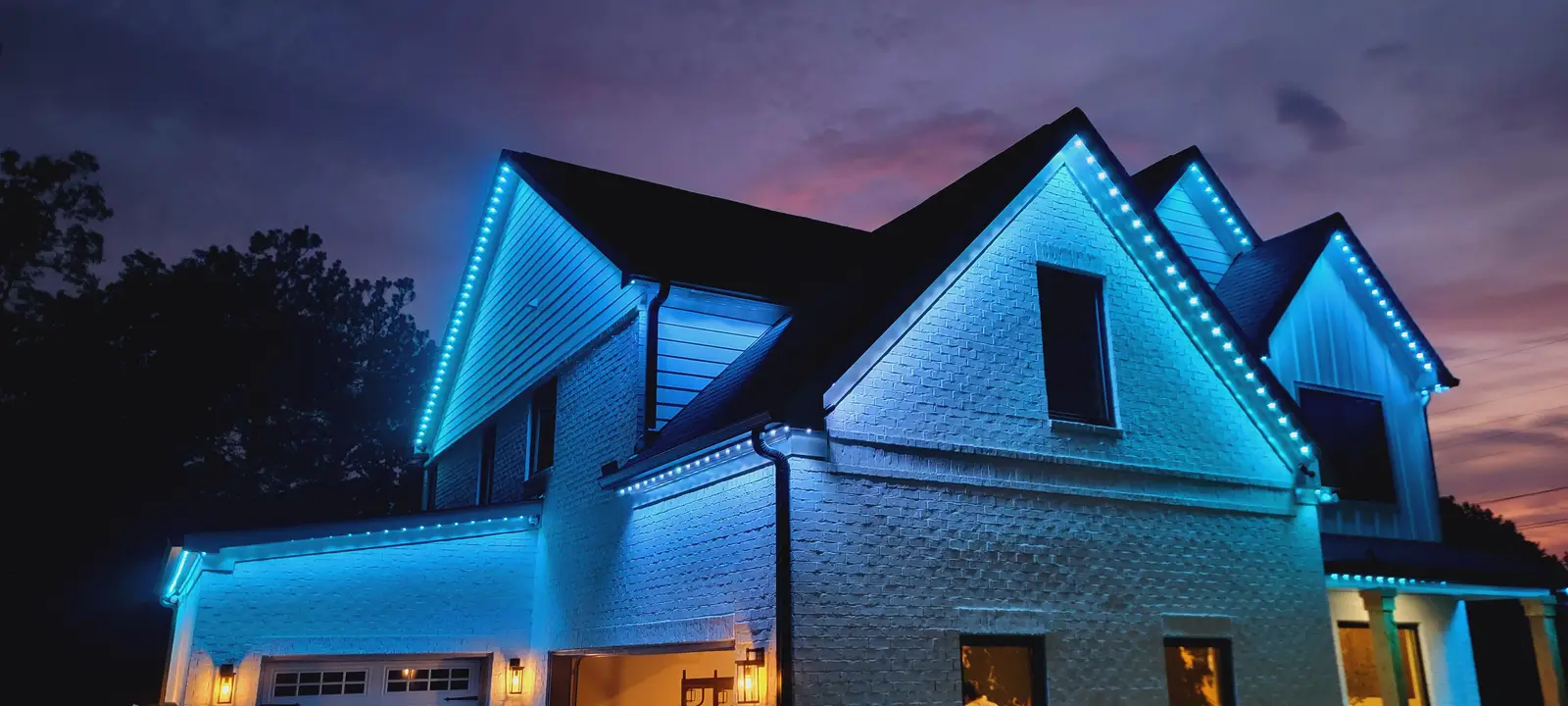
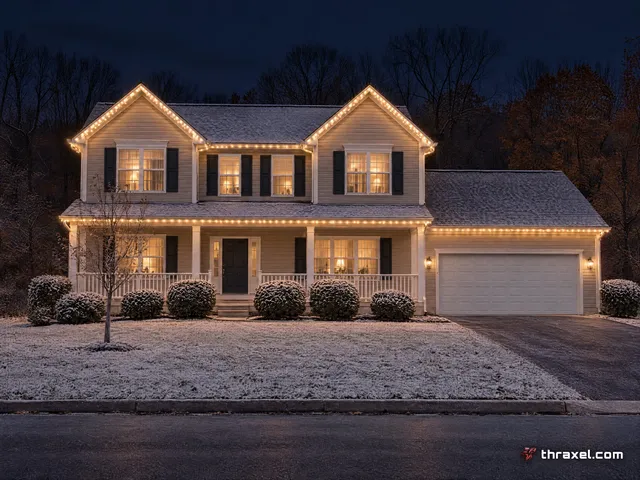
Street-level pattern
The neighbor effect: why one permanent lighting install tends to spread
On 11 of Thraxel's last 14 residential permanent installs, at least one neighbor on the same street booked their own install within 18 months. Across our tracked jobs, 58 percent generate a direct neighbor inquiry. We did not expect the pattern until we started counting.
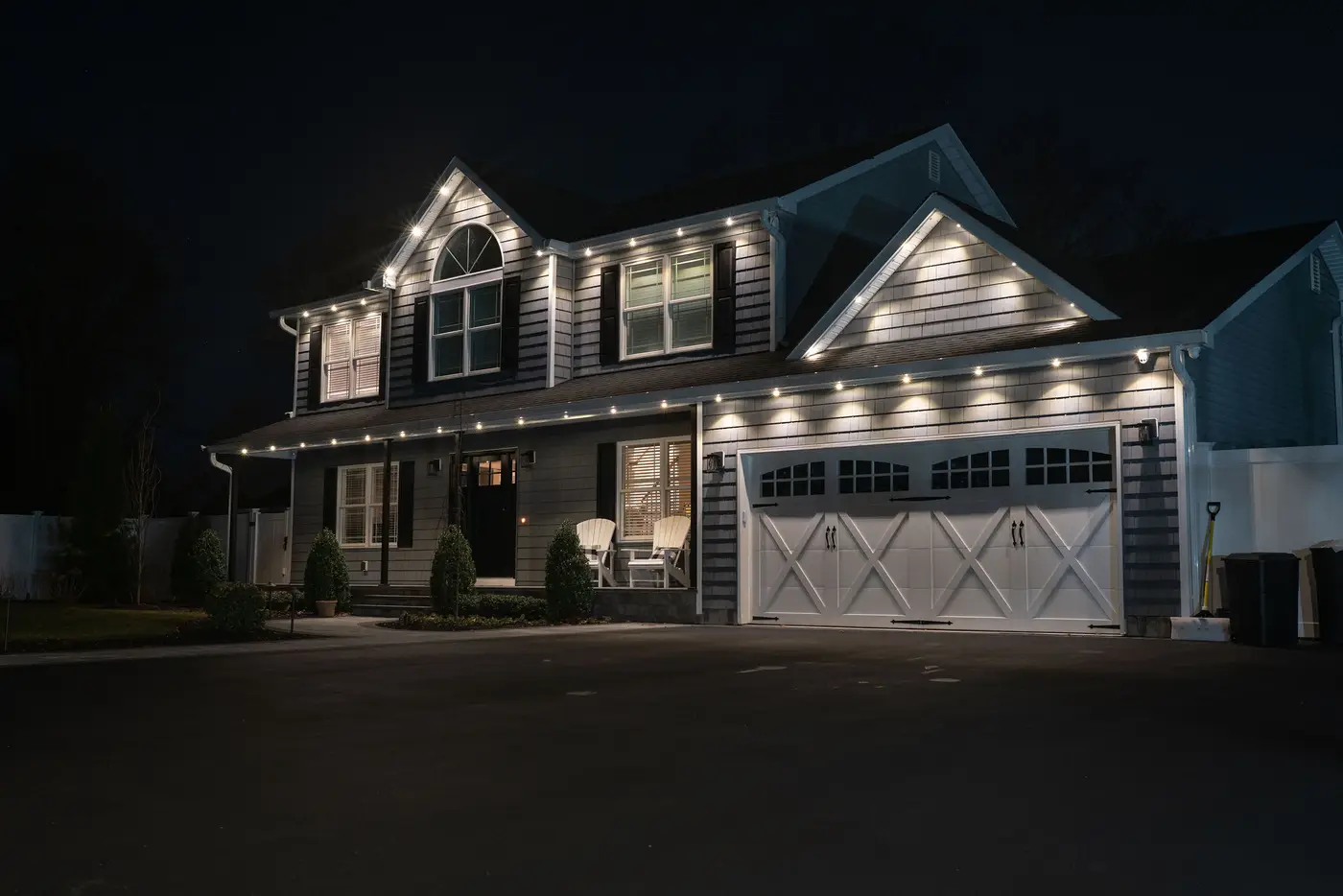
The pattern, as we have seen it
Looking back at our last 14 residential permanent installs, 11 of them led to at least one neighbor on the same street booking their own system within 18 months. Separately, we track a 58 percent rate of streets generating a direct inquiry from someone nearby after an install goes up.
This is our own tracking from real jobs, not a formal study, and it is a small, regional dataset. We are sharing it because homeowners keep asking us whether this actually happens, and the honest answer is: often enough that we notice it.
We started keeping this number after a crew lead mentioned installing three houses on the same cul-de-sac in one season, one after another, and we wanted to know if that was a fluke or a pattern worth writing down. Once we started counting across all 14 jobs, the pattern held up more often than any of us expected going in.
Why a street would follow one house
A permanent roofline is visible every night, not just for one holiday, so neighbors see it far more often than a seasonal display. A house running Everyday Warm on a Tuesday in March is a much longer advertisement than string lights that come down January 4.
There is also a curiosity factor. Neighbors ask each other who did the work before they ask a search engine, and a family-run, brother-operated company with no call center tends to get referred by name rather than found cold.
Word of mouth also compresses the decision timeline. A neighbor who already trusts a referral from someone they know skips a lot of the research a cold homeowner would otherwise do before booking a consult, sometimes calling within days of seeing the finished install next door.
What we cannot claim
We cannot say a single install guarantees a neighbor will follow, and we do not track every reason a nearby homeowner eventually calls. Some neighbors were already considering an upgrade before the first house went lit.
What the numbers show is correlation across our own project history in Western Pennsylvania, concentrated in HOA neighborhoods and closer-set suburban streets where sightlines between houses are short.
We also do not track how many of those follow-on installs came from a direct conversation versus simply noticing the house night after night. Both count toward the 58 percent figure, and we do not separate them.
It is also worth saying plainly that not every install leads anywhere. Three of the 14 installs in our sample did not produce a documented neighbor booking within the 18-month window we track, and we are not hiding that from the number.
The HOA angle specifically
HOA boards move slower than individual homeowners, but a board member seeing a neighbor's approved install can shortcut a lot of the usual back-and-forth over what exterior lighting is even allowed, since color-matched track invisible by day tends to sail through review.
We have seen a single approved install effectively set the neighborhood precedent, with subsequent homeowners citing the earlier approval when they submit their own request, which speeds up their own timeline considerably, sometimes cutting weeks off a board's review process.
Where this shows up most
Denser suburban blocks and HOA communities in places like Butler County and the Pittsburgh suburbs see this more than rural properties with long driveways and wide setbacks, simply because more households can actually see the install every night.
It also shows up faster around the holidays, when a permanent system running a Christmas scene sits next to seasonal displays and the contrast, no ladders, no takedown, gets noticed at the mailbox.
River towns along the Allegheny with tighter lot lines tend to show the pattern quickly too, since a house with a permanent system is often visible from a neighbor's porch or driveway without either party needing to walk anywhere, let alone drive past on purpose to look.
- 11 of the last 14 residential installs led to a neighbor booking within 18 months
- 58% of tracked streets generate a direct neighbor inquiry
- Effect is strongest on dense, visible streets and in HOA neighborhoods
What this means if you are trying to decide right now
If your motivation is partly about being the house other people notice, the 58 percent inquiry figure is relevant. If your motivation is purely personal, wanting the house lit for your own family, the neighbor pattern is a side benefit, not the main reason to move forward.
Either way, the decision does not need to account for what your neighbors will do. It only needs to account for what you want from your own exterior, since the free consultation and render process is identical regardless of your reason for calling.
Some homeowners tell us afterward that the nicest part was not the follow-on installs but the compliments at the mailbox, which cost nothing and happen far more often than a formal booking ever would.
If you are the first house on your street
Being first is not a downside. It means a free consultation and a design mock-up of your own house within 24 hours, the same process every homeowner gets, whether you are the first lit house on the block or the fourth. Reach Thraxel at 724-859-4390 to start.
First movers on a street often become the reference point for that neighborhood going forward, the house other homeowners point to when a neighbor asks who did the lighting they keep noticing on their evening walk, long before a second install ever gets scheduled.