Straight answer
Can you see permanent lights from the street?
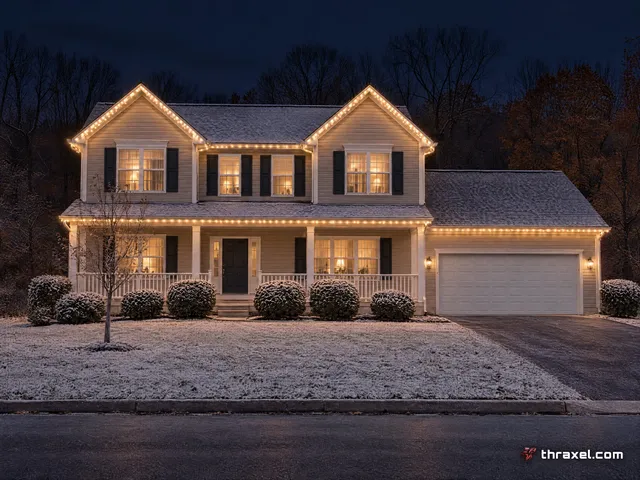
Yes, clearly, once the sun goes down. The roofline, columns and landscape zones are lit to be read from the sidewalk and the street, which is the entire purpose of the system. During the day the same track is designed to disappear.
What street visibility actually depends on
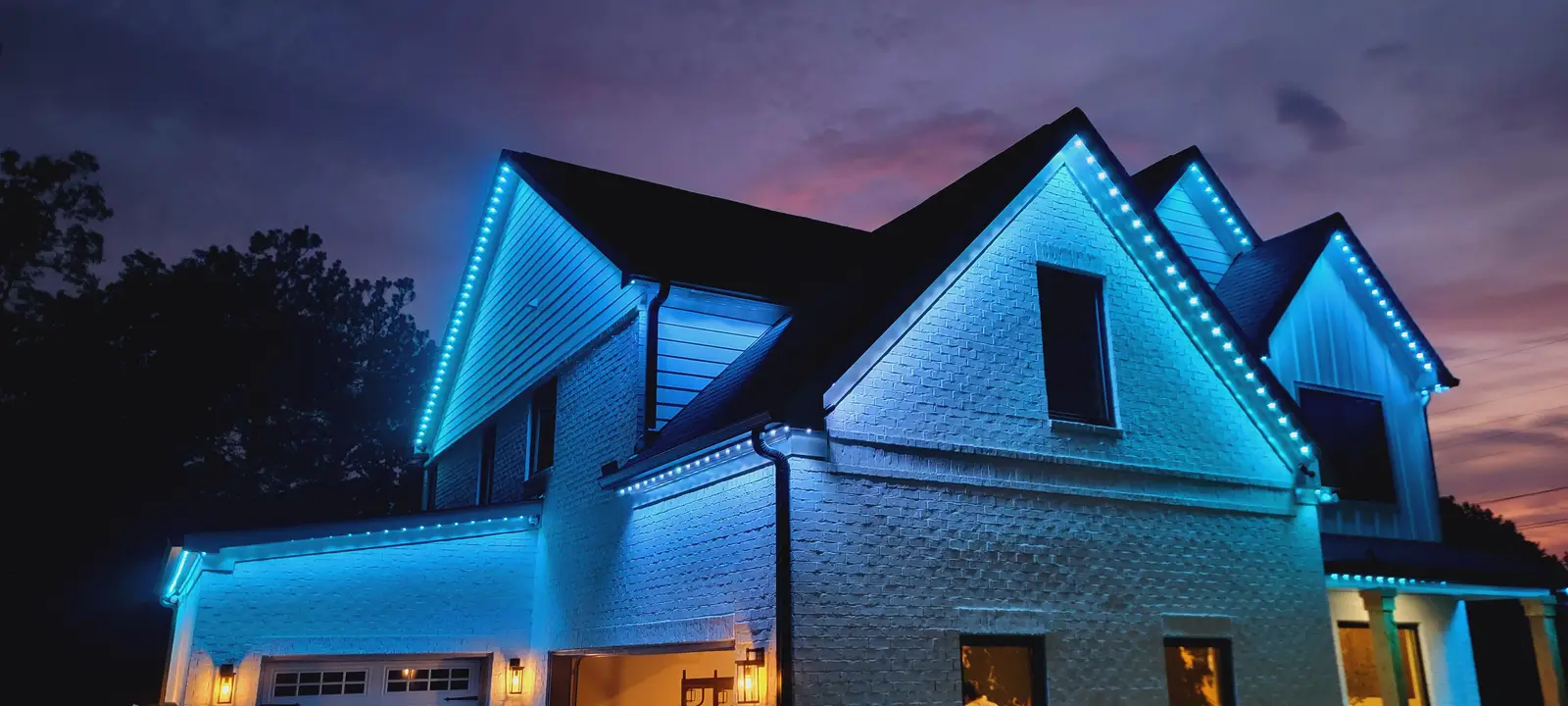
How clean a permanent install looks from the curb comes down to zone placement more than raw brightness. Track along the eaves, soffits and columns is chosen because those are the lines a driver or a neighbor across the street naturally reads first.
Thraxel designs each layout during the free consultation and returns a design mock-up of the actual property within 24 hours, so you can judge street-level visibility before a single pixel is installed, not after.
Houses set well back from the road, common on larger lots around Freeport and Ford City, often need a slightly different zone plan than a tighter street-facing lot in a Butler County development, since the viewing distance from the curb changes what actually reads clearly.
Brightness and scenes, not just placement
Each RGBWW pixel produces 16 million possible colors plus a dedicated 2700K warm white, and because every pixel is individually addressable, brightness and color can be tuned zone by zone from the Thraxel Lighting app.
A homeowner who wants a subtle, low-key look for a quiet street can run a dimmer Everyday Warm scene. A restaurant or plaza wanting to be seen from the road can run full brightness and a scheduled color scene. Both are the same hardware, tuned differently.
Music-synced shows and named scenes like Halloween or Game Day are naturally more visible from a distance than a steady warm-white run, simply because motion and changing color draw the eye faster than a static line of light.
Being visible without becoming a nuisance
Visible from the street is good design. Blinding a neighbor's front window or washing light across a property line is not, and Thraxel accounts for beam direction and mounting angle during the design phase to avoid that.
Astronomical timers, used mainly on landscape zones, adjust run times automatically with the season, so lighting is on when it should be seen and off overnight rather than running all night unnecessarily.
- Zone placement (eaves, columns, fascia) drives what reads from the street
- Brightness and color are tunable per zone from the app
- Astronomical timers manage landscape lighting run times automatically
How this differs from seasonal strand lighting
Seasonal C9 strands are visible from the street because of the bulb itself, glass, glowing, spaced along a wire. Permanent lighting is visible because of the pixel output through the track, which gives a cleaner, more even line without individual bulb hot spots.
For homeowners comparing the two purely on curb presence, permanent generally reads as a straighter, more continuous line at night, while a well-hung seasonal display has its own warmer, slightly irregular character that some households prefer for one month a year.
Neither look is objectively better from the street. It comes down to whether a household wants the classic bulb-and-glow character of C9 for one month, or a cleaner architectural line that runs every night of the year without needing to be rehung.
Seeing it on your own street before you buy
The fastest way to judge street-level visibility is the driveway demo. Thraxel brings a tactical case with four live RGBWW strips, 128 LEDs, and controls it from the app right where your own driveway meets the street.
Pair that with the 24-hour render of your house and you will know exactly what a passing car or a neighbor's porch will see before committing. Start at thraxel.com/quote/ or reach Thraxel directly for a walk-through of what your specific roofline will look like lit.