The other 12 hours
Curb appeal after dark: the half of the day most landscaping skips
Mulch beds, trimmed hedges and a fresh mow all vanish once the sun sets. Roughly half of every day, a home's curb appeal has nothing standing in for it. In Thraxel's own 2023-2025 tracking, homes carrying a permanent lighting system appraised 3 to 7 percent higher on average, directionally.

Daylight curb appeal has a hard stop
A landscaper can make a front yard look sharp at 2 p.m. and invisible at 8 p.m. Homeowners spend on hardscaping, shrubs and lawn care that only performs for the daylight hours, then let the other half of the day go dark by default.
That gap matters more in Western PA than in a lot of markets, since our winter days are short and much of the year the drive home, the school pickup, and evening guests all happen after sunset.
By late November the sun sets before 5 p.m. across Armstrong and Butler County, which means most weekday evening activity at a house happens in the dark for nearly five months straight, longer than the entire growing season most landscaping budgets are built around.
What after-dark curb appeal actually is
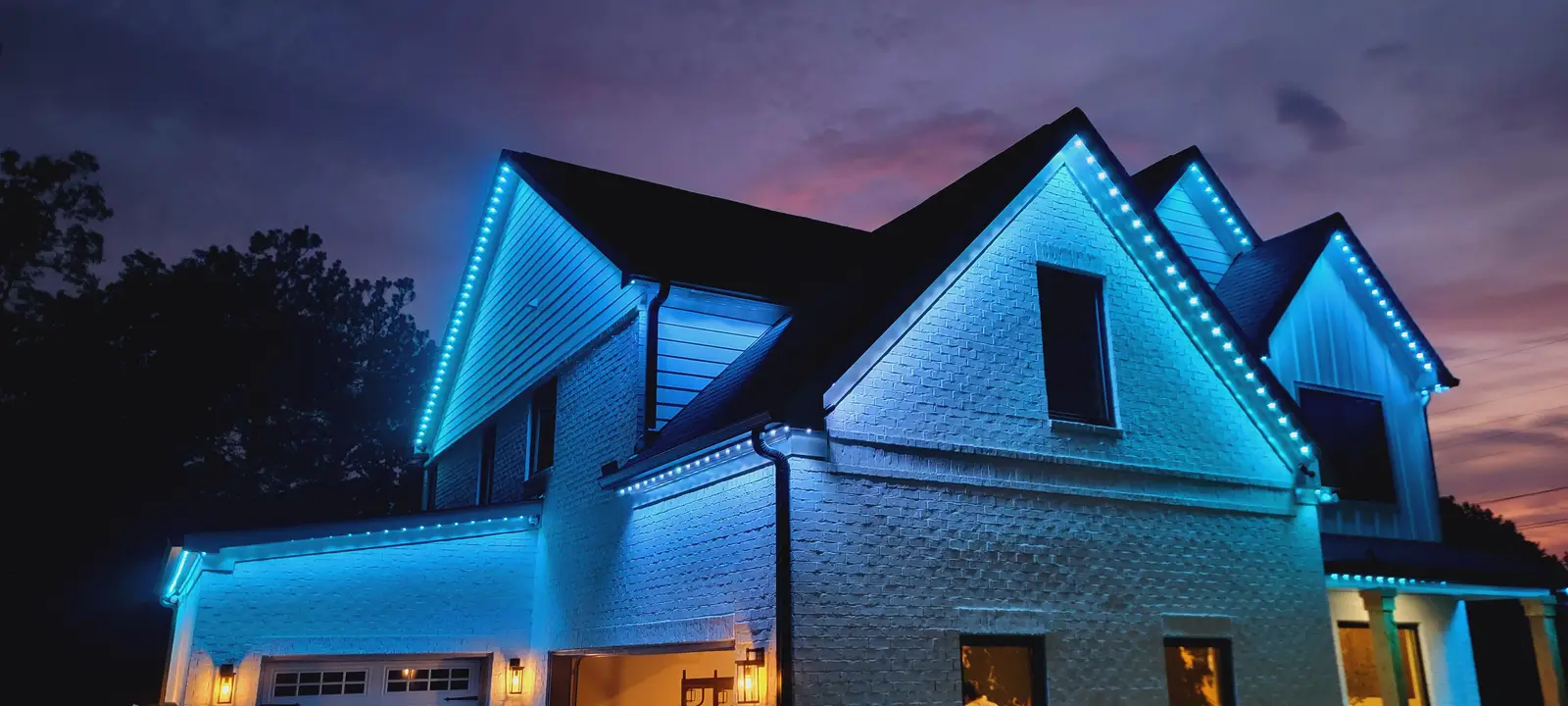
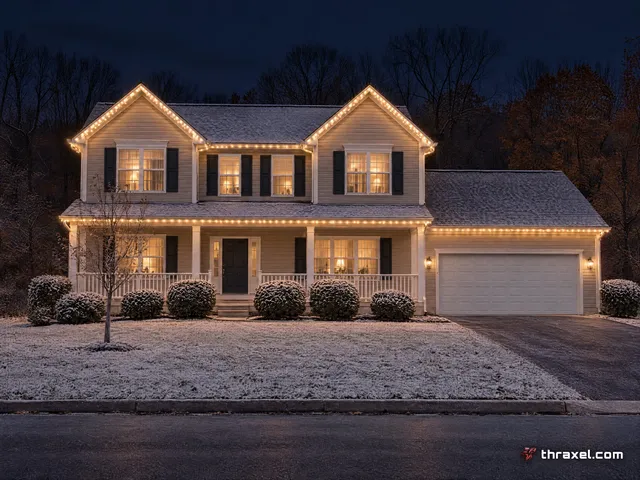
It is not a single spotlight aimed at the front door. A full system traces the roofline, wraps columns, washes the facade and can extend into landscape beds, all running from individually addressable RGBWW pixels tucked into color-matched track that disappears by day.
Because it is app controlled, the same exterior can run a plain warm white on an ordinary Tuesday and a bolder color scene for a holiday or a game day, without anyone touching a ladder.
The distinction from a standard porch light or floodlight matters here. Those fixtures illuminate for visibility and safety. A full system is designed for presentation, tracing the actual architecture of the house rather than just lighting the area in front of the door.
The value angle, held honestly
Across residential permanent installs Thraxel tracked from 2023 to 2025, homes with the system appraised 3 to 7 percent higher on average. It is a directional figure from our own project history, and it will not carry a poorly kept yard the way it can complement a well-kept one.
Daylight landscaping and after-dark lighting are not competing budgets. The two work together: a well-lit lawn and a well-lit facade extend the same first impression across the full 24 hours instead of just the sunlit half.
Homeowners who already invest heavily in daytime landscaping, mature trees, defined beds, a manicured lawn, tend to get the most visual payoff from lighting, since there is already a strong shape for the lighting to trace after dark.
- Roofline, columns and facade lighting cover the classic evening silhouette
- Landscape zones extend the same look into beds and walkways
- 3-7% average appraisal lift in Thraxel's own tracking, directional only
Where this matters most in our region
HOA streets in places like Gibsonia and denser Kittanning neighborhoods tend to have close sightlines between houses, so after-dark curb appeal is more visible to more people than it would be on a rural property with a long driveway.
Whatever your setting, the process starts the same: a free on-site consultation and a design mock-up of your specific house within 24 hours, before anything gets installed.
River towns along the Allegheny see a version of this too, where evening walkers and porch-sitters get a longer look at a neighboring house than a driver passing at 35 miles an hour ever would.
What we tell homeowners debating scope
The most common question we get is whether to light the whole roofline or just the front-facing section. Full roofline coverage gives the most complete look from every angle, including from a neighbor's yard or a side street.
A front-only package costs less and covers what most people driving by or walking up actually see, which is a reasonable middle ground for a homeowner who wants the look without the full-property investment.
Either way, the free consultation walks the property with you and points out which zones matter most for your specific layout, rather than defaulting to a one-size package. A design mock-up follows within 24 hours so you can see the plan before deciding.
The difference between accent lighting and a real system
A lot of homes already have some after-dark lighting: a porch fixture, a couple of solar stakes along the walk, maybe a floodlight over the garage. None of that traces the actual shape of the house the way roofline and column lighting does.
The difference shows up most in wide shots, from across the street or in a listing photo, where scattered accent lighting reads as spotty while a full system reads as one deliberate, finished look, rather than a collection of unrelated fixtures added over the years.
It also shows up in consistency. Solar lighting dims as batteries age and depends on direct sun exposure during the day, while a hardwired, app-controlled system runs the same brightness every night regardless of the previous day's weather, cloud cover included.
What it costs to run once installed
Electricity is a minor part of the equation. A typical 168-LED install running six hours a night costs roughly 52.80 dollars a year, since each pixel draws about 0.3 watts, a rounding error next to most other home maintenance costs like gutter cleaning or a lawn service contract.
National industry estimates commonly put the installation itself between roughly 20 and 50 dollars per linear foot, and 0% APR financing for up to 24 months is available for qualifying buyers who would rather spread that upfront cost out. A 3-year parts and 1-year labor warranty backs the install once it is in place.