Install day
What actually happens the day your permanent lighting goes in
Most homes are done in one to two days, start to finish, and you leave the day with an app that already controls your roofline. This is the sequence, roughly, from truck arrival to the first scene you run yourself.

The morning the crew arrives
The crew shows up with the approved render printed or pulled up on a tablet, so every person on the ladder knows exactly which zones are going where before the first bracket is placed. There is no improvising the layout on site, that decision was made when you approved the render.
First on the list is running the color-matched aluminum track along the fascia, cut and fitted to your specific roofline rather than a generic length. This is the part that ends up effectively invisible by day, tucked tight against the trim.
Crew size typically runs two to four people depending on the roofline and how many zones are included, and everyone holds the manufacturer-required install certifications for the system going on your house, not just general contracting experience.
Getting the pixels in and powered
Once track is set, the RGBWW pixel strip goes in on 16-gauge wire inside IP67 marine-grade silicone housing, built to sit through ice, wind and a summer downpour without anyone climbing back up to check. Every pixel is individually addressable, so if one is ever damaged later it gets diagnosed and swapped on its own rather than replacing a whole run.
Power and low-voltage runs get tied into the controller, which is where the system starts talking to the Thraxel Lighting app. This part of the day is quieter, mostly connections and testing, not visible progress from the curb.
If your quote included additional zones, landscape beds, a fence line, a dock, those runs typically happen in parallel with the roofline work rather than as a separate visit, assuming the crew size and scope allow it.
What you need ready that morning
Clear access to your electrical panel and any exterior outlets near the roofline speeds things up considerably. If you have dogs, keeping them inside during ladder work is worth doing for everyone's sake, crew included.
Beyond that, there is not much prep required from you. A fuller list, including landscaping and driveway access, is at thraxel.com/blog/how-to-prepare-your-home-for-install/.
Having your Wi-Fi network name and password ready saves a few minutes later in the day too, since the app pairing near the end of the visit depends on it working the first time.
- Clear access to the electrical panel
- Any exterior outlets near the eaves unobstructed
- Pets kept inside while ladders are up
When the app comes on
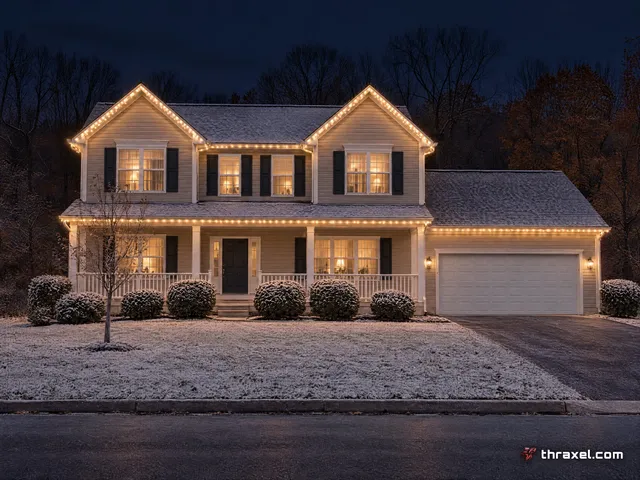
Toward the end of the install, the crew connects the system to your Wi-Fi and walks it through the Thraxel Lighting app on a phone, right there on your driveway. This is the moment the render becomes real light on your actual house, not a picture anymore.
You get shown Everyday Warm first, since that is the scene most homes run most nights, then a color scene so you can see the RGBWW range in person. If your system needs to work with Alexa, Google Home, Apple HomeKit or Control4, that pairing happens the same visit.
If any scheduling or scene automation was part of your quote, that gets set up here as well, so the roofline can already be running on a sunset timer before the crew ever leaves the driveway.
How long it actually takes
Most residential homes finish in one to two days depending on roofline length and how many zones you added beyond the roofline, things like columns, fascia detail, or a landscape tie-in. Larger homes or commercial properties with multiple buildings run longer and get scheduled accordingly.
Weather can push a day if conditions are unsafe for ladder work, the same way it can with any exterior trade. Tyson will tell you up front if your install window has any weather risk baked into it.
October and early November tend to be the busiest permanent install windows, since a lot of homeowners want the roofline finished before the holidays, so booking a few weeks ahead of a target date helps hold a preferred slot.
Before the crew leaves
The last step of install day is not actually the last step of the process. A final walkthrough happens once everything is live, covering how to run scenes, what the warranty covers, and answering anything you did not think to ask on the render call. That walkthrough is detailed separately at thraxel.com/blog/the-final-walkthrough/.
By the time the truck pulls away, your roofline is app-controlled from day one, backed by a warranty that runs three years on parts and one year on labor.
The crew also does a quick cleanup pass, packaging, spare hardware and any debris, before pulling out, so the yard looks like nothing happened except a finished roofline that lights up on command.