Color decision
Warm white or multicolor Christmas lights: which one fits your house?
Warm white shows off the house. Multicolor shows off the holiday. Neither is wrong, but each one suits certain homes, certain streets and certain families better. Here is the honest way to choose, plus the option that lets you stop choosing.

The quick answer
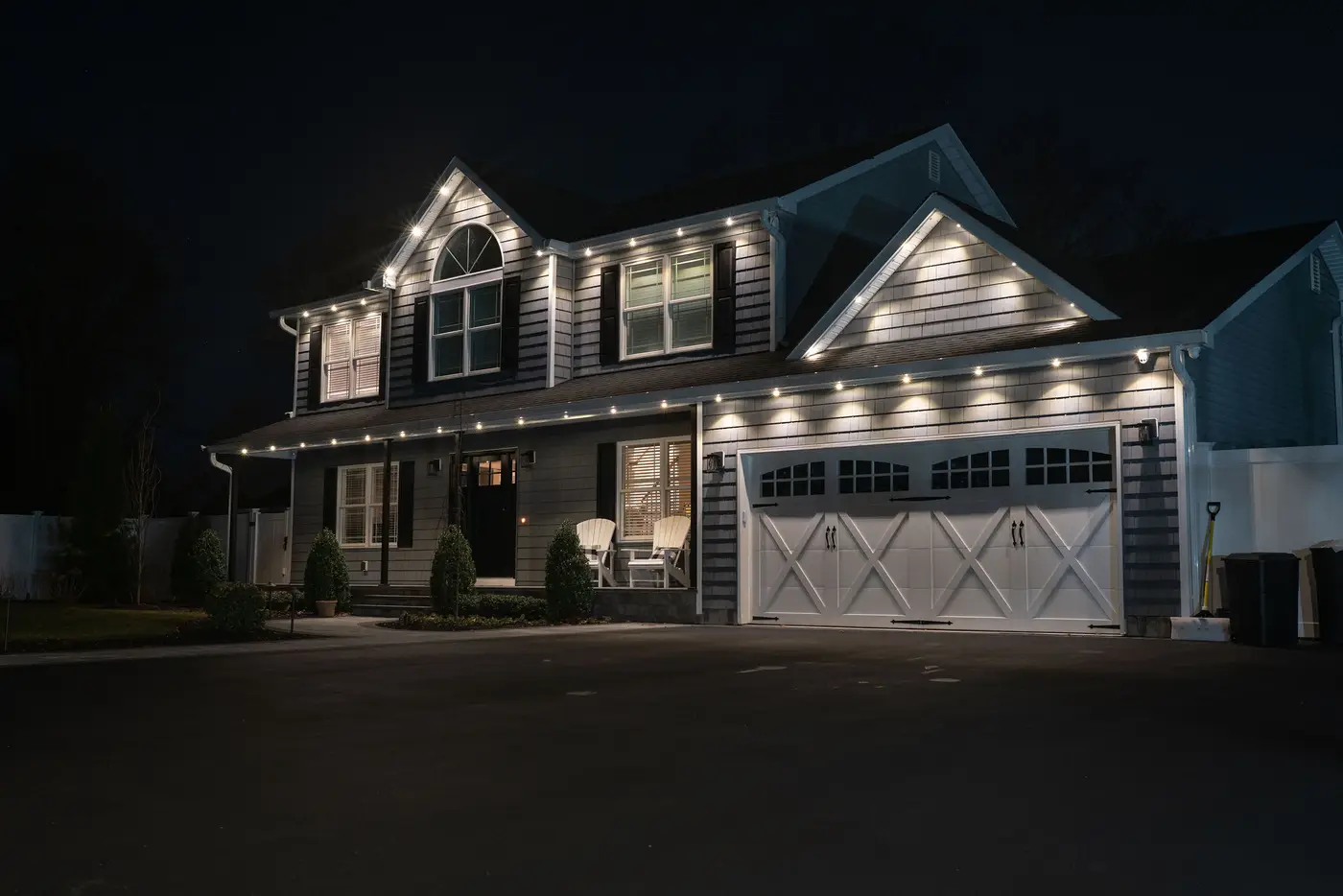
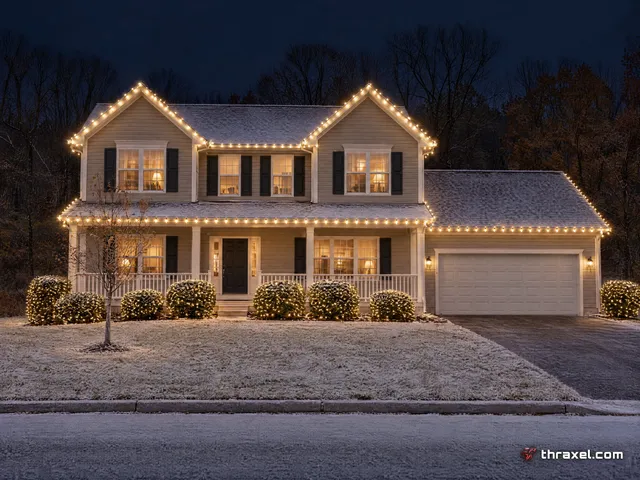
Choose warm white if you want the architecture to be the star: brick, stone, a strong roofline, columns, a stately entrance. Choose multicolor if you want the display to be the star: kids, tradition, the house the grandkids point at from the back seat. If you cannot decide, warm white on the roofline and color on the trees is the compromise that almost never looks wrong.
The third path is a permanent RGBWW system, which runs a true 2700K warm white one night and full multicolor the next from your phone. We come back to that at the end, because it changes the question entirely.
Why warm white wins on Western PA architecture
This region is full of brick colonials, stone farmhouses, foursquares and river-town Victorians. Those houses have good lines, and warm white traces them without competing. The color sits close to candlelight, so it reads as elegant rather than festive, and it flatters red brick and tan stone in a way blue or green bulbs simply do not.
Warm white also survives the whole season without looking tired. It goes up before Thanksgiving, carries through New Year's and does not feel out of place on January 3. Neighborhoods with an HOA or a tasteful-decor culture, like parts of Sewickley or the newer plans around Cranberry, tend to lean warm white for exactly that reason.
One caution. There are two whites. Warm white is golden and soft. Pure white, sometimes sold as cool white, is blue-tinged and stark. On a home they must not mix, and pure white on old brick can look clinical. If you want white, we recommend warm, and we hold that same tone across every strand and every piece of greenery.
Why multicolor still wins hearts
Multicolor is the Christmas most of us remember. Big C9 bulbs in red, green, blue, orange and yellow along a roofline are a direct line to the 1970s and 80s in towns like Indiana and Greensburg, where entire streets still do it. It is joyful, it photographs well against snow, and children do not care about architectural restraint.
It also does more work on a plain house. A ranch with a low roofline and few features can look sparse in warm white, but the same eave in multicolor becomes a display. If the goal is to be the house on the block, color gets you there faster.
The trade-offs are real. Multicolor demands more restraint elsewhere, because color on the roof plus color on the trees plus inflatables starts to fight itself. It also looks decidedly done after December 26, which matters for takedown timing. We start pulling lights January 4 as weather permits, so a multicolor house spends about a week in the awkward zone.
The mixed approach that usually works
Warm white on the roofline, color on the yard. That is the recipe. The eave and gables in warm white C9 give the house its structure. The trees, shrubs and a wreath in multicolor minis add the festive layer at eye level. From the road the house looks composed, and from the driveway it looks like Christmas.
A second mix that works is a single accent color. Warm white everywhere with red bows and a red-lit wreath, or warm white with one blue-lit spruce. Two colors, deliberately chosen, read as design. Five colors on every surface read as a garage sale.
We draw whichever version you are considering onto a render of your real house before anything goes up, which is where most people finally settle the argument. The whole seasonal program is described at thraxel.com/christmas/, and the bulb-size half of the decision is covered at thraxel.com/blog/c9-vs-mini-christmas-lights/.
- Warm white roofline plus multicolor trees: safest all-around look
- Warm white plus one accent color: cleanest, most designed look
- Full multicolor: the biggest, most nostalgic display, best on simpler houses
Neighbors, HOAs and the street
Look at the block before you decide. If every house on your street runs warm white, a full multicolor display will stand out, which is either the point or a problem depending on your neighbors. If the street is all color, one warm-white house reads as reserved and often gets the most compliments. Either way, know which side you are joining.
HOA covenants in the Pittsburgh suburbs sometimes limit color, flashing or the dates lights may stay up. Read the rules before you fall in love with a look, and remember that our takedowns run on a weather-dependent schedule starting the first week of January. Where a covenant sets a hard removal date, tell Tyson at the consult and the schedule is built around it.
The option that ends the debate
A permanent RGBWW roofline makes the warm-white-or-color question a nightly decision instead of an annual one. Every pixel can produce 16 million colors, and each one also carries a dedicated 2700K warm-white diode, so warm white is a real white and not the slightly off blend that RGB-only systems produce. Run Everyday Warm on a Tuesday, full multicolor on Christmas Eve, black and gold when the Steelers play.
The track is color-matched aluminum tucked under the fascia, invisible by day, and it has passed every HOA we have installed in. It is a bigger single purchase than a seasonal hang, and it is not the right buy for a house about to be re-sided or sold. For everyone else, it is the way to have both looks without a ladder. Details at thraxel.com/permanent/.
Seasonal or permanent, warm or color, it begins with a free consult and a render within 24 hours. Reach Thraxel by text or call at 724-859-4390 and tell us which side of the debate you are on.