Color science
RGBWW vs RGB: the diode that decides whether your white looks right
RGB lights make white by running red, green and blue at full power at the same time. It never quite lands. RGBWW adds a dedicated 2700K warm-white diode, so white is white. On a roofline you will look at 300 nights a year, that fourth diode is the whole purchase.
What the letters mean
RGB stands for red, green and blue. An RGB pixel has three tiny diodes and produces every other color by mixing them at different intensities. RGBWW adds a fourth diode that is only warm white, tuned to about 2700K, which is the color temperature of a classic incandescent porch bulb.
Both types can produce 16 million colors. The difference is entirely in how they handle white. Since warm white is the color a permanent system runs most nights of the year, the difference is not small. It is the look of your house from October to March.
Why mixed white looks wrong
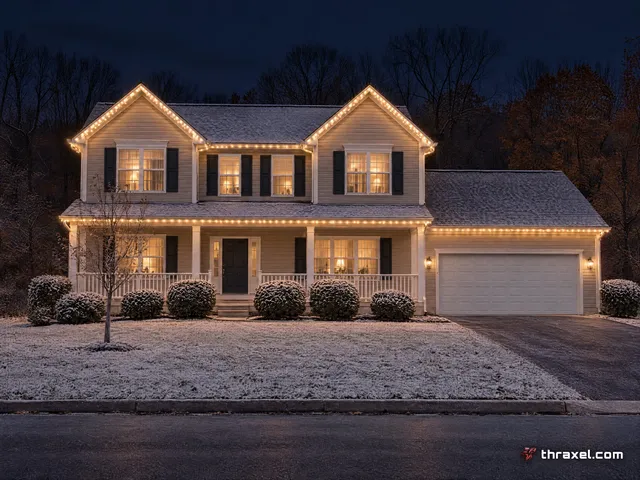
Run red, green and blue at full intensity and you get something the eye reads as white, but not quite. Depending on the diodes it leans pink, lavender or icy blue. Against a brick colonial in Indiana or a stone farmhouse in Westmoreland County, it looks like a lighting product, not like the house has porch lights along the roofline.
The other problem is brightness. A mixed white pushes all three color diodes at once, which is the hardest a pixel ever works, and it still cannot match the clean output of a diode built for the job. RGB-only systems tend to either look off-white or look dim in white mode, and sometimes both.
Homeowners rarely notice this on the demo. They notice it in December when the neighbor's roofline is a honey-warm glow and theirs is faintly purple. That is a bad time to learn what RGBWW means.
What the dedicated warm-white diode changes
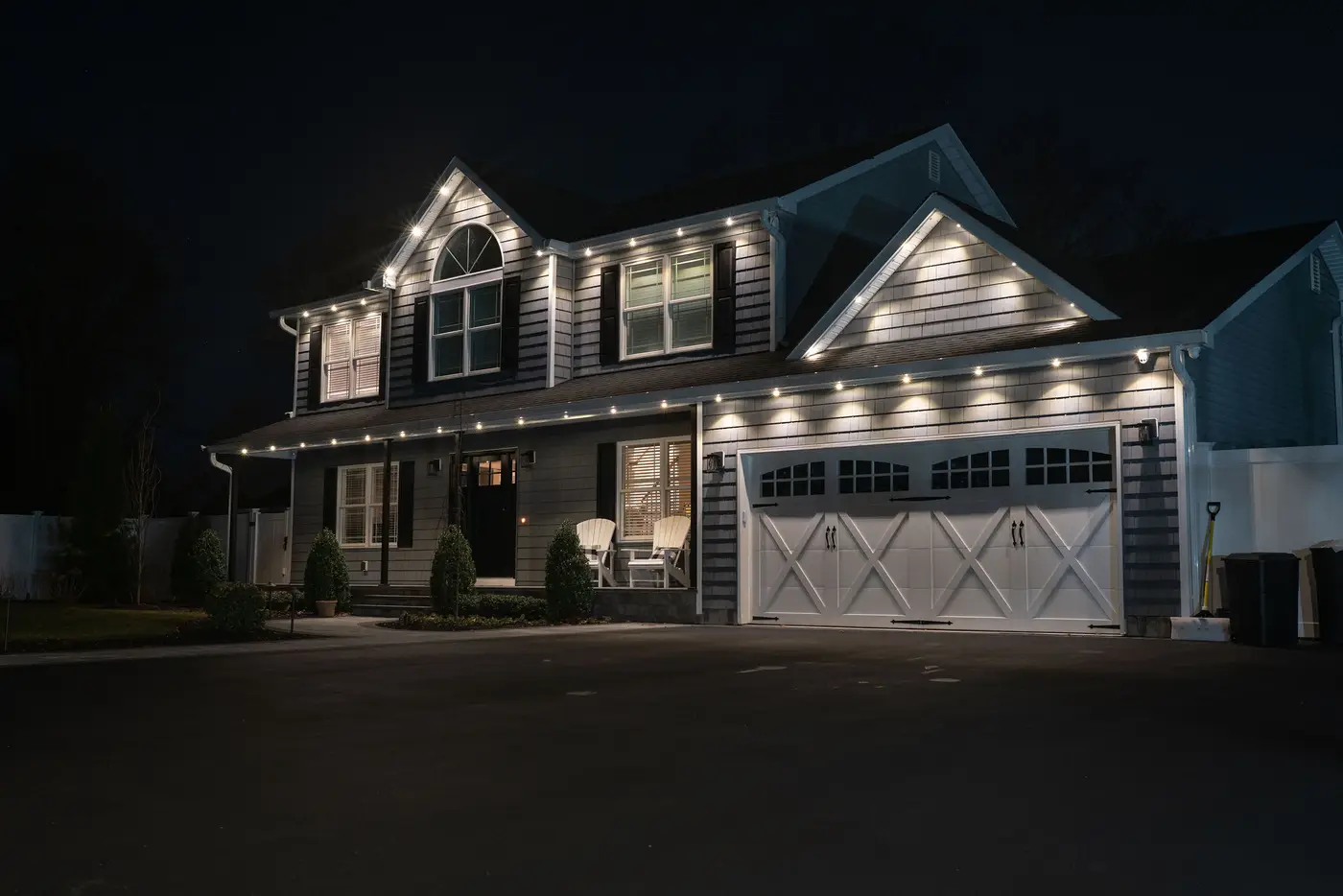
With RGBWW, warm white is its own channel. The controller turns off red, green and blue and drives the white diode alone. The result is a true 2700K, the same warmth as the bulb in a carriage lantern or a Christmas candle in a window. It matches the warm white our seasonal Christmas crews hang, so a house that switches from seasonal to permanent does not change character.
It also opens up mixes that RGB cannot do. Warm white plus a touch of red gives a candlelight amber. Warm white plus blue gives a cooler white for a modern home. Warm white as a base with color accents on the peaks is the most-requested look on our renders, and it only works when white is a real diode.
- True 2700K warm white for the Everyday Warm scene
- Cleaner pastels, because white is not fighting three colors
- Warm-plus-color blends for Valentine's Day, Easter and dinner-on-the-patio nights
What RGB is still fine for
Honesty check. If a system will only ever run saturated colors, RGB is fine. A commercial sign accent that runs red all year, a rail-tourism trestle that runs Christmas colors for a six-week season, a game-day fence line that is black and gold or nothing. Color-only jobs do not need the fourth diode.
For a house, that is almost never the use case. We have yet to meet a homeowner who wanted the roofline lit only in saturated color and never in white. The Everyday Warm scene exists because that is what people actually run.
How to check what you are being quoted
Ask the installer to put the demo in warm white and hold it next to your existing porch light. If the two match, it is RGBWW. If the strip looks bluish, pinkish or noticeably dimmer, it is RGB pretending. We bring a hard case with four live RGBWW strips, 128 LEDs, to every consult for exactly this test.
Ask for the color temperature in Kelvin. A real warm-white diode has a number, and ours is 2700K. Read the rest of the spec, IP67 silicone housing, 16-gauge wire, individually addressable pixels, at thraxel.com/permanent/, and compare it line by line to whatever else you are looking at. For a broader shopping checklist see thraxel.com/blog/questions-to-ask-a-lighting-installer/.
The bottom line for a Western PA roofline
You will run this system in warm white far more often than in any color. Buy the version that does warm white properly. The rest of the spec, the invisible track, the app, the 3-year parts warranty, matters, but none of it fixes a purple white.
See the difference on your own driveway before deciding. Request a free consult at thraxel.com/quote/ and the render of your house comes back within 24 hours. Tyson handles every quote personally; call or text Thraxel at 724-859-4390.