Local traditions
Western PA Christmas light traditions, from rowhouse strings to smart rooflines
Western Pennsylvania decorates on its own schedule and in its own colors, shaped by mill towns, river valleys and an early winter. Here is where the local style came from and how it still shows up on porches today.

Mill towns, rowhouses and the first strings of lights
Western PA grew up around steel, coal and rail, and its neighborhoods still show it. Tight rowhouses line the river towns, brick colonials fill the boom-decade suburbs, and farmhouses sit spread across the ridges above Armstrong and Indiana counties. Christmas lighting followed the housing stock it was hung on, house by house, generation by generation.
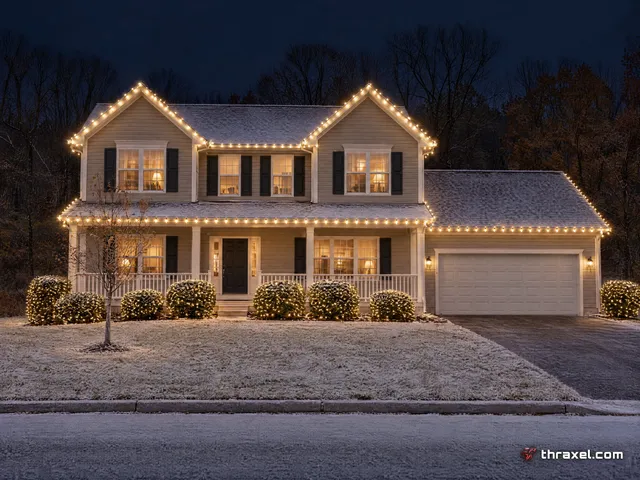
A rowhouse porch got a string of bulbs along the rail. A farmhouse got a lit evergreen visible from the county road half a mile off. Those early habits still shape what a display here looks like today. Warm white and classic red and green dominate over the flashier multicolor programs common in warmer, newer suburbs elsewhere in the country.
None of that was accidental restraint. It reflected what was practical for the housing stock at hand, a narrow rowhouse front, a modest farmhouse roofline, and it stuck because it worked and because it looked like everyone else's house on the block.
A calendar built around an early winter
The region also decorates on a compressed clock. Hard frost arrives early in Armstrong, Butler and Westmoreland counties, and the first heavy snow is never far behind it. That leaves a narrow window between Thanksgiving and mid-December when most rooflines go up, whether the crew is family or hired help.
Add in a football season that runs straight through the holidays and you get a local quirk few other regions share: black-and-gold porch lights in October, orange for Halloween, then the full switch to red and green once the turkey is gone. Same house, three looks, one season, and barely six weeks to fit them all in.
That compressed schedule is also why the region has never really embraced the earliest-possible-decorating culture some other parts of the country lean into. There simply is not much calendar room for a display that goes up before Thanksgiving and stays up past New Year's without running into the actual weather.
Neighborhood displays as an unspoken agreement
Drive any river town in December and you will find a block or two that clearly agreed, without ever meeting about it, to go all in. One lit roofline invites the next. It is friendly, mostly unspoken, and it predates professional installers by generations.
The pattern tends to start small, one house that has always decorated well, and grows outward over a few winters as neighbors notice and add their own version. Nobody organizes it and nobody keeps score out loud, but everyone on the street knows which houses set the bar.
- Rowhouse porches strung with classic bulbs along the rail
- Farmhouse evergreens lit and visible from the road
- Black-and-gold game day colors ahead of the holiday switch
- Whole blocks that fill in with lights over a few winters
Where a hired crew fits into an old habit
A professional install does not replace the tradition, it just takes the ladder out of it. Thraxel's seasonal program mirrors the shape families have always followed: lights go up once the weather cooperates after Thanksgiving, and takedowns start January 4 as conditions allow, with any in-season problem handled within 24 to 48 hours.
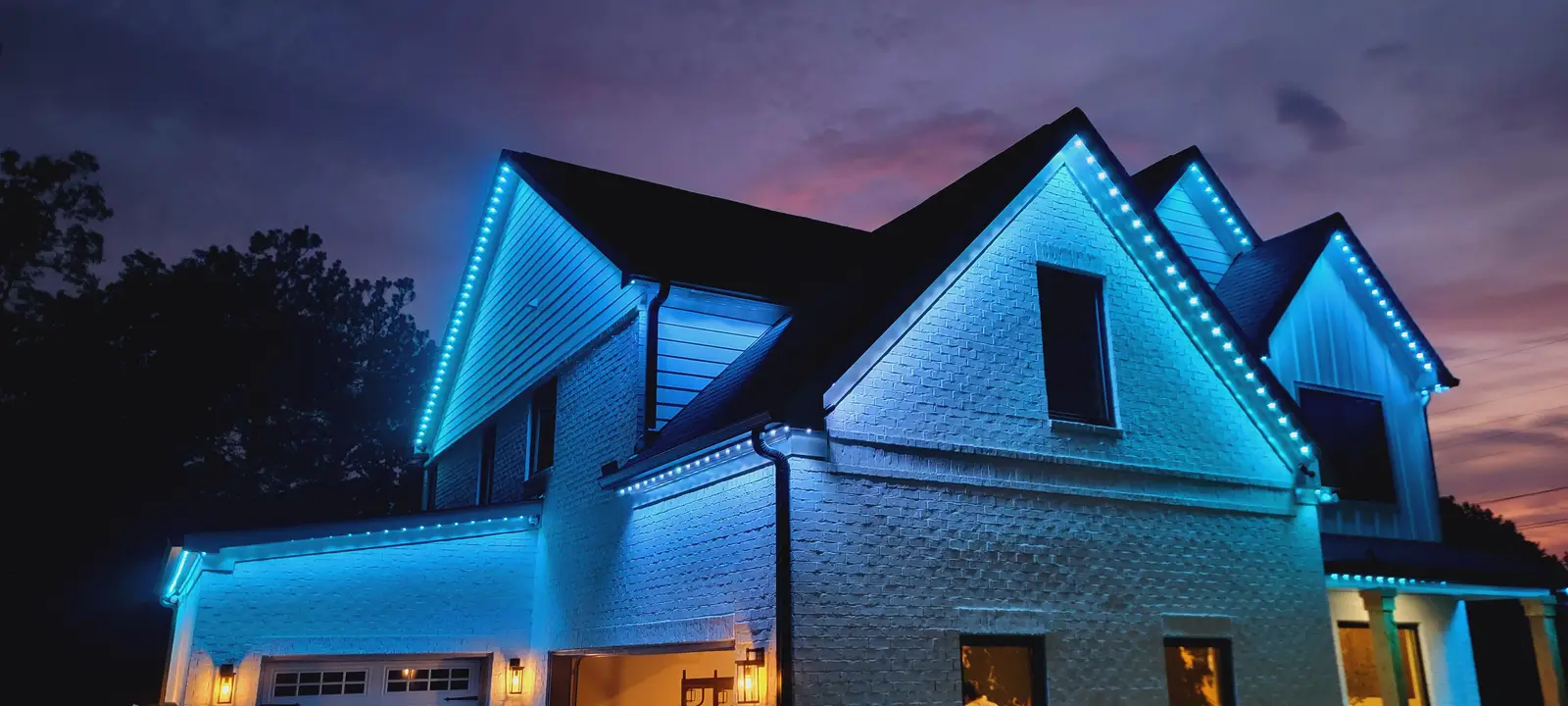
A growing number of households are also moving to a permanent system tucked under the eaves year round, so the same roofline can run Steelers colors in the fall and holiday red and green in December without anyone climbing anything. Both approaches are laid out at thraxel.com/christmas/ and thraxel.com/permanent/.
The choice between the two usually comes down to how many occasions a household wants the house lit for. One month a year still points a lot of families toward the seasonal program. More than that, and the math and the convenience both start pointing toward permanent.
The look changes, the impulse does not
What has changed since the rowhouse-and-farmhouse era is the technology, not the reason for doing it. People here still want the house lit for the season and the street to notice. What is different now is who ends up on the ladder, and for a growing share of homes, whether a ladder is involved at all.
That continuity is worth noticing. A rowhouse porch strung with bulbs decades ago and a permanent RGBWW roofline installed this year are aiming at the same basic goal: a house that looks alive and cared for during the darkest, coldest stretch of the year. Only the hardware in between has changed.
It is also worth remembering that none of this style developed in a vacuum. Housing stock, weather and a football schedule that runs straight through the holidays all pushed the region toward the same restrained, warm-toned look, and that combination of pressures is fairly unique to Western PA compared with regions that have milder winters or different sports calendars.
What to keep and what to update
For a household weighing how to decorate this year, the local traditions worth keeping are mostly about restraint and timing, warm tones over flashy ones, a display that respects the compressed season rather than fighting it. The parts worth updating are the physical labor and the risk, which is exactly what professional installers and permanent systems were built to remove.
Either way, the same street that has been agreeing on a lit-up December for decades is going to keep doing it. The only real question for any one house is how much of the work stays manual.
A free consultation is usually the fastest way to answer that question for a specific property, since a design mock-up of the actual house within 24 hours makes the choice between seasonal and permanent much easier to see than describing it in the abstract ever could.