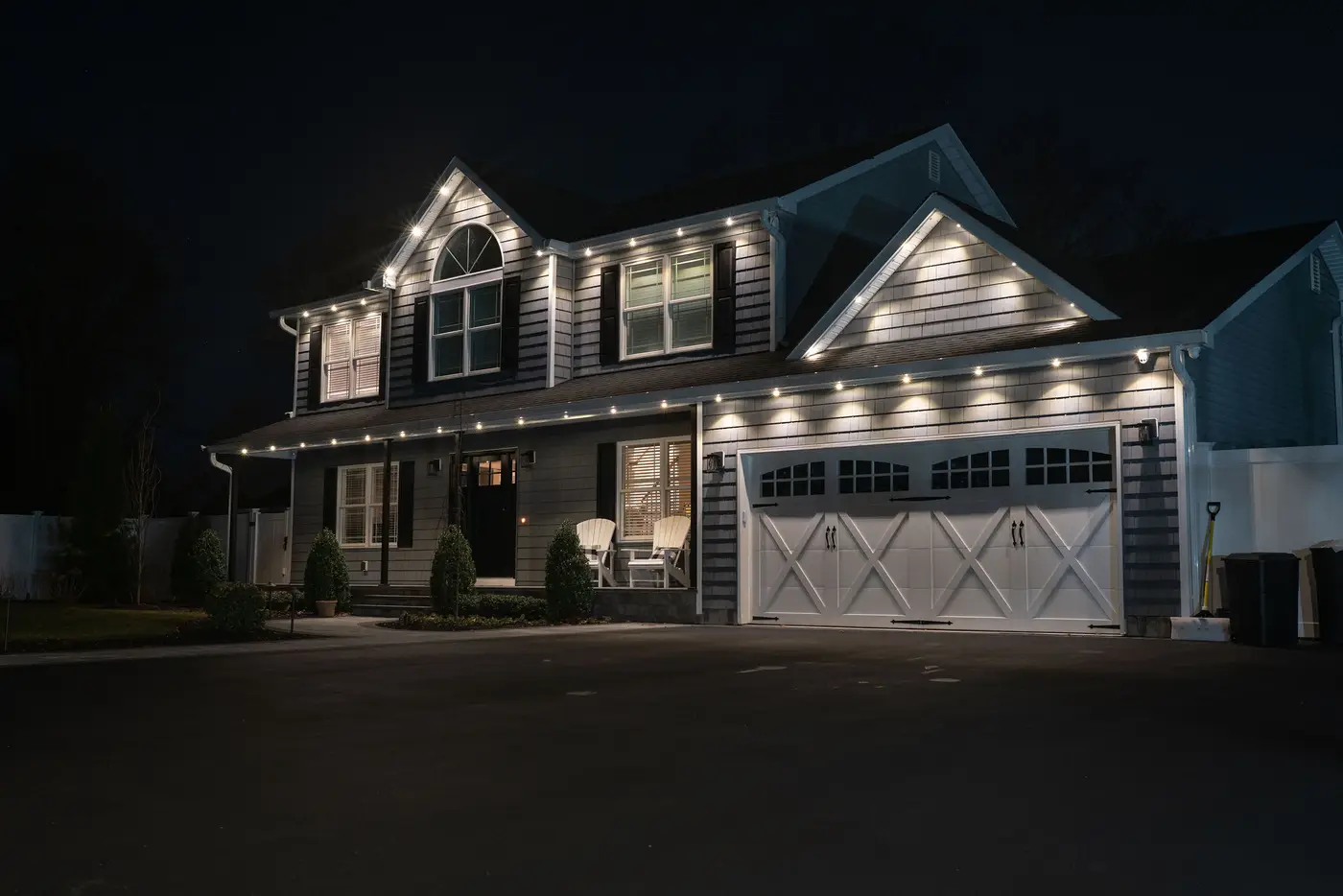
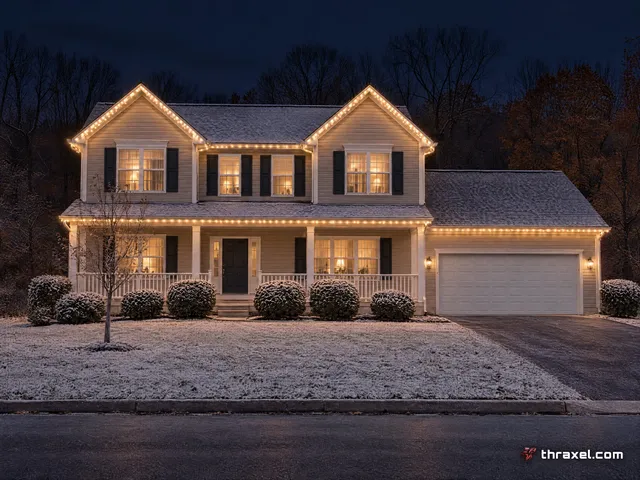
The dusk shot
Twilight listing photos, and why the lighting has to be real
Every real estate photographer wants the dusk shot: the sky still holding blue, the house glowing warm against it. Most get there with editing software and a single porch light. A lit exterior gets there with the actual house, which shows the moment a buyer drives up in person.

Why photographers chase this shot
The twilight window, roughly 20 to 30 minutes after sunset, is when a house photographs best. The sky still has color, interior and exterior lights balance instead of blowing each other out, and the whole scene reads warmer than a flat daylight shot.
Photographers who shoot this window with an unlit house are relying almost entirely on interior lamps and post-processing to fake exterior warmth. It can look convincing on a screen, but it sets an expectation the actual house does not meet in person.
Interior lamps alone cannot carry an exterior facade the way roofline lighting does, since lamp light reads through windows as scattered glow rather than a defined line tracing the building. A photographer working around that limitation often spends extra editing time correcting what the camera actually captured.
What changes when the house is actually lit
A permanent system running individually addressable RGBWW pixels along the roofline, columns and fascia gives a photographer real light to work with instead of manufacturing it in editing. The color-matched track that carries those pixels is invisible in daylight, so it does not show up as equipment in the shot.
It also means the shot is repeatable. The listing photo, the open house at dusk, and a walk-through video shot two weeks later all show the same lit exterior, because it is the same system running the same scene, not a one-time staging setup.
Individually addressable pixels also mean a photographer is not fighting an inconsistent string, since a single failed bulb on a big-box light strand can put an odd dark gap right where the camera is framing the shot. Each pixel here is diagnosed and replaced on its own, typically the same day, rather than the whole strand needing to be swapped.
What to schedule and when
Get the free consultation and the 24-hour render before booking a photographer, not after. That gives you a preview of the exterior look before committing to a shoot date, and it means the install can happen with enough runway before the sun starts setting earlier in the fall.
For sellers who only need the roofline and entry lit for photography purposes, that smaller scope is available without lighting the full property.
Fall listings compress the timeline the most, since sunset moves earlier through October and November across Western Pennsylvania, shrinking the usable twilight window and pushing agents to schedule the shoot earlier in the evening than they would in June.
- 20 to 30 minute twilight window is when most listing photos are shot
- Real exterior lighting removes the need to fake warmth in editing
- The same lit exterior works for photos, open houses and video walk-throughs
How agents use the same lighting beyond the photo shoot
A listing photo is one use of exterior lighting, not the only one. The same lit roofline shows up in a video walk-through, on a virtual tour link shared to a buyer's phone, and during an actual evening showing, which is the moment a buyer either recognizes the house from the listing photos or feels misled by them.
Agents managing several listings at once benefit from consistency across a portfolio. A house lit for one listing photo shoot and never touched again is a one-time expense, while a system controlled from an app can be scheduled to run through an entire listing period, open houses included, without a return visit.
The honest limit here
Lighting improves the exterior photo and the in-person twilight showing. It does not improve interior photography, staging, or a listing description. Treat it as one piece of the marketing package, not the whole plan.
A photographer with weak framing or bad weather on shoot day will not get saved by a lit roofline either. Lighting fixes one variable, exterior illumination, and leaves composition, timing and post-processing skill exactly where they were.