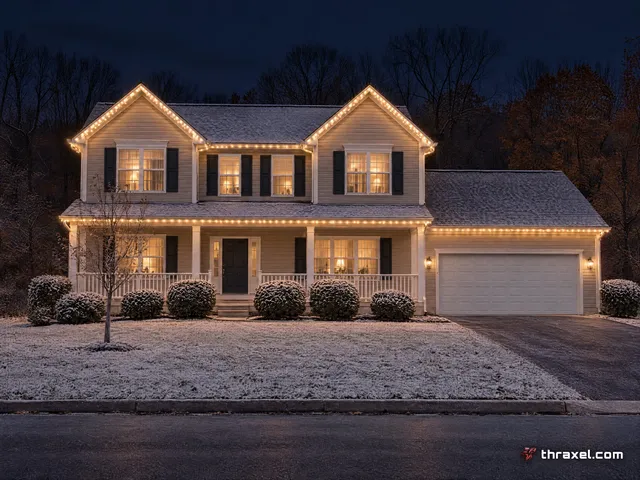
Old traditions, new system
The traditions a permanent lighting system keeps alive
Most household traditions do not end on purpose. They end because a ladder gets harder to climb, a house gets renovated, or one busy November everyone just skips it. A permanent lighting system removes most of the reasons that happens.
How traditions usually quietly stop
A family lights the house every year for a decade, and then one year they do not. Rarely is there a single reason. It is more often a slow accumulation: the person who always did it moves away, gets busy, or simply stops wanting to be on a roof in November. The tradition does not end loudly, it just fades out.
A permanent system takes the physical burden out of that equation entirely. Once the track and pixels are mounted, turning the display on is an app tap, not a project, which removes the single most common reason a tradition quietly dies.
Talk to almost any household that let a display lapse for a few years and the story tends to sound similar: nobody decided to stop, the season just got busy once, then twice, and by the third year putting the boxes away without unpacking them had become its own quiet habit.
One system, every occasion, not just December
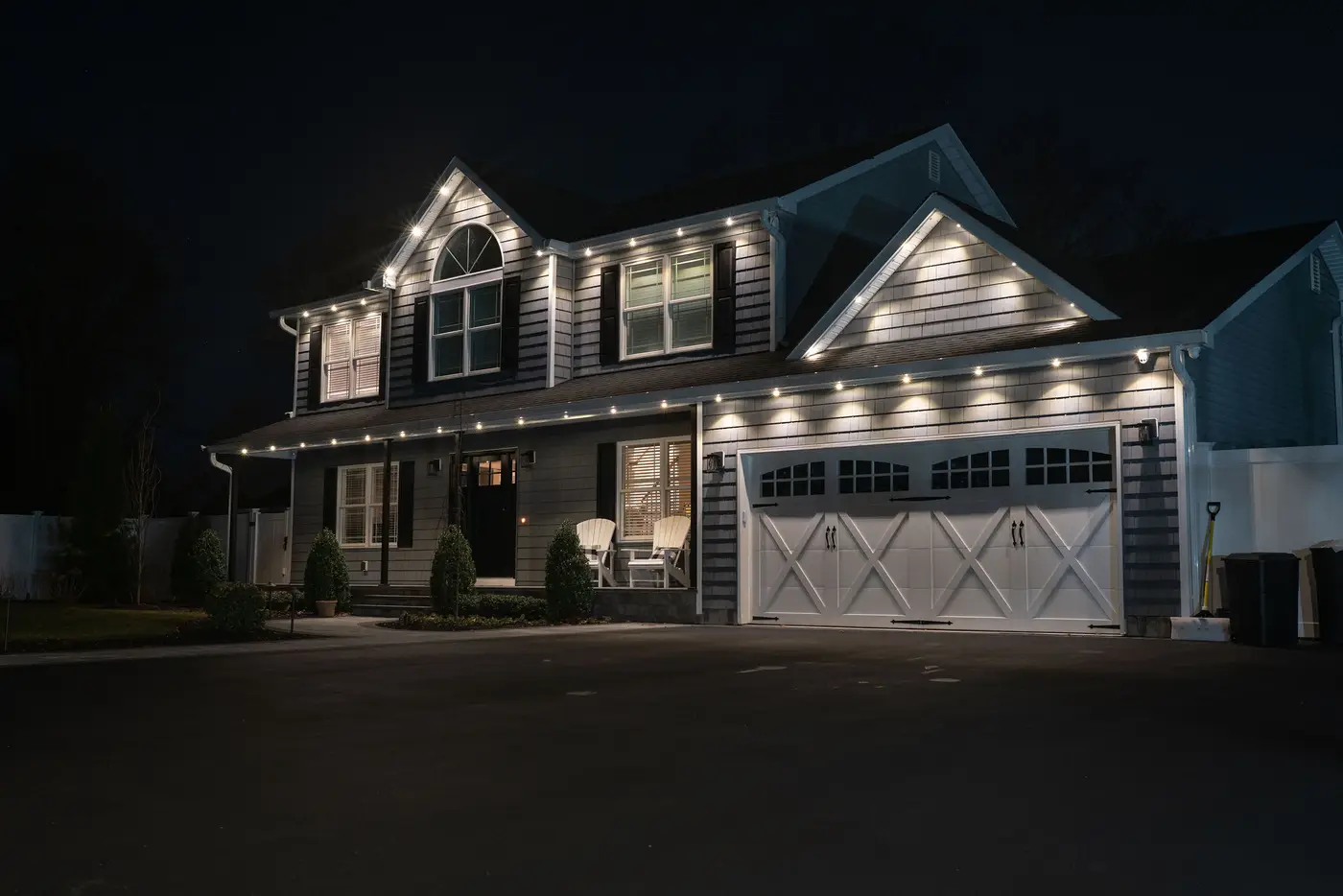
Because the pixels are individually addressable and can produce 16 million colors plus a true 2700K warm white, the same roofline that runs red and green in December can switch to orange and purple for Halloween, black and gold on a Sunday, or warm white on an ordinary Tuesday.
That flexibility means a family is not choosing one tradition over another when they install permanent lighting. The Christmas display, the game day display and the everyday warm look all live on the same fixtures, ready whenever the season calls for them.
It also means a house never sits fully dark between holidays the way a seasonal-only display does. The roofline stays part of the household's routine year round instead of appearing for one month and disappearing for eleven, which changes how much the family actually engages with it.
Kids growing up with the house lit
For a family with young kids, a permanent system means the house can be lit every year without depending on whether a parent has the time or the physical ability to hang lights that particular season. The tradition becomes something the kids simply grow up with, unconditionally, rather than something that depends on a good weekend in November.
That consistency matters more than it might seem. A tradition a child can count on every single year, without exception, tends to become part of how they remember the season itself, in a way that an inconsistent display never quite manages.
The renovation problem, solved differently
One real threat to a lighting tradition is a home renovation, a new roof or new siding that makes last year's setup obsolete. Thraxel generally recommends waiting on a permanent install until major exterior work is finished, so the track goes onto the final fascia, not one that is about to be replaced.
Once that work is done, though, a permanent install becomes the version of the tradition that does not need revisiting again for years. It is one install, backed by a 3-year parts and 1-year labor warranty, rather than a decision remade every season.
A tradition without the ladder attached
The traditions Western PA families actually value, the house lit for the neighborhood, the switch flipped on the first cold night, the Christmas Eve glow, were never really about the ladder. A permanent system keeps the part that matters and removes the part that eventually ends it.
That distinction is worth sitting with for any household that has let a display lapse in recent years, not out of a lack of interest, but because the physical work of putting it up became more trouble than it was worth for whoever used to handle it.
Making the switch without losing the look
A common concern when moving from a seasonal display to a permanent system is losing the specific look a family has built its tradition around. In practice, the true 2700K warm-white diode gives a close match to classic warm holiday lighting, and the free consultation and design mock-up let a household see exactly how their own roofline will look before committing to anything.
That render step matters most for families worried about breaking with a specific inherited style. Seeing an accurate mock-up of the actual house, rather than a generic example photo, tends to resolve most of the hesitation around switching, since the comparison becomes concrete instead of hypothetical.
Why the switch tends to happen after a specific moment, not gradually
In practice, a lot of households do not decide to switch to permanent lighting on a calm afternoon of comparison shopping. It tends to follow a specific moment: a fall off a ladder that did not go well, a season skipped because nobody had the time, or simply the tenth November in a row of digging strands out of a garage bin.
That pattern is worth naming, because it means waiting for the perfect moment to switch is often just waiting for the tradition to slip a little further first. A free consultation costs nothing and does not commit a household to anything, which makes it a reasonable step to take well before any of those breaking points actually happen.
Families who make the switch proactively, before any specific incident forces the decision, tend to describe it less as solving a problem and more as simply removing an annual chore that had stopped being worth the effort a few seasons earlier.
The version of the tradition that outlasts any one homeowner
A permanent system also tends to outlast a single owner's tenure in a house. Because the track and pixels stay under the eaves as part of the property, a new family moving into a home with permanent lighting already installed inherits a fully working display rather than an empty roofline and a decision to make from scratch.
That is a small but real way the tradition can keep going even when the people living in the house change entirely, which is not something a seasonal display, packed away and owned by whoever hung it, can offer in quite the same way.