The default look
Everyday Warm: the scene most permanent lighting owners actually use
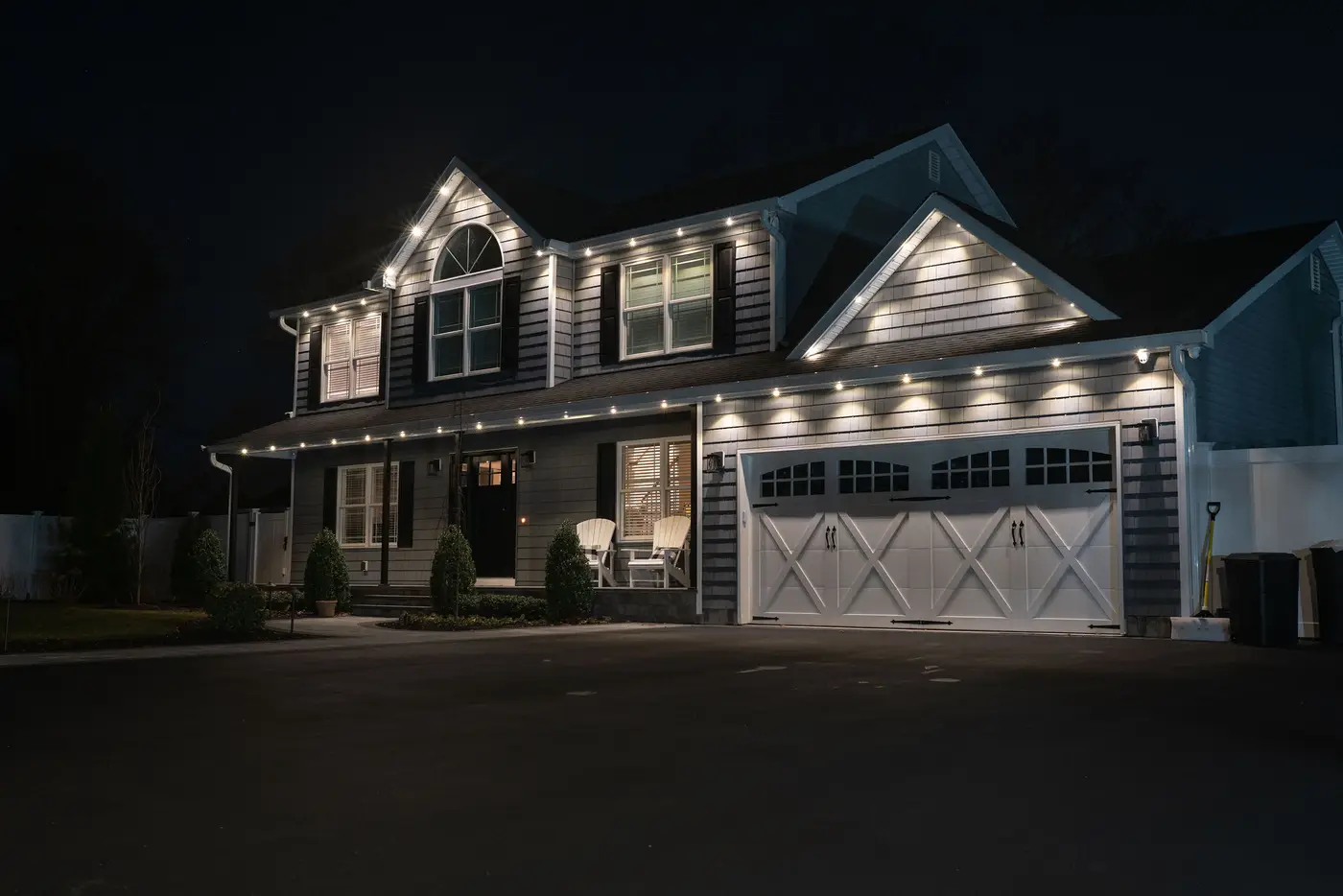
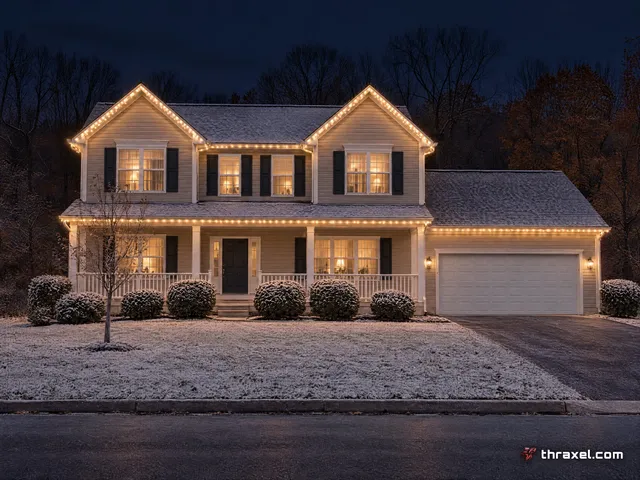
Halloween gets one night. Christmas gets a season. The Everyday Warm scene is what a permanent lighting roofline runs the other 300-plus nights of the year, and it is the reason a true warm-white diode matters more than most homeowners expect going in.

Why it is called Everyday
Most homeowners install permanent lighting expecting to use it for holidays and forget that the system also has to work as an ordinary porch light replacement for the rest of the year. Everyday Warm is built for exactly that, a clean, consistent white that a house can run every single night without it looking like a decoration.
It is the scene we set as the default during the final walkthrough on most residential installs, precisely because it is the one homeowners end up using most often once the novelty of color scenes settles down.
The name is deliberately plain. There is no marketing flourish in calling it Everyday Warm rather than something more elaborate, because the whole point of the scene is to be the reliable, unremarkable option a house leans on every single night, not a feature that has to compete for attention.
Why a real white diode matters here
An RGB-only lighting system fakes white by blending red, green and blue at close to equal intensity. It can look convincing in a photo, but next to a genuine white light source it reads slightly off, usually a touch cool or a touch pink depending on the blend.
The Thraxel system pairs its RGB pixels with a dedicated 2700K warm-white diode built into the same housing, so Everyday Warm is an actual white light source, not an approximation. That distinction matters most on this exact scene, since it is the one running the majority of the year.
2700K is the same color temperature most homeowners already associate with a warm incandescent bulb indoors, which is part of why Everyday Warm tends to feel familiar rather than like a lighting product. It matches the general warmth of interior lighting most houses already run, rather than introducing a colder, more clinical exterior tone.
What it costs to run
A typical 168-LED install running Everyday Warm six hours a night costs about $52.80 a year in electricity, with each pixel drawing roughly 0.3 watts. That figure covers a scene running every night of the year, not a seasonal display running for a few weeks.
For comparison, that annual cost applies whether the scene is warm white or a full-color display, since the wattage draw is similar across colors on this system. The everyday use case is simply the one adding up the most total hours per year.
Homeowners occasionally ask if running Everyday Warm year-round costs meaningfully more than a shorter seasonal display. It does not, in practical terms. The per-pixel wattage is low enough that even a scene running 300-plus nights a year stays well under what most households spend on a single traditional exterior floodlight left on the same schedule.
Where Everyday Warm fits into the schedule
Most homeowners set Everyday Warm to run on an automatic dusk-to-set-time schedule through the app, then let holiday and event scenes override it temporarily for Halloween, the Fourth, or a birthday. When the temporary scene ends, the house reverts automatically rather than needing a manual switch back.
That default-and-override structure is part of why a lot of owners describe the system as something they stop thinking about after the first few weeks. It is simply the house's normal after-dark look until a specific occasion calls for something else.
Scheduling and sunset automation is handled in the app itself, so the dusk-to-set-time timing adjusts automatically as the seasons change rather than needing to be manually reset every few weeks through a Western PA winter and summer.
- Runs on the same dedicated 2700K diode as the rest of the app's white output
- Roughly $52.80 a year for a typical 168-LED home at six hours a night
- Automatic scheduling with holiday scenes able to override it temporarily
Compatible with Alexa, Google Home, HomeKit and Control4
Because Everyday Warm is the scene most homeowners leave running most nights, a lot of people end up interacting with it through a smart home platform rather than the Thraxel Lighting app directly. The system works with Alexa, Google Home, Apple HomeKit and Control4, so a voice command or an existing whole-home automation routine can turn Everyday Warm on at dusk without opening a separate app.
That integration is not exclusive to Everyday Warm, every scene is available through the same connections, but it is the scene most homeowners actually wire into a nightly routine, since it is the one running on a normal Tuesday rather than a specific occasion.
For a camper or RV application, the system runs on Bluetooth instead of Wi-Fi, and Everyday Warm works the same way there, a simple, reliable default that does not depend on a network connection to switch on.
Getting a system that runs Everyday Warm well
If a house does not have permanent lighting yet, the roofline zones best suited to Everyday Warm, eaves, soffits, columns and fascia, are the same ones covered in a standard consultation. Details on the full system are at thraxel.com/permanent/.
The free design mock-up returned within 24 hours shows the roofline in a general lit state rather than a specific scene, but Everyday Warm is the closest visual match to what that render represents, since it is the baseline look the house will carry most nights of the year.
Text Thraxel at 724-859-4390 to schedule the free on-site visit, and ask specifically to see the warm-white output during the driveway demo before committing to anything.
The driveway demo case, four live RGBWW strips controlled from the app right in front of you, is the fastest way to judge the warm-white output for yourself rather than relying on a description. Most homeowners run the demo through Everyday Warm first before moving on to any of the color scenes.