HOA playbook
What Western PA HOAs actually say about permanent lighting
Most HOA covenants in the Pittsburgh suburbs were written before permanent roofline lighting existed. That is why the answer to the question is usually yes, once the board sees a system that disappears by day and has cleared every association we have installed in.

Start with the covenants, not the rumor
Every homeowners association in Western Pennsylvania runs on a recorded set of covenants, conditions and restrictions, plus a thinner set of architectural guidelines the board updates now and then. The covenants are the law of the street. The guidelines are the interpretation. Before anyone talks about lights, pull both documents and read the exterior modification section.
In our experience, most HOAs around Pittsburgh have language about holiday decorations and language about exterior alterations, and nothing that names permanent lighting directly. That gap is normal. The product is newer than the paperwork. It also means the board will decide by analogy, so how you describe the system matters more than people expect.
A quick way to sort it out: search the documents for the words lighting, decoration, fixture and alteration. Those four words surface nearly every clause that could apply. If none of them mention a roofline system, plan on filing an architectural request and treating it as a minor exterior change.
What the rules usually cover
Across the associations we have worked with, the same handful of concerns repeat. Boards want a uniform look during the day. They want holiday displays up and down on a schedule. They want no glare into a neighbor's bedroom, and they want nothing that reads as commercial signage on a residential street.
Notice what is missing. Almost none of those concerns are about whether a house can be lit at night. They are about what the house looks like at noon and how the neighbors feel at midnight. A system that is invisible in daylight and dimmable from a phone answers both without a fight.
- Daytime appearance: exposed wire, visible clips, mismatched hardware
- Seasonal windows: when holiday displays may go up and must come down
- Nuisance: brightness, flashing, spill onto adjoining lots
- Attachment: what may be screwed into siding, trim or roofing
- Color: some covenants restrict exterior colors, which can extend to the track finish
Where permanent lighting fits the language
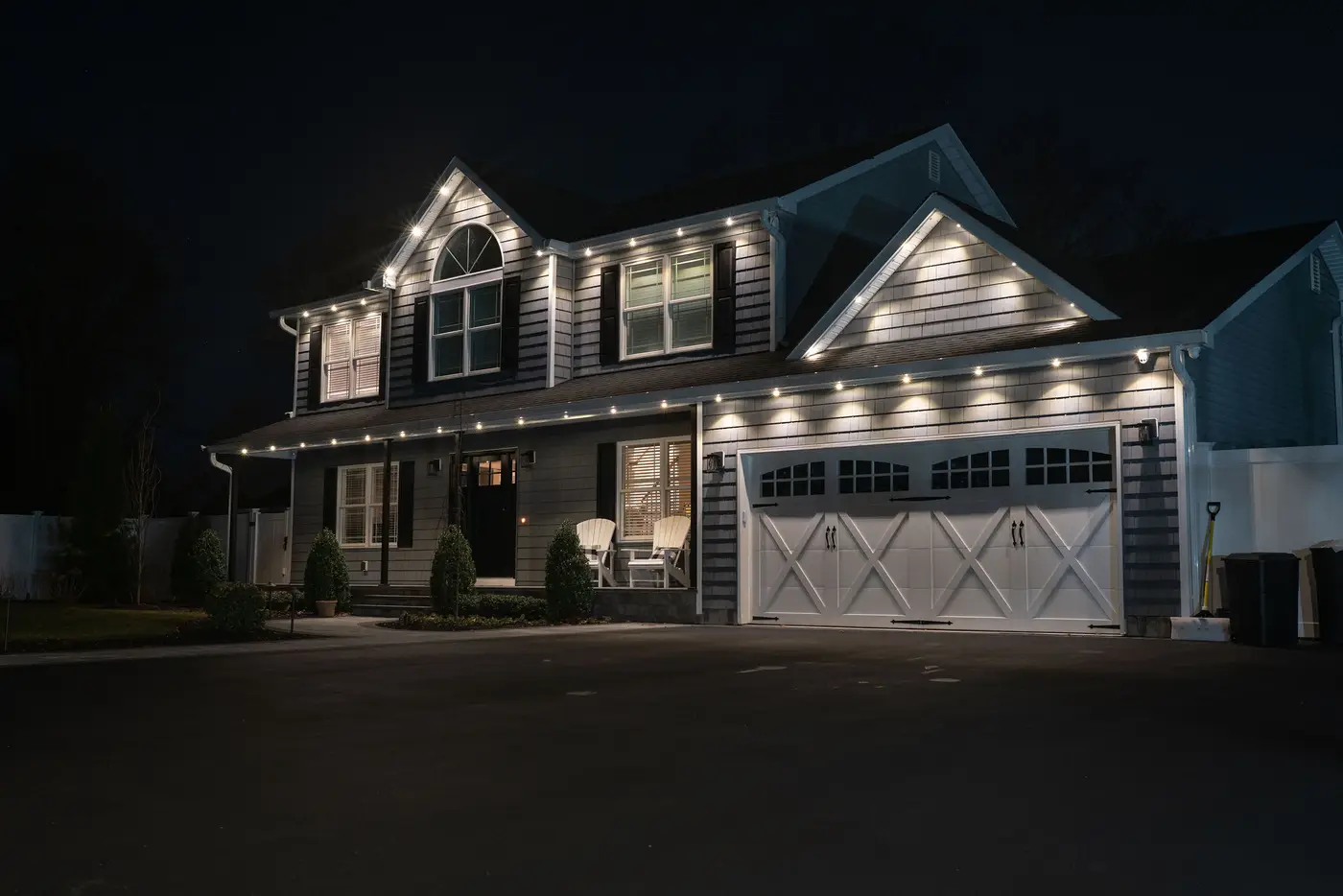
Our track is aluminum, matched to the fascia or trim color, and mounted tight against it. From the sidewalk in July there is no product to see, which is exactly what the daytime uniformity clause wants. The pixels sit inside the channel rather than hanging from clips, so the exposed wire objection never comes up.
The seasonal window clause is where permanent systems win outright. There is nothing to take down in mid-January, because nothing went up in November. You run a Christmas scene until the association's date, then switch to Everyday Warm and the house looks like every other house on the street, only finished.
On nuisance, the app gives you brightness control and scheduling. If a covenant says exterior lighting off by 11, you set the schedule once and forget it. We have yet to be turned down by an association, and that record covers a lot of different covenant language across the region. The full system is described at thraxel.com/permanent/.
The neighborhoods where this comes up most
The HOA question shows up on nearly every quote we run in Cranberry Township, Wexford, Mars, Peters Township and Upper St. Clair. Those communities were built in waves from the 1990s on, and most plans carry an active association with an architectural committee that meets monthly.
That monthly meeting is the thing to plan around. Submit in September and you are typically approved with time to install before Thanksgiving. Submit the week before the holiday and you may be waiting on a January vote for lights you wanted in December. See thraxel.com/areas/cranberry-township/ for how we run that corridor.
Older plans in Butler, Kittanning and the river towns are far less likely to have an association at all. There the question shifts from HOA to township, which is a different conversation covered in thraxel.com/blog/township-ordinances-and-outdoor-lighting/.
What can still go wrong
Honesty matters here. A board can say no to anything it wants within the covenants, and a few rare associations ban all exterior alterations without a variance. If your documents prohibit attachments to the fascia of any kind, that is a real obstacle and we will tell you so at the consult rather than after the deposit.
The other failure mode is skipping the request entirely. An unapproved install can draw a fine, a demand letter and a forced removal. It almost never comes to that, but the cost of asking is one form and a month of patience, and the cost of not asking can be the whole system.
Color restrictions occasionally surprise people. A covenant that limits exterior colors to an approved palette may technically apply to the track finish. Since the channel is matched to your existing trim, it lands inside the palette by definition, but say so in the application.
How we handle it on a real install
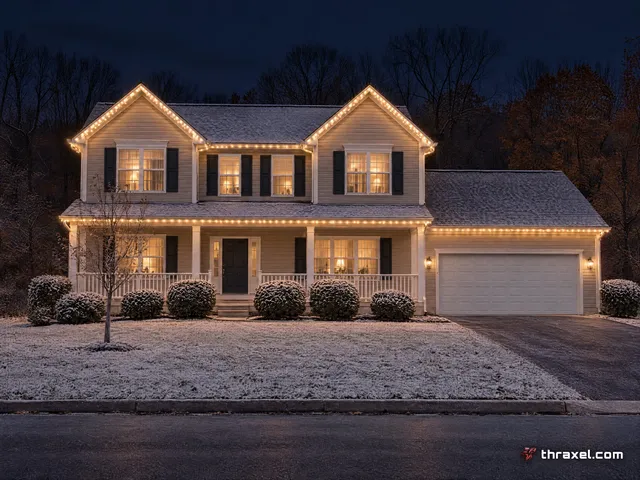
It begins with a free on-site consultation and a render of your actual home, back to you inside 24 hours. That render is the single most useful attachment for an HOA packet, because it shows the board a photograph of your house with the track in place instead of a manufacturer's brochure.
We supply spec sheets on the IP67 housing, the UL, ETL and CUL certifications and the track finish, and we will write a plain-language description of the install for the committee. You submit, the board votes, and installation follows approval. Most homes take one to two days once we are cleared.
If you live in an HOA plan anywhere in our footprint and want a straight read on your covenants, text a photo of the exterior section to Thraxel at 724-859-4390. Tyson has read enough of them to tell you in a few minutes where you stand.