Retail and plazas
Retail plaza lighting: one install, a scene for every season
A strip plaza with permanent RGBWW lighting looks open on a Tuesday in February and looks like an event on Black Friday. The difference between the two is a schedule entry, not a crew and a lift.

What a plaza is fighting against
Retail in Western PA competes with a phone. The thing a plaza can do that a phone cannot is be visible from Route 8, Route 22 or Route 30 at 6 p.m. in January. Most plazas give that up by going dark above the sign band.
A lit parapet line across a plaza turns a row of individual storefronts into one destination. Tenants get the halo without buying anything. Landlords get a building that photographs well for leasing. Everyone gets a parking lot that feels safer to cross in winter.
The hardware is the same system we install everywhere: color-matched track, RGBWW pixels, app control, described at thraxel.com/permanent/. What a plaza adds is the scene calendar.
The scene calendar for retail
Each of those is saved once and scheduled by date. A property manager approves the calendar in September and does not touch it again. Tenant grand openings, sidewalk sales and holiday markets get a one-off scene the manager can trigger from a phone.
We wrote up the individual scenes in more detail. Start with thraxel.com/blog/halloween-lighting-scenes/ for the October look and thraxel.com/blog/steelers-game-day-lighting/ for game days.
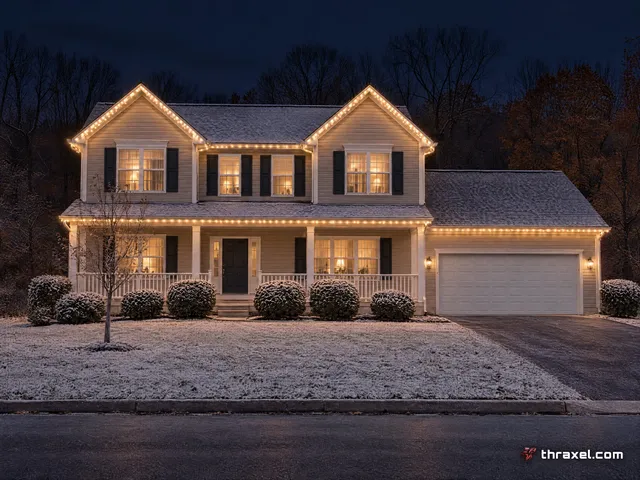
- January through September: Everyday Warm, true 2700K white from a dedicated diode
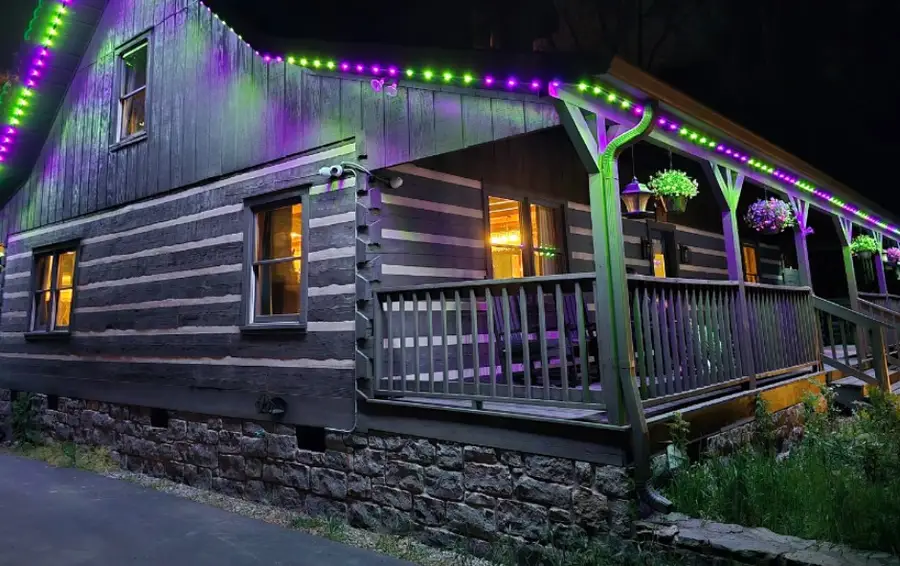
- Mid to late October: orange and purple for Halloween
- Thanksgiving through January 6: red and green, or warm white with red accents for a quieter look
- Fourth of July week: red, white and blue
- Any Steelers Sunday: black and gold
- February 14 and March 17: pink and red, then green
Zoning a multi-tenant building
A plaza is never one zone. We break it into the parapet or roofline, the entry canopies, the pylon or monument sign, and the landscape islands and walkways. Anchor tenants sometimes get their own bay as a zone so a grocery or pharmacy can run its brand color while the rest of the building stays warm.
Independent zones also solve the tenant-mix problem. A church tenant may not want Halloween; a bar may want it loud. Zoning lets the manager keep the peace without giving up the calendar.
Signage and facade accents are a listed zone for us and they are usually the part tenants notice first. A lit sign on a lit building reads as one composition.
The cost conversation, without prices
We do not put Thraxel prices in blog posts. Every plaza differs in run length, mounting surface and power access, and the quote is free. National industry estimates for permanent lighting commonly fall between roughly $20 and $50 per linear foot installed, and your property will differ, which is why we measure on site.
What the number replaces is easier to state. A plaza that hangs seasonal lighting pays for a lift, a crew, a repair visit and a takedown every year, for a display that runs six weeks. A permanent system is one install with 3 years on parts and 1 year on labor, and it runs 52 weeks.
Electricity is a rounding error next to parking lot lighting: roughly 0.3 watts per pixel.
Install logistics on an occupied plaza
We install around tenant hours. Lifts stay out of fire lanes, entrances stay open, and the crew works when weather permits, which in Western PA means we plan spring through fall for most plaza work. Plaza installs take a few days depending on frontage.
The process starts with a free site visit and a render of your actual plaza within 24 hours, which is what landlords use to get owner or REIT sign-off. Commercial quotes go through thraxel.com/quote/ with the commercial property type, and large multi-building projects go to AJ at 240-730-4064.