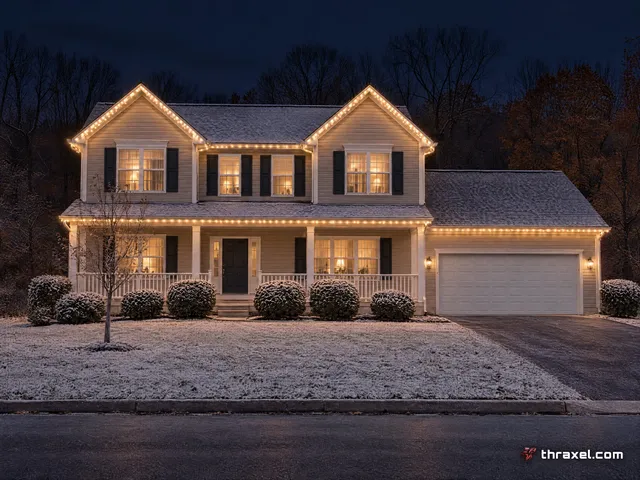
October, done right
Halloween lighting scenes that take ten seconds to turn on
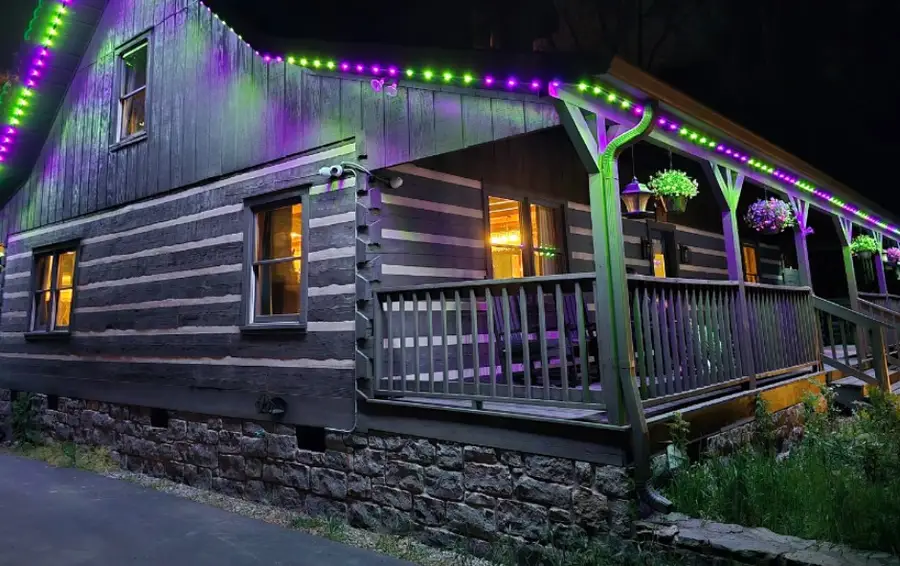
A Halloween scene on a permanent Thraxel system is orange and purple along the eaves, green on the porch, and a slow chase across the peaks, saved in the app and started with one tap. No strands, no cords, no ladder in the cold.
What a Halloween scene actually is
A Halloween scene is a saved combination of colors and patterns that your roofline, porch and landscape lights jump to when you tap it in the Thraxel Lighting app. Nothing gets hung. Nothing gets plugged in. The same pixels that run warm white the rest of the year switch to orange and purple, and they switch back the same way.
Halloween is one of the scenes we set up on every permanent install, alongside Everyday Warm, Game Day, Christmas and July 4th. You can leave it exactly as we built it or open it up and change the colors, the speed and which zones take part. The full system rundown lives at thraxel.com/permanent/.
Because every pixel on the house is individually addressable, one scene can do more than one thing at a time. The eaves can run a slow orange and purple alternating pattern while the columns hold solid purple and the porch sits in a sickly green. One tap, three looks.
Orange, purple and the colors people forget
Orange and purple is the default because it reads as Halloween from a block away, and both colors sit well against brick, stone and vinyl. But you have 16 million colors to work with, so there is no reason to stop at two.
Acid green is the one people forget, and it is the one that makes a display look intentional instead of generic. A green wash on a porch ceiling or under a bay window, with purple above it, looks like a set rather than a strand of lights. Deep red works for a haunted-house feel, and dim cold blue-white reads like moonlight on a farmhouse.
What we steer people away from is running every color at full brightness at once. A Halloween scene looks better with two or three colors and some restraint. Brightness is adjustable per scene, and a roofline at 60 percent usually photographs better than one at 100.
- Classic: orange and purple alternating along the eaves
- Haunted: deep purple roofline, green porch, everything else dark
- Pumpkin patch: solid orange with a slow warm flicker
- Moonlight: dim cold white on the peaks only
Zone by zone: roofline, porch, columns, landscape
The roofline carries the scene. Eaves, peaks and gables are where the color shows from the street, and where an orange and purple chase moves the eye across the whole front of the house.
Columns and porch posts are the second layer. Wrapping a column in solid purple while the roofline moves creates depth, and the porch is where trick-or-treaters actually stand, so it is worth lighting well.
Landscape zones close the loop. If you have uplights on the trees or a wash on a stone wall, they join the same scene. An orange uplight on a bare October maple in Armstrong County is about as seasonal as it gets. The addressable side of the system is explained at thraxel.com/blog/individually-addressable-pixels-explained/.
Timing it for trick-or-treat night in Western PA
Many Western PA boroughs and townships set their own trick-or-treat night and hours, and it is often not the 31st. Build the scene around that night, not around the calendar date.
We suggest turning the Halloween scene on in mid-October and leaving it. Two weeks of orange and purple gives the neighborhood time to notice, and the kids know which house to hit first. On trick-or-treat night itself, bump the brightness and put the porch zone at full so the steps are safe.
If the system is tied to Alexa, Google Home or HomeKit, the scene can be part of a routine with your other smart devices. Otherwise it is one tap in the app on the drive home from work.
Keeping the neighbors on your side
Halloween is the one holiday where a little chaos is expected, but a strobing purple roofline at 2 a.m. is still a strobing purple roofline at 2 a.m. Keep motion effects slow. Drop to a dim static color, or turn it off, at a reasonable hour. The neighbor with a newborn will remember either way.
HOAs generally do not care what color a permanent system runs, because nothing is mounted that was not there yesterday. The track is color-matched to the trim and hidden against the fascia by day. If your board has a lighting rule at all, it usually covers temporary decorations and removal deadlines, and a permanent scene triggers neither. Butler County subdivisions are a good example, see thraxel.com/areas/butler/.
Back to warm white on November 1
On the morning of November 1, tap Everyday Warm and the house goes back to a 2700K warm white that looks like it came with the architecture. No cords in the yard, no lights to pull off the gutters in the rain.
Then you get three or four weeks of quiet before the Christmas scene takes over. That is the whole argument for a permanent system over a bin of orange strands in the garage: every holiday is already installed.
A free consult starts it. Tyson comes out, sets the demo case on your driveway, and you scroll through orange, purple and green on real pixels before you decide anything. Book it at thraxel.com/quote/.