Install season
The November window that decides your Christmas display
Traditional Christmas lighting in Western PA goes up in a narrow window, roughly the first weekend of November through Thanksgiving. Here is what determines your date inside that window and how to land a good one.

What the November window actually is
Traditional Christmas lighting installs run from early November through the days before Thanksgiving, once the design and render are finished for a property. It is a compressed window compared to the rest of the calendar, since the goal is a finished display well before the holiday drive-arounds start.
That compressed timeline is by design, not by accident. Nobody wants a display finished the week of Christmas, and the whole point of the November window is to have everything running well before family, neighbors and the annual neighborhood drive-through actually show up looking for it.
Inside that window, not every day is a working day. Installs only happen when weather permits, and a wet or icy stretch pushes crews to the next open date rather than forcing a ladder job in bad conditions.
It applies to businesses too, not just homes. A restaurant or HOA entrance wanting a lit display for the same stretch of the calendar is working inside the exact same window, just with a design that might cover a bigger footprint or need sign-off from more than one person before it's locked.
Why the good weekends book first
November has a finite number of dry, workable weekends, and every household on the calendar wants roughly the same thing: a finished display before the first snow or before family arrives for the holiday. That means the best weekends fill from the earliest bookings forward.
A design locked in September or October has a real shot at claiming one of those dates. A design that only starts coming together in mid-November is choosing from whatever is left, which sometimes means a weekday rather than a weekend.
It is worth saying plainly: this isn't about Thraxel running out of crew capacity so much as it is about weather. There are only so many dry weekend days on a Western PA calendar in November, and everyone wanting an install is competing for the same short list of them.
What install day looks like
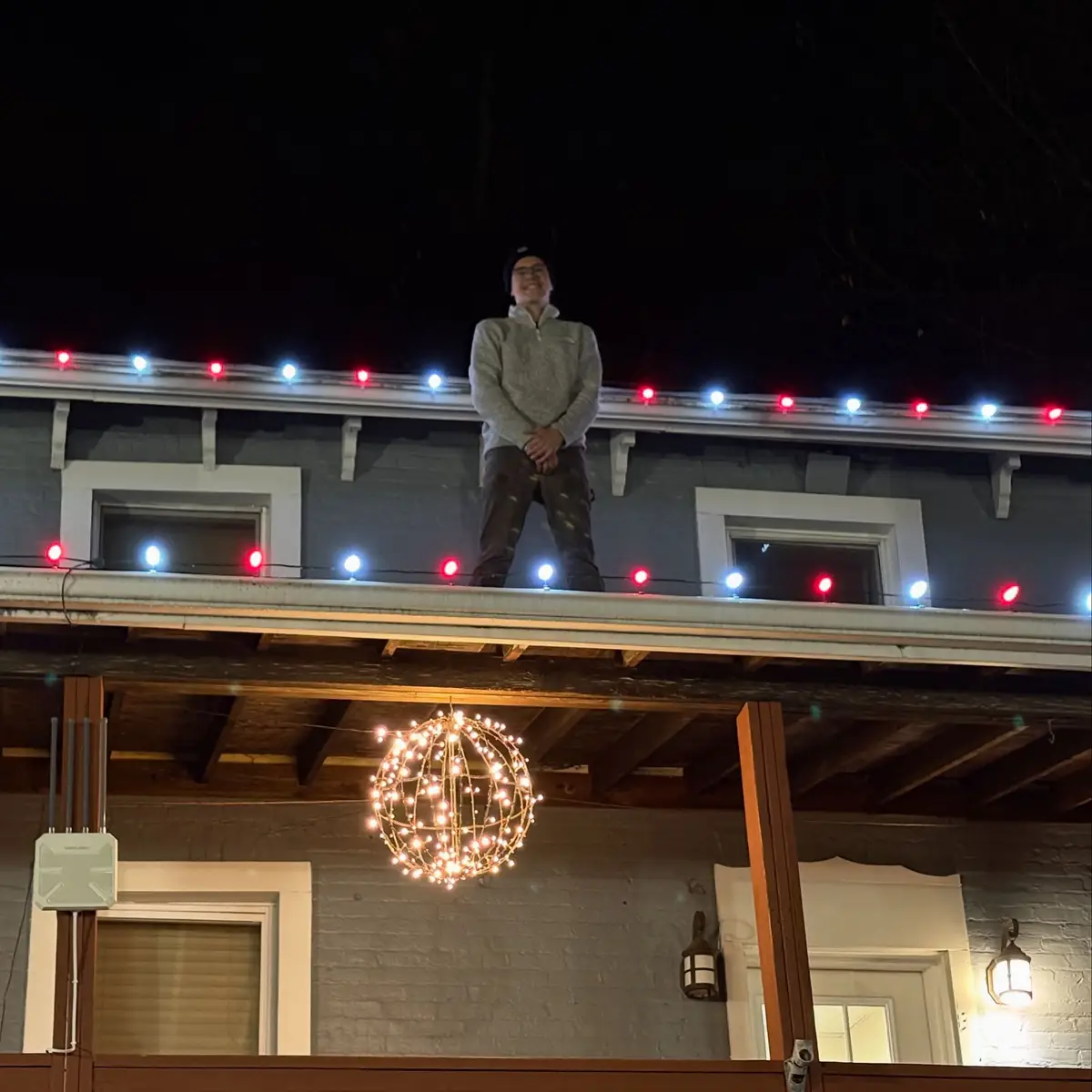
The crew, who we call the Elves, shows up in costume with the Christmas music going, which is less a gimmick and more just how the job gets done every year. Proper PPE stays on the whole time, and the install itself only proceeds when the weather cooperates.
Most homes are done the same day, though a larger property with more rooflines, trees and columns can run longer. By the time the crew leaves, the display is wired, tested and ready to run, not just hung and hoped for.
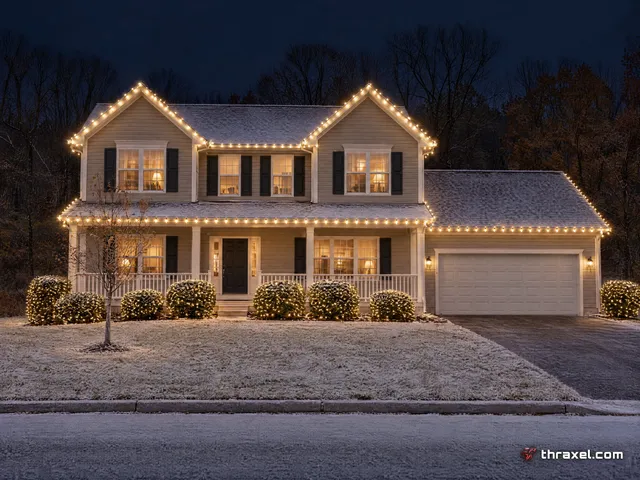
The design that guides install day was already locked weeks earlier, built from the design mock-up of the actual property rather than a generic template. That is part of why install day itself moves fast, there is no guessing on site about where a run of lights should go.
- Design and mock-up completed before install day
- Costumed crew, proper PPE, weather-dependent scheduling
- Display tested and running before the crew leaves the property
What happens after the crew leaves
Once a display is up, it moves into the in-season maintenance phase, where any problem, a burnt bulb, a wire that got chewed, gets a visit within 24 to 48 hours at no extra charge. That coverage runs through the whole holiday season, not just install week.
That coverage is what makes the whole white-glove program hold together. A November install day is only the start of the season, and knowing a fix is coming within a day or two if something fails is part of what homeowners are actually paying for, not just the initial hang.
It stays up through the season and comes down starting January 4, as weather allows, then gets labeled, packaged and stored until the following November. See thraxel.com/blog/december-lighting-service-season/ for what that maintenance stretch actually covers.
When November doesn't cooperate
Some years the first two weekends of November are genuinely bad, wind and rain back to back. When that happens, the schedule compresses toward Thanksgiving instead of spreading evenly across the month, which is exactly why the earliest possible booking matters most in a tight-weather year.
A homeowner who booked in September still has room to absorb a lost weekend. A homeowner who called in the second week of November has almost none, which is the real cost of waiting, not a missed discount but a missed date, since quotes stay free no matter when the call comes in.
Homeowners weighing whether a Christmas display is worth the tight scheduling at all sometimes end up comparing it against a permanent system instead, since a permanent roofline never has to fit inside a single month's weather window. thraxel.com/blog/permanent-vs-seasonal-christmas-lights/ covers that comparison directly.
Getting your date inside the window
The process starts the same way every season: a free consultation, a design mock-up of your actual property, and a design locked before the calendar fills. Request a quote at thraxel.com/quote/, and see thraxel.com/christmas/ for the full service breakdown.
There is no cost to starting that process even close to the window, but every day earlier is a day of extra flexibility if a weekend gets rained out. That is the entire logic behind the November window, plan for the weather you can't control by giving yourself room around it.
It works the same whether the property is a single-family home in Kittanning or a larger footprint further out in the territory. The window narrows the same way for everyone once Thanksgiving is close, so the advice holds regardless of how big or small the display ends up being.