Install timeline
Most houses take one to two days. Here is what changes that.
A typical Western PA home is fully lit in one to two days. The number that moves is roofline length, not effort, so a sprawling ranch and a tall colonial can take the same crew very different amounts of time.
The short answer
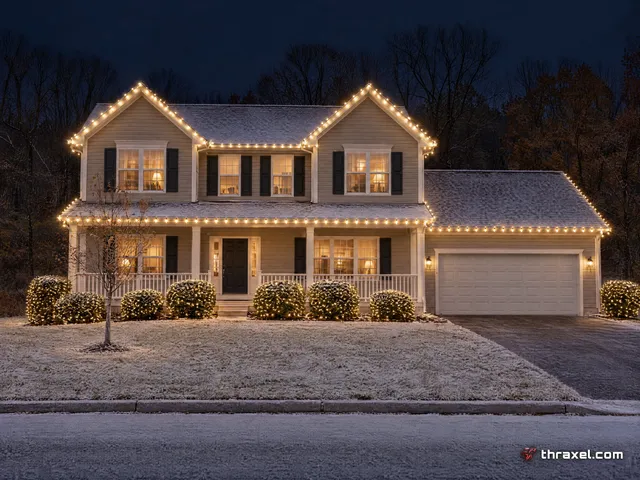
Most homes we light get finished in one to two days. That covers the roofline, any porch or column detail, and a tree or two in the yard. It does not include design or the mock-up, which happen before a crew is ever scheduled.
A smaller ranch or bungalow can be done well inside a single afternoon. A large two-story colonial with multiple peaks, dormers and a wraparound porch is closer to a full second day.
Commercial properties fall outside that range entirely, since a restaurant, plaza or hotel roofline can run into thousands of linear feet. Those jobs are scoped separately during the consultation rather than compared to a typical residential timeline.
What actually sets the timeline
Linear footage of roofline is the biggest factor. A crew moves at roughly the same pace whether the trim is brick, vinyl or stone, so a longer perimeter simply takes longer to travel and secure.
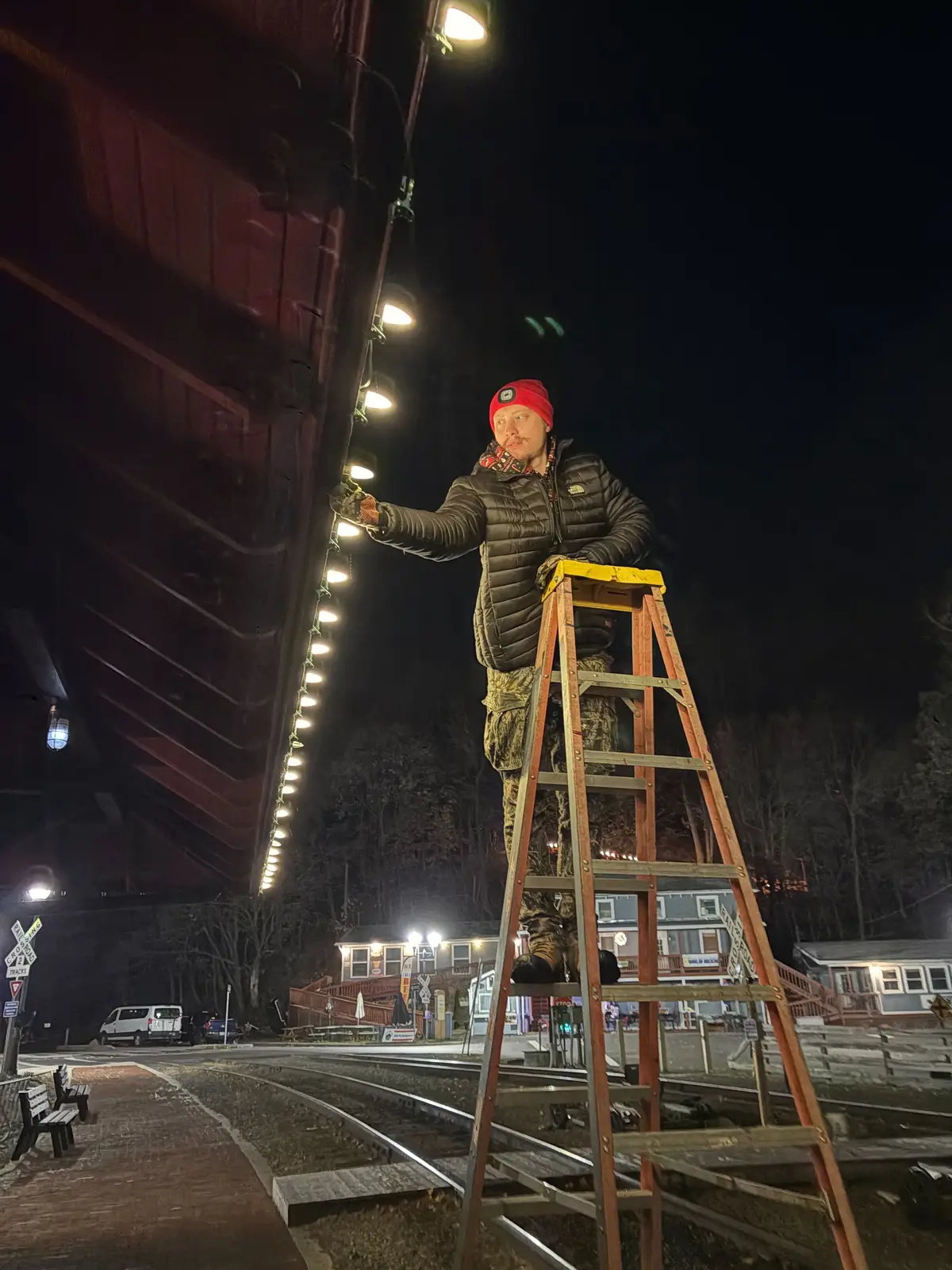
Story count matters almost as much. A single-story ranch lets the crew work from shorter ladders and move fast. A two- or three-story home with steep pitches slows things down because every section requires more careful ladder placement and more time aloft.
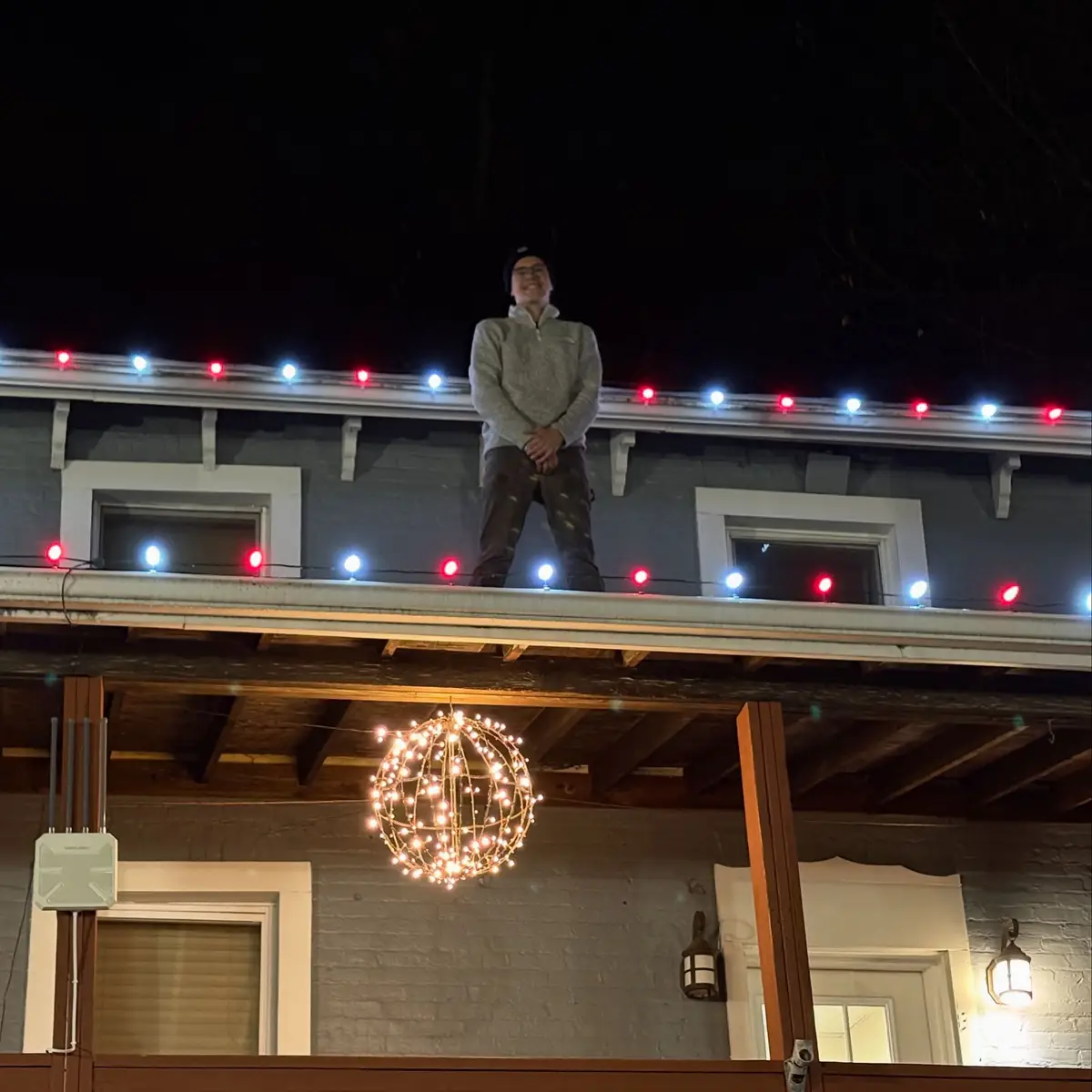
Design complexity is the third piece. A straight warm-white roofline install goes quickly. Wrapping columns, outlining windows, tree wrapping and layered color schemes all add hours because each element is a separate pass, not an extension of the same line.
Roof shape plays a role too. A simple gable roofline moves faster than a house with multiple dormers, valleys and cross-gables, since each transition point is a separate connection rather than a continuous straight run.
Crew size stays fairly consistent from job to job, so a longer or more detailed project generally means more hours on site rather than a bigger crew showing up to compress the same work into less time.
Daylight itself is a quiet factor late in the season. A crew starting a job in early November has more usable daylight to work with than one scheduled for the second week of December, when sunset comes noticeably earlier.
- Roofline linear footage
- Number of stories and roof pitch
- How much detail work is in the design
- Weather on install day
What can stretch an install day
Weather is the one variable nobody controls. Thraxel only installs when conditions permit, so a wet or icy morning can push a job to the afternoon or the next open day rather than risk a crew on a slick ladder.
Access issues add time too. A fence, a locked gate, a dog that needs to be inside, or landscaping that blocks a ladder's footing all slow a crew down in ways that have nothing to do with the lighting itself.
Power access is a smaller but real factor. A house with limited outdoor outlets sometimes needs a bit more planning on where each run connects back, which the consultation is meant to catch well before install day.
None of this is billed as a surprise. The consultation is where these details get flagged, so the crew shows up already knowing what the property requires.
What a two-day install actually looks like
On a job that spans two days, the roofline is almost always finished first, since it is the largest continuous section and the anchor the rest of the design builds from. Porch, column and tree detail typically fill the second day.
Materials left on site overnight between day one and day two are secured properly rather than left loose, so there is nothing for a homeowner to watch over or worry about between visits.
A two-day install does not mean two separate trips scheduled weeks apart. It is one continuous project, usually consecutive days, planned that way from the start rather than split up reactively.
What happens once the lights are up
The crew does a final walkthrough with you before they leave, testing every run and confirming the app controls work from your phone. That walkthrough is part of the install, not a separate visit.
From that point the season's white-glove program takes over. Any problem that shows up over the next several weeks gets a response within 24 to 48 hours, at no charge, covered under the same service you already paid for. Full details are at thraxel.com/christmas/.
That coverage is what makes the one to two day number a meaningful timeline rather than just the start of a longer, unpredictable process. Once the walkthrough is done, the display is expected to work, and anything that does not is handled quickly.
It also means the one to two day figure is not a rough estimate padded to look impressive. It reflects the actual physical work of the install, since everything after the walkthrough falls under a separate part of the seasonal service.
How to plan around the timeline
Book early enough that a two-day job does not collide with your own schedule. See thraxel.com/blog/when-to-book-christmas-light-installation/ for how the November calendar actually fills.
If you have an event on a specific date, tell us during the free consultation. A crew can be sequenced so your house is finished before a party or a holiday visit, rather than left for whatever slot happens to be open that week.
Homeowners around Butler and Saxonburg tend to ask this question most around larger two-story properties, where the difference between a one-day and two-day estimate can shift a whole weekend's plans. Bringing that up at the consultation lets the crew plan accordingly from day one.