Westmoreland County
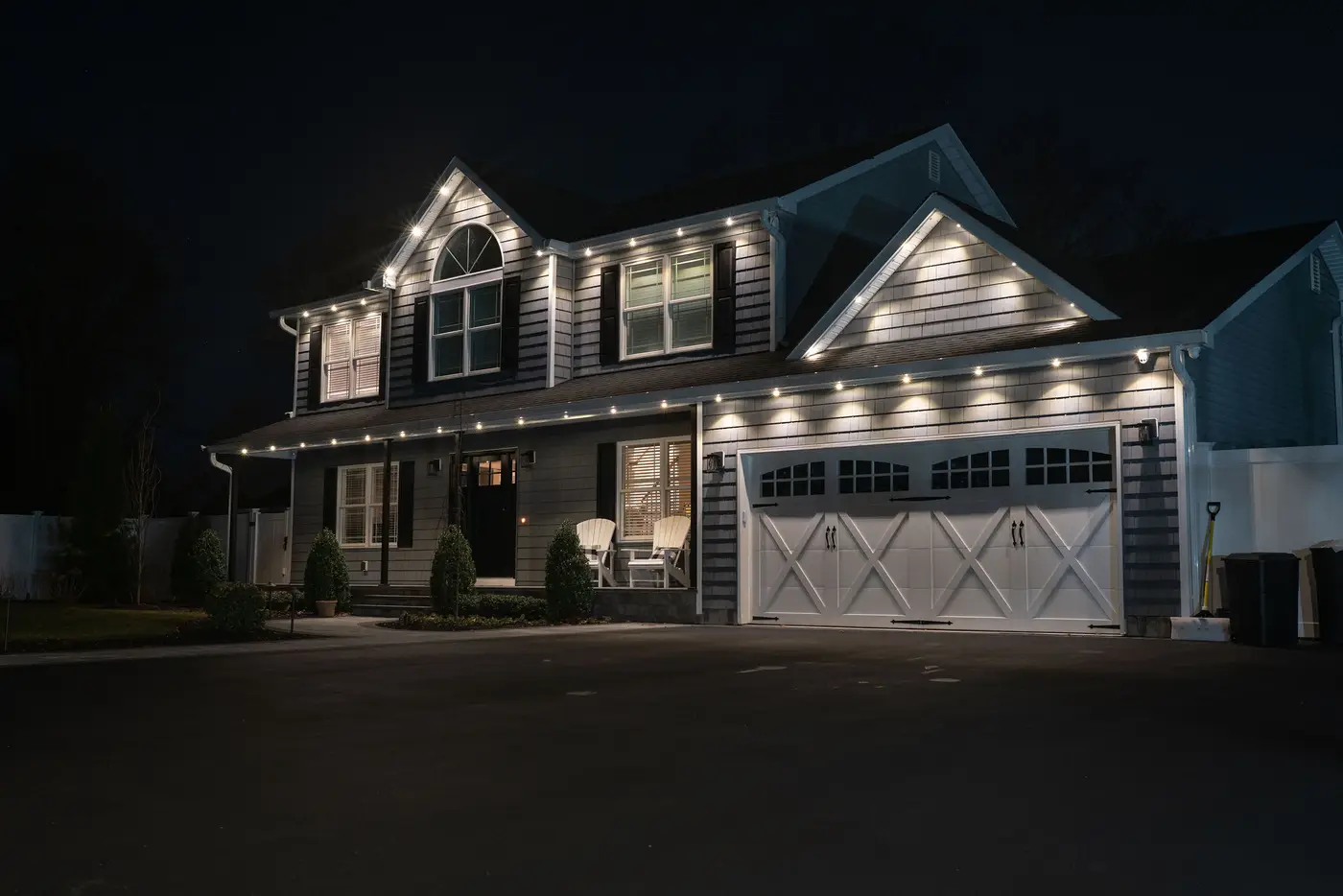
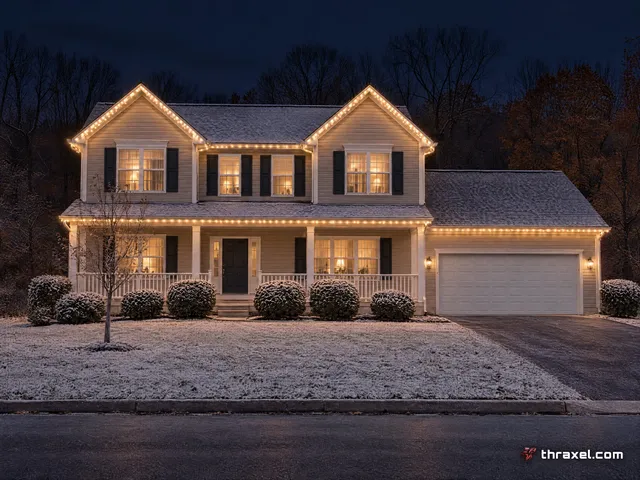
Lighting Westmoreland County homes, style by style
Westmoreland County covers a lot of ground east and south of Pittsburgh, from Murrysville subdivisions to farmhouses outside Latrobe. The right lighting approach depends less on the town and more on the house.

A county of very different housing stock
Greensburg has an older downtown core with brick homes and shorter, steeper rooflines. Murrysville and New Kensington run newer and more suburban, with longer, straighter roof lines and more square footage of eave to work with. Out past Latrobe the lots open up into farmhouse country with wraparound porches and detached outbuildings.
None of that changes the process, it changes the design. A brick colonial in Greensburg and a farmhouse near Latrobe get the same design mock-up treatment, just against a very different roofline.
Westmoreland County is also home to Idlewild and Saint Vincent College, and Latrobe carries its own local pride as the hometown of Arnold Palmer and Mister Rogers, the kind of civic identity that shows up in how seriously a lot of these towns treat their front-porch lighting every winter.
Brick colonials and Steelers Sundays
Brick colonials are common through this part of the county, and they light beautifully with a warm-white permanent system that traces the roofline and columns without fighting the brick color. See more on that specific home style at thraxel.com/blog/lighting-a-brick-colonial/.
Because the system is app-controlled with named scenes including Everyday Warm and Game Day, a lot of Westmoreland households run black and gold on Sundays through the season without touching a single bulb by hand.
Every component installed is UL, ETL and CUL certified, and the crew holds the manufacturer-required certifications for the install itself, which matters on a brick colonial where the fascia detail is often original to the house and worth mounting to carefully rather than rushing.
Farmhouses and longer rooflines
Properties out toward Latrobe and Greensburg's edges often have longer rooflines, wraparound porches, and sometimes a barn or outbuilding worth lighting too. More linear footage means more zones, and more zones mean more control, since every pixel is individually addressable and can run separately from the next.
Landscape lighting tends to matter more out here as well, since these lots often have more yard, more trees and longer driveways than a tighter in-town lot. Path and tree lighting round out the package on thraxel.com/landscape/.
Astronomical timers keep everything on the correct schedule automatically as sunset shifts through the fall and winter, which matters on a rural property that might otherwise sit dark on the drive in before anyone manually adjusts a switch.
- Longer rooflines get split into multiple zones for independent scene control
- Outbuildings and detached garages can be added to the same system
- Rural driveways commonly pair with path lighting for safety after dark
What Westmoreland homeowners actually pay
We do not publish Thraxel prices because every roofline and yard is different, but the shape of the cost is public. As a broad national industry benchmark, permanent roofline systems fall somewhere around $20 to $50 per linear foot installed, and landscape fixtures land closer to $150 to $400 per fixture installed. Every Westmoreland County property still gets measured before a real number is attached to it.
Once the system is in, running it costs about $52.80 a year for a typical 168-LED install used six hours a night, since each pixel draws roughly 0.3 watts regardless of house size. Qualifying buyers can also spread the upfront cost out with 0% APR financing for up to 24 months instead of paying it in one lump sum.
Every install also carries a 3-year warranty on parts and a 1-year warranty on labor, and Thraxel remains fully insured on every Westmoreland County job, longer rural farmhouse rooflines included, where more track and more ladder time are involved than on a compact in-town lot.
Seasonal still has its place
If you are planning to re-side or re-roof soon, or you only want one season of classic C9 warm white, the seasonal Christmas program is the right call for this year. It is full white-glove service, from design and render through install by a costumed crew, in-season repairs, and takedown starting January 4.
You can always add the permanent system after exterior work is finished. There is no penalty for waiting a season if the timing is not right yet.
For homeowners weighing a resale angle on the permanent system down the line, Thraxel's 2023 to 2025 residential tracking shows an average appraised value increase of 3 to 7 percent, directional figures from past projects rather than a promise, worth factoring in even if resale is years away.
Booking a Westmoreland County consult
The starting point is always the same: a free on-site walk of the property, a design mock-up within 24 hours, and an honest recommendation about which system fits your house and your plans. Most installs finish in one to two days.
Call or text 724-859-4390 to get on the schedule, or start with the quote form at thraxel.com/quote/.
The visit ends the same way everywhere in the county, with a final walkthrough covering the app and scene selection before the crew leaves, so a Greensburg or Latrobe homeowner is not left figuring it out alone the first time they want to switch scenes.
For a Westmoreland County property with a barn, a detached garage or an outbuilding worth lighting alongside the house, mention it on the first call. Those extra structures get folded into the same design mock-up and the same zoned system rather than treated as a separate project later.
Randy, the AI assistant on the thraxel.com site, can field general questions about either the seasonal or permanent program at any hour, though the actual property walk still happens with a person before anything is scheduled or measured.
Most Westmoreland County homeowners hear about Thraxel from a neighbor's finished roofline before they ever search for it, which tracks with the company's own numbers: 58% of recent residential installs generated at least one inquiry from someone else on the same street.