The ladder problem
Ladder falls spike every November. Here is why, and what actually helps
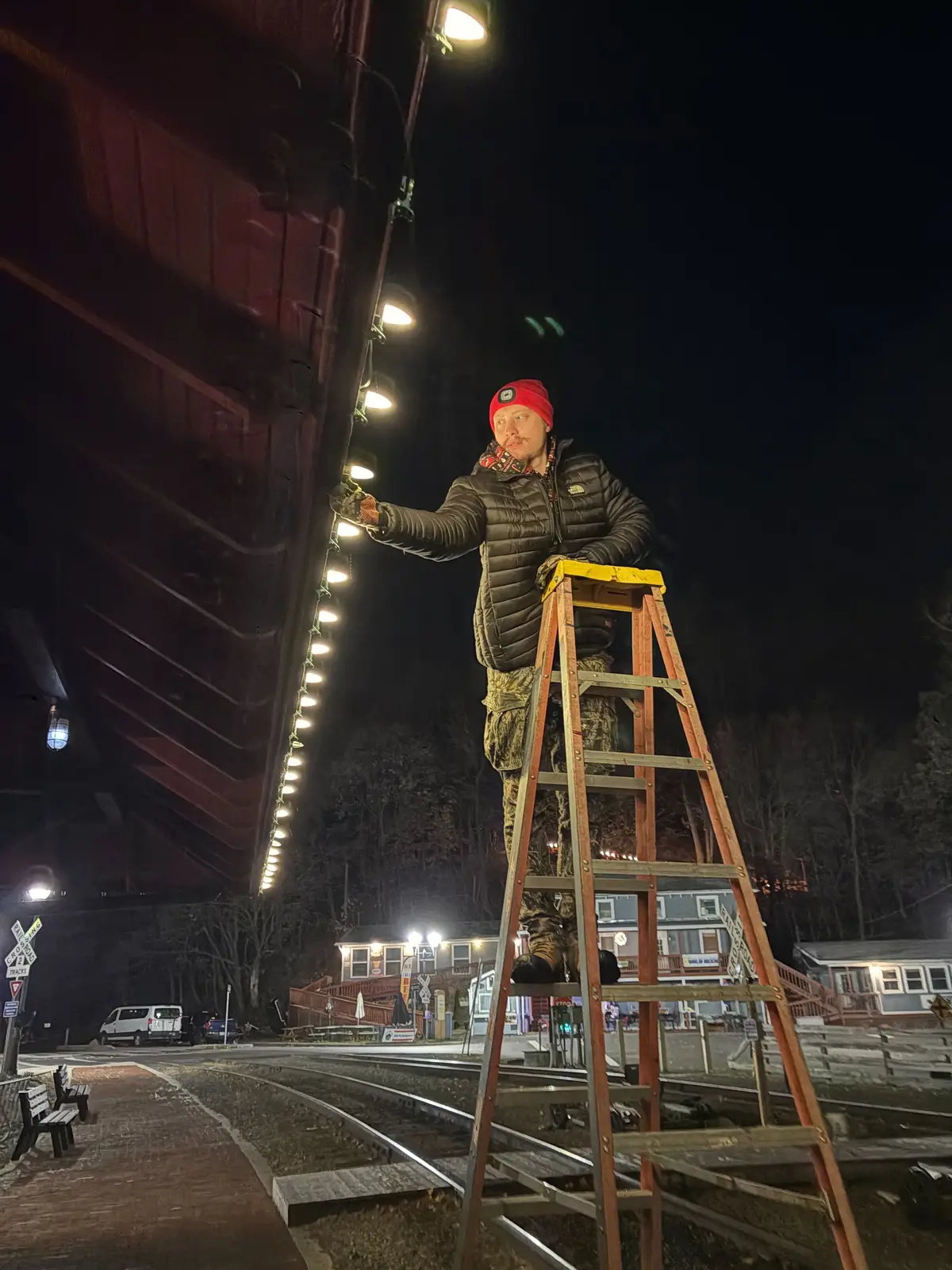
U.S. consumer safety agencies report thousands of holiday-decorating injuries each year, and a large share involve a ladder against a roofline. The pattern is almost always the same: reaching, twisting, or a foot that never quite finds the rung.

Why the numbers rise in late November
The spike is not really about ladders being more dangerous in winter. It is about who is on them. Most decorating falls happen to homeowners who use a ladder once a year, on a schedule set by the weather rather than by comfort or practice with the equipment itself.
Add a two-story eave, a coil of lights over one shoulder, and cold hands, and the margin for error shrinks fast. Roofs that were fine to walk on in October can be slick with frost by the second week of November in Armstrong and Butler County, and that change often happens overnight.
The forecast rarely cooperates with a decorating schedule either. A homeowner who planned to hang lights on a mild Saturday can end up doing the job a week later on a colder, damper afternoon simply because that was the only free weekend left before the holiday.
Where falls actually happen
Almost never at the top of the climb. The dangerous moment is usually a side-reach to tuck a strand under a shingle, a shift of weight to grab a dropped clip, or the step down at the very end when attention has already moved to the next section of roofline.
A ladder set on a slight slope, common on driveways and sloped yards across the hills of Western PA, adds another variable most homeowners do not account for. What looks level from the ground can be off by enough degrees to matter once someone's full weight is at the top.
- Reaching sideways past the ladder's rails instead of moving it
- Setting a ladder on frozen or uneven ground without checking it
- Carrying a coil of lights or a staple gun with both hands occupied
- Working alone with no one holding or spotting the base
What a professional crew does differently
Our crews never work a roofline solo. Every ladder job runs with a second person on the ground managing the base, the extension cord and the next section of lights, so the person up top only has one job at a time instead of several competing for attention.
Ladders are set and re-set constantly rather than stretched to reach one more section. It looks slower from the driveway. It is the reason a crew that is on your roof every week of the season has a very different injury record than a homeowner who is on a ladder once a year.
Technicians also rotate through the two roles across a full day of installs, which keeps fatigue from building up in the position that carries more risk. A tired climber late in a shift is a genuinely different risk profile than the same person fresh at eight in the morning.
Where PPE and training fit in
Beyond the ladder itself, our install technicians wear proper footwear, work only in weather that allows a safe climb, and are trained on setup before they ever touch a customer's roofline for the first time. thraxel.com/blog/ppe-and-professional-install-crews/ covers the full kit and why costumes go over it, not instead of it.
The option that removes the ladder entirely
A permanent lighting system is mounted once. After that, every scene change for the rest of the year happens from the Thraxel Lighting app, not from a rung on a ladder. Homeowners who have said never again about a November climb are exactly who this system is built for.
It is one reason permanent installs at thraxel.com/permanent/ have grown faster with families who are getting older on the same house, or who have simply decided the view from the ground is good enough for every holiday, not just Christmas.
If you are climbing this year anyway
Use a ladder rated for the job, not whatever is in the garage. Have someone hold the base every time, even for a five-minute stretch, and check the footing before you climb rather than after you are already at the top with a strand in your hand.
And if a section of roofline genuinely worries you, that is a reasonable moment to call a crew instead of pushing through it. A free consultation at thraxel.com/quote/ costs nothing, and it is a lot cheaper than a trip to urgent care over one stubborn section of trim.