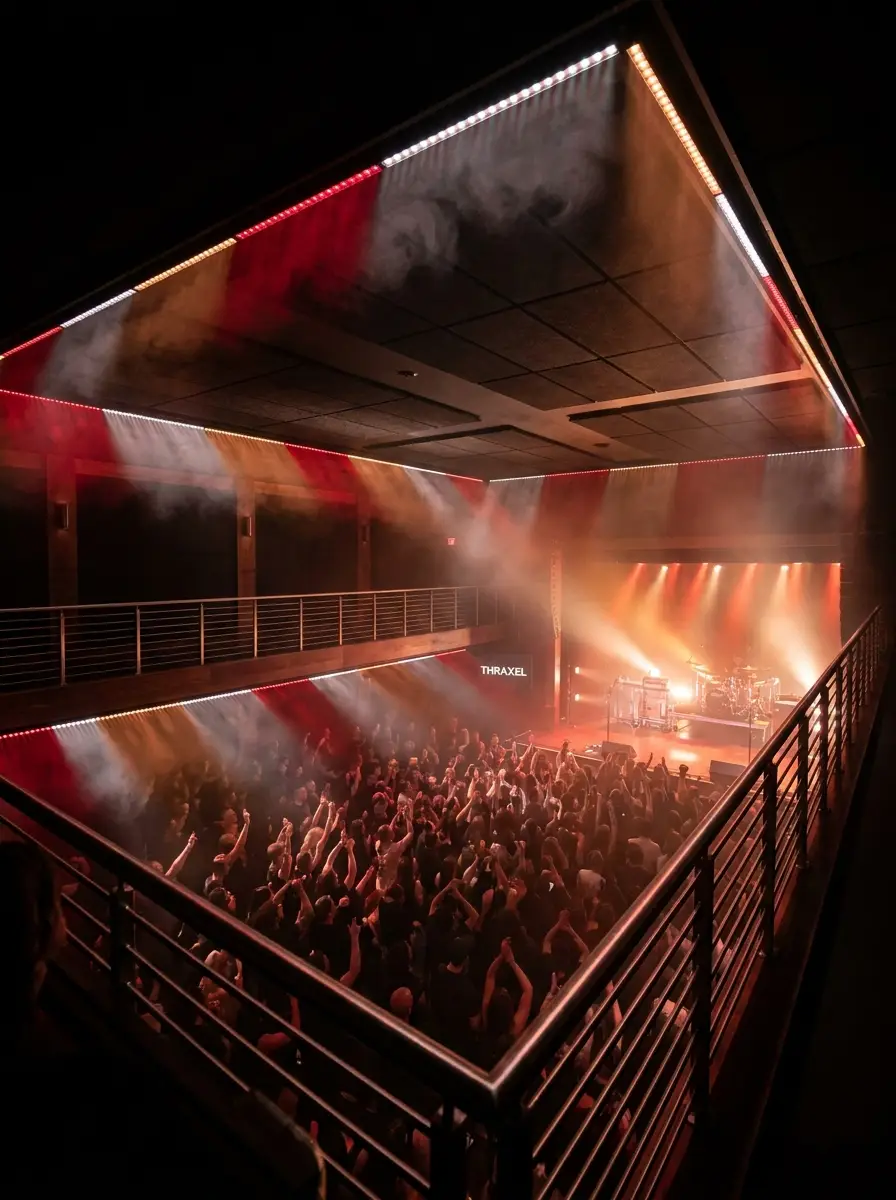
Behind the costume
There is real safety gear under the elf costumes
Our seasonal crew works in Christmas costumes with music playing, which is part of what makes install day fun to watch. Underneath that, every technician is wearing the same protective equipment they would wear without an audience.
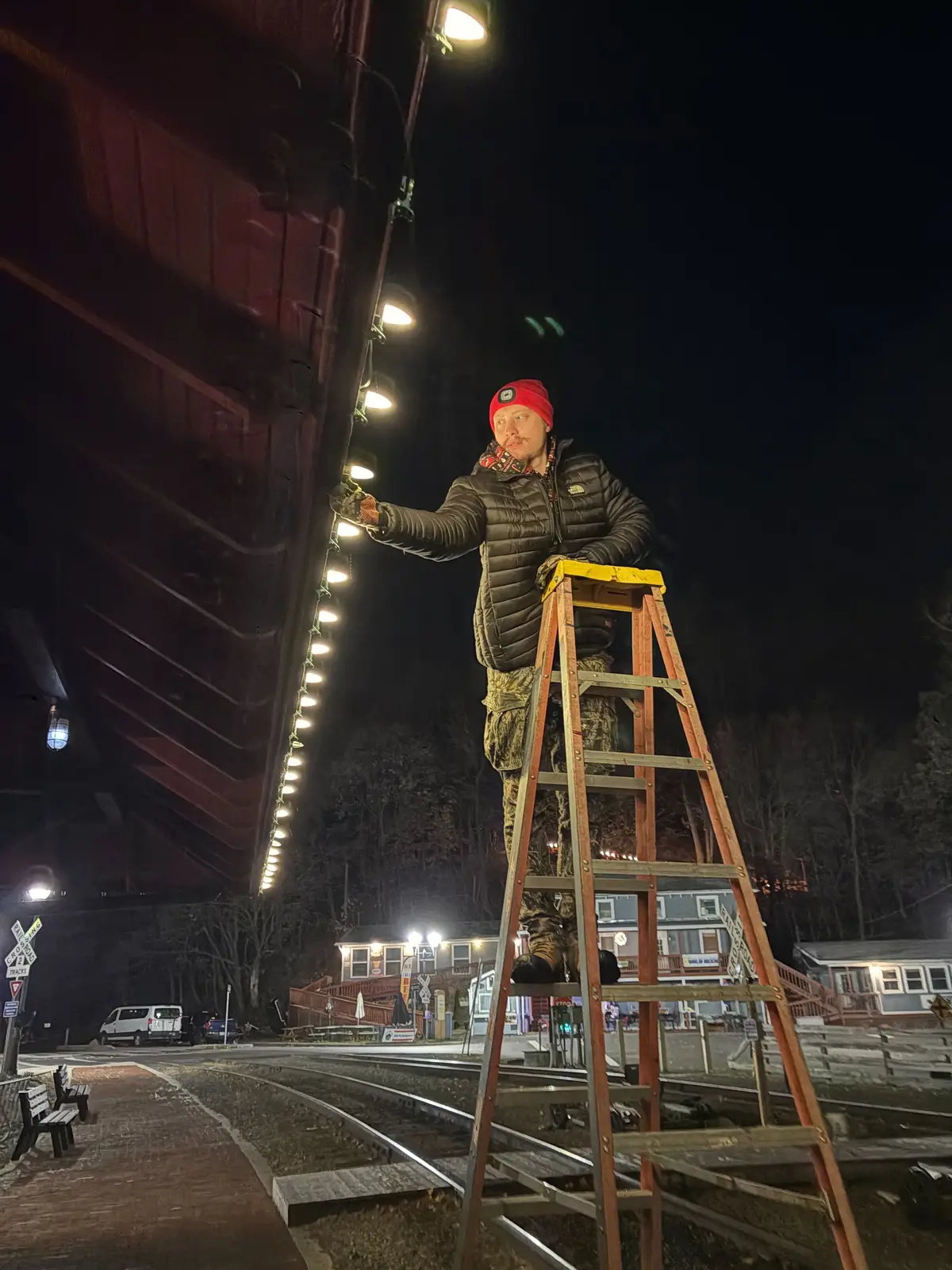
What actually goes on before a roofline job
Grip-rated footwear comes first, built to hold on a wet or frosted roof edge rather than street shoes that happen to have decent tread. Gloves are next, chosen for dexterity with small clips and connectors rather than bulky work gloves that make fine motion harder.
Layered cold-weather gear goes underneath whatever the crew is wearing on top for the day, whether that is a standard uniform or a costume, and it is chosen specifically not to restrict the range of motion a roofline job requires from shoulder to fingertip.
- Grip-rated footwear suited to roof and ladder work
- Gloves that balance dexterity with hand protection
- Eye protection when cutting wire or track
- Layered cold-weather gear that does not restrict movement
- A harness and anchor point on steeper or higher rooflines
Training before the first job of the season
Every technician goes through ladder setup, roofline movement and PPE checks before they touch a customer's house, not as a formality but because the first job of a new season is the one where habits either get reinforced or corrected before a full schedule of installs begins.
Costumes and music come after that groundwork, not instead of it. A crew member is dressed as an elf and trained as a technician at the same time, and the second part is what makes the first part possible to do safely.
Why weather matters as much as the gear
Christmas installs at thraxel.com/christmas/ only happen when weather conditions allow a safe climb. A crew with full PPE still will not go up on an iced roofline, because equipment reduces risk, it does not eliminate what a genuinely unsafe surface presents no matter how well-trained the person on it is.
That is one reason install scheduling in Armstrong and Butler County shifts around a storm system rather than pushing through it. The good November weekends book first, and a delayed day is a normal part of the process, not a sign anything went wrong with the plan.
The two-person rule
No technician works a roofline alone. One person manages the ladder base, hands up materials and watches the ground while the other handles the actual install, and the roles trade off through the day so no one is fatigued into the riskier position for too long at once.
This rule holds on every job regardless of how routine the roofline looks or how many times that particular crew member has done a similar house before. Familiarity is not a substitute for a second set of hands on the ground.
Why this matters more than it looks like it does
It is easy to focus on the finished roofline and skip past how it got there. A crew in full PPE, working in pairs, walking away from unsafe weather, is the difference between a lighting company you hire once and one whose technicians are still doing this job ten seasons from now.
It is also part of why hiring an insured, trained crew changes your own liability picture, covered in more detail at thraxel.com/blog/insured-installers-and-your-liability/.
A crew that treats PPE as optional on an easy-looking house tends to treat it as optional everywhere eventually, since the habit either holds every time or it erodes gradually. Consistency across every job, not just the hard ones, is what actually keeps a crew safe over years of seasons.
What you can expect on install day
A crew that shows up dressed for the season, works in pairs, checks conditions before climbing, and gets your house lit without treating any of that as optional. The costume is the visible part. The protective equipment and the protocol underneath it is the part that actually keeps everyone off the ground and on the roof safely.
If you have questions about how a specific job will be staffed or equipped, ask before install day rather than during it. A crew confident in its own process will walk you through it without hesitation, the same way they would answer a question about insurance or certification.