Summer scenes
Red, white and blue on the roofline without a single extension cord
The Fourth is the holiday that made most people wish they had permanent lighting. Red, white and blue in a repeating pattern along the eaves, saved as a scene, turned on from the porch while the grill heats up. Here is how we build it and what the white actually looks like.

The scene, in one sentence
July 4th is one of the named scenes we load on every permanent system: red, white and blue pixels repeating along the roofline, with the option of a slow chase so the pattern drifts across the front of the house. It sits in the Thraxel Lighting app next to Everyday Warm and Game Day, and it comes on when you tap it.
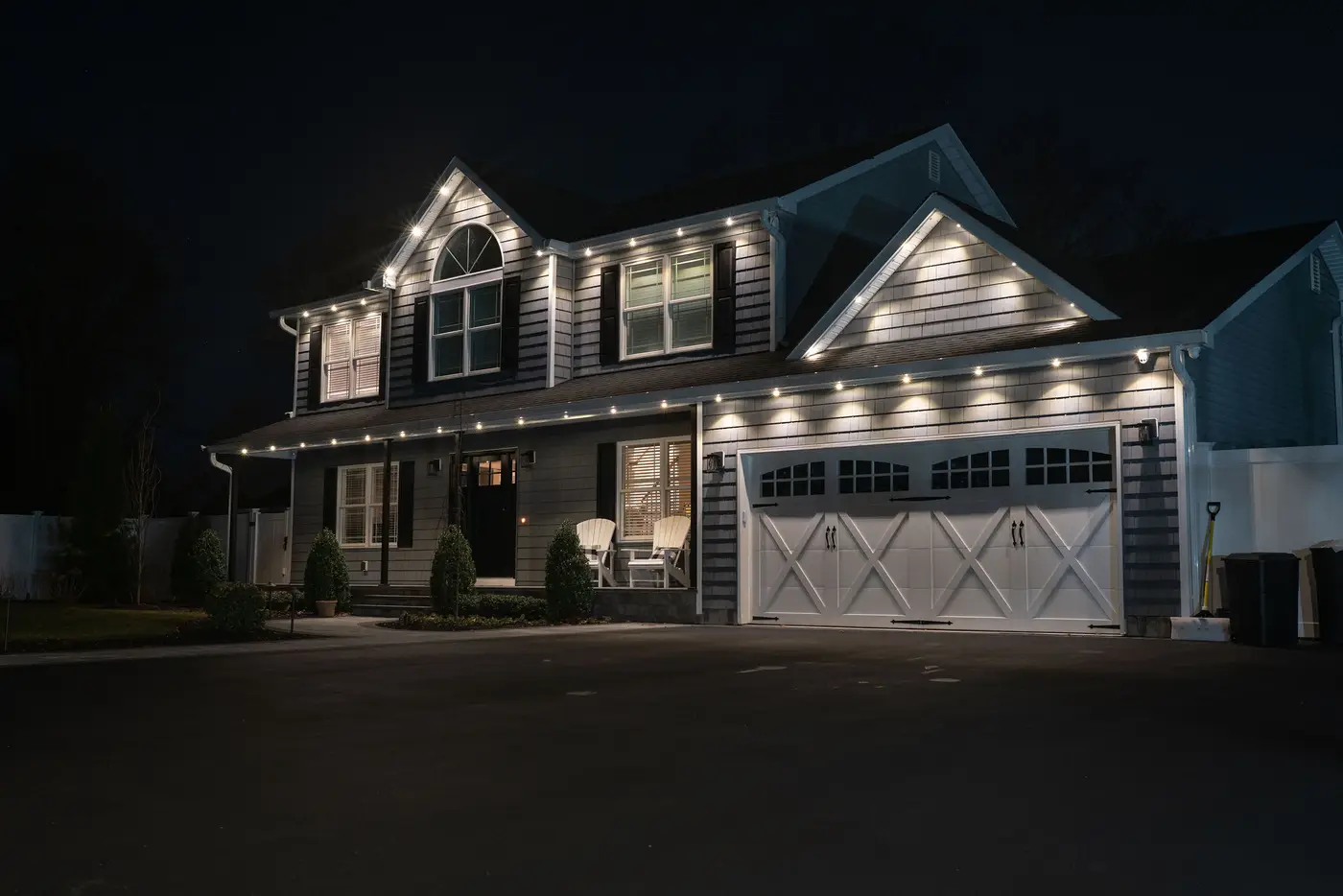
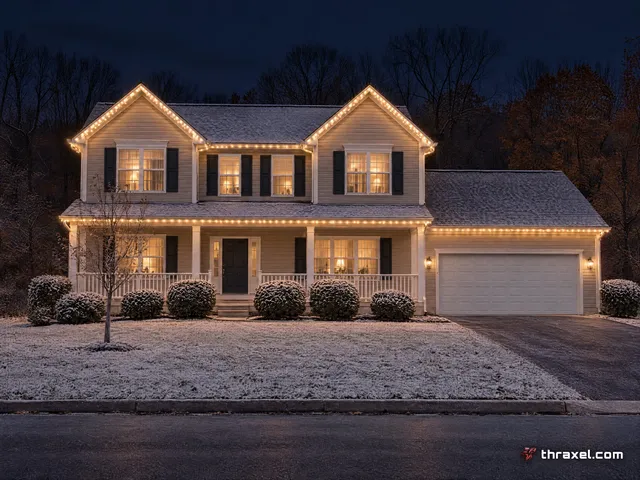
Nobody climbs anything. Nobody digs through a tote for the strand that half-works. The pixels are already mounted inside color-matched track under the eaves, and they were there in March looking like trim. The system details are on thraxel.com/permanent/.
The scene is yours to edit. Change the ratio of red to blue, widen the segments, kill the motion, or pull the landscape zone in so the maple out front turns blue while the roofline runs the flag.
Getting the white right
White is where cheap RGB systems fall apart on the Fourth. An RGB-only pixel makes white by turning red, green and blue on together, and the result leans faintly pink or faintly blue depending on the strip. Between a strong red and a strong blue, that fake white looks muddy.
Thraxel pixels are RGBWW, which means each one carries a dedicated 2700K warm-white diode in addition to the color diodes. For a flag scene you have two whites to pick from: the warm diode, which reads cream and looks handsome on a brick colonial, or a cooler mixed white that reads crisper next to primary red and blue.
Most homes end up with the cooler mixed white for July and the warm diode for every other night. We set both up during the final walkthrough so you can flip between them. There is more on this at thraxel.com/blog/can-permanent-lights-be-warm-white/.
Patterns that work on a roofline
Because each pixel is addressed individually, the scene can be laid out in segments rather than a single color per strip. Three-pixel blocks of red, white and blue give a bunting look. Longer blocks of eight or ten read cleaner from across the street on a big two-story.
Motion is optional. A slow chase, where the pattern shifts one pixel every second or so, gives the house a parade feel without becoming a strobe. Faster chases look busy on a long straight eave and are better saved for a party.
On peaks and gables, we often run solid blue at the point and let the red and white segments run the horizontals. It frames the house instead of wallpapering it.
- Bunting: short red, white and blue blocks repeating, no motion
- Parade: long blocks with a slow one-direction chase
- Framed: blue peaks, red and white eaves, landscape in white
- Fireworks: mostly dark roofline with random red, white and blue sparkles
Patio, dock and pool: the Fourth is an outdoor holiday
The roofline is what the neighbors see. The patio, deck and pool are where you actually spend July 4th. We zone those areas separately so the party space can run its own look, usually a dimmer version of the flag colors or a plain warm white so people can see their plates.
Dock lighting is a Western PA specialty. Kittanning, Ford City and Freeport all sit on the Allegheny, and a lot of our customers watch river fireworks from their own dock. Marine-rated color lighting along the dock edge in red, white and blue looks right at home there, and it doubles as safety lighting once the fireworks end. Our Kittanning page is at thraxel.com/areas/kittanning/.
Pool decks work the same way. Blue in the pool area, flag colors on the house, warm white on the path between them so nobody misses a step.
Fireworks night and the neighbors
Leave the roofline on for the fireworks. Blue and red on the house against a dark sky makes for the kind of photo people actually post, and it reads well from the street when cars are cruising the neighborhood.
After the show, drop the brightness or switch to Everyday Warm. A full-brightness chase at midnight is a lot for the people two doors down who have to work on the fifth. The system dims per scene, so a 30 percent version of the flag pattern is a reasonable late-night compromise.
HOA boards have not objected to July 4th scenes on our installs, because the hardware is the same fascia-colored track that was approved for warm white. Color is a setting, not a new fixture.
One scene, three holidays
The same red, white and blue scene covers Memorial Day at the end of May, Flag Day on June 14, the Fourth, and Labor Day in September. Four occasions from one saved setting, and none of them require touching the house.
That reuse is the quiet argument for a permanent system over seasonal lights. Seasonal strands are a December product. Permanent pixels are a calendar product. See what a lit summer patio looks like in the real installs at thraxel.com/gallery/.
To see the flag colors on your own driveway before you commit, ask for the free consult. Tyson brings a demo case with four live RGBWW strips and runs the scene in front of you. He answers texts at 724-859-4390.