Five-year math
The five-year cost of permanent vs seasonal Christmas lights
Run the numbers over five winters instead of one and the comparison flips. Seasonal lighting is the cheaper first December. Somewhere between year three and year six, a permanent system typically catches up, and after that it is the cheaper house to own.

Why one year is the wrong window
Comparing a seasonal install to a permanent system on a single December is like comparing one month of rent to a mortgage. The seasonal number will always look smaller because it is a smaller purchase. It buys you one winter. The permanent number buys you every winter, plus the other eleven months.
Five years is the shortest window that tells the truth. It is long enough for the recurring seasonal fees to stack up, short enough that most families are still in the same house, and well inside the lifespan of a properly installed permanent system with a 3-year parts warranty behind it.
We install both. Our seasonal program at thraxel.com/christmas/ is a full white-glove service and we are not trying to talk anyone out of it. But when a homeowner in Butler asks us which one costs less, the honest reply is a question back: for how many years?
The seasonal side of the ledger
Professional seasonal Christmas lighting is a service fee paid every year. National industry estimates commonly fall between roughly $2 and $6 per linear foot per season, or roughly $500 to $2,500 and up for a typical home. Your house will differ, and the quote is free, but that is the band most Western PA homes fall inside.
Multiply the low end by five winters and you are at $2,500. Multiply the high end by five and you pass $12,500. Neither number buys you anything you keep. When the lights come down in January they go into labeled storage until the next season, and the service fee comes around again in November.
What the fee does buy is real: a mock-up, a costumed crew installing with the music going, in-season repairs at no charge within 24 to 48 hours, takedown starting January 4, and storage. For one holiday a year, it is a very good product. The math only turns against it when you keep paying it.
- Paid: every year, in full, for as long as you want lights
- Owned at the end of five years: nothing on the house
- Lit: roughly six weeks per year
The permanent side of the ledger
Permanent lighting is one larger purchase. National industry estimates commonly land between roughly $20 and $50 per linear foot installed, and the specific number depends on your footage, peaks and height, which is why we measure before we quote. After install, the only recurring cost is electricity: about $52.80 a year for a typical 168-LED system running six hours a night.
Over five years that power bill is roughly $264. Add nothing else. There is no app subscription, no storage fee, no takedown fee, and pixel failures inside the 3-year parts warranty are handled at no charge. If you finance at 0% APR over up to 24 months as a qualifying buyer, the purchase is spread across two of the five years with no interest added.
So the five-year permanent total is the install price plus about $264. The five-year seasonal total is five service fees. Whichever seasonal fee your house lands on, the crossover typically happens between the third and sixth winter on the national ranges, and after that every year is pure savings.
- Paid: once, or over 24 months at 0% APR for qualifying buyers
- Owned at the end of five years: the whole system, still under the parts warranty for the first three
- Lit: any night you want, 365 days a year
The eleven months nobody prices
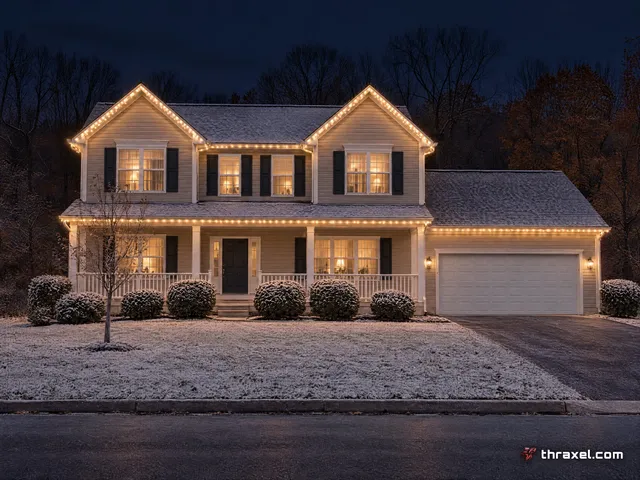
A straight cost comparison undercounts the permanent system, because it treats December as the only month with value. A permanent RGBWW roofline runs Everyday Warm on a normal night, orange and purple for Halloween, red, white and blue for July 4th, green for St. Patrick's Day, and black and gold on Steelers Sundays. Seasonal lights do none of that.
If you would have paid for a Halloween install or a Fourth of July setup, that is money the permanent system also replaces. Most people would not. But most people also do not realize how often they use the lights until they have them. A backyard patio lit on a warm September evening is worth something even if it never shows up on a spreadsheet.
The hard-to-price part matters too. No November weekend spent waiting for a crew. No ladder. No January takedown to schedule around the weather.
When seasonal still wins the five-year math
Permanent is not the right answer for every house, and we say so on consults. If you are selling within a year or two, the payback window closes before you reach it, although permanent lighting appraised 3 to 7 percent higher on average in our 2023 to 2025 residential tracking, which is directional and not a guarantee.
If the fascia is getting replaced, the roof is coming off, or the siding is scheduled for spring, hang seasonal lights this year and do the permanent system when the exterior is finished. And if you specifically want the look of glass C9 bulbs and only ever want them in December, seasonal is the right product at the right price.
Renting your lights for a while before buying is a legitimate path, and thraxel.com/blog/renting-vs-owning-christmas-lights/ walks through it.
How to run the numbers for your own house
Get both options quoted. We do this on every consult when a homeowner asks: one number for a seasonal season, one for the permanent system, the same footage on both, with a render of your actual house within 24 hours. Then you multiply the seasonal number by however many years you plan to stay and compare.
Request it at thraxel.com/quote/ or reach Thraxel directly at 724-859-4390 by call or text. For the broader comparison beyond cost, thraxel.com/blog/permanent-vs-seasonal-christmas-lights/ covers the look, the HOA angle and the ladder question.