Holiday rides
Christmas railbike events: lighting the ride people plan around
December turns a railbike outing into a family tradition. Here is how lighting design, wireframe figures and a dedicated Christmas scene work together on the kind of night ride operators build a season around.
Why December is the target night
December is the night railbike operators build a season around. A regular evening ride is a nice add-on; a Christmas-lit ride through a trestle and past a lit depot is the kind of trip families plan a visit around, not just add to a weekend.
The route itself does not change for the holiday. Same track, same railbikes, same trip length. What changes is the scene running on the same permanent hardware installed earlier in the year, which is the whole appeal of building the system once instead of decorating from scratch every winter.
The goal on a December trip is a full car, every seat booked before the ride departs. Thraxel does not track or report ticket sales for operators, so treat that as the aim operators are working toward with a lit route, not a guaranteed outcome of installing lights.
What lighting does is give the marketing team something to sell besides the ride itself. A lit trestle photographs well in October, long before the first December departure, which gives an operator a season of lead time to promote the event.
A December ride also reaches people who would not otherwise drive out for a railbike outing. Once-a-year visitors, extended family in town for the holidays, a birthday or an anniversary built around the season, all of it widens who shows up beyond the operator's regular weekend crowd.
A dedicated Christmas scene, switched from the app
The same controller that runs Everyday Warm on a normal night switches to a Christmas scene from the app, no rewiring and no swapping strands. Other named scenes on the same system include Game Day, July 4th and Halloween, so the corridor is not a one-trick display.
Because every pixel is individually addressable, the Christmas scene can run red and green through the main corridor while a warm white anchors the depot, or vary by zone however the operator wants it to read from a moving railbike.
Some operators run a soft warm-white version early in the ride and shift into the full red-and-green scene as riders reach the trestle, using the individually addressable pixels to build a sense of arrival rather than showing the whole display at once.
Wireframe figures turn the corridor into a display
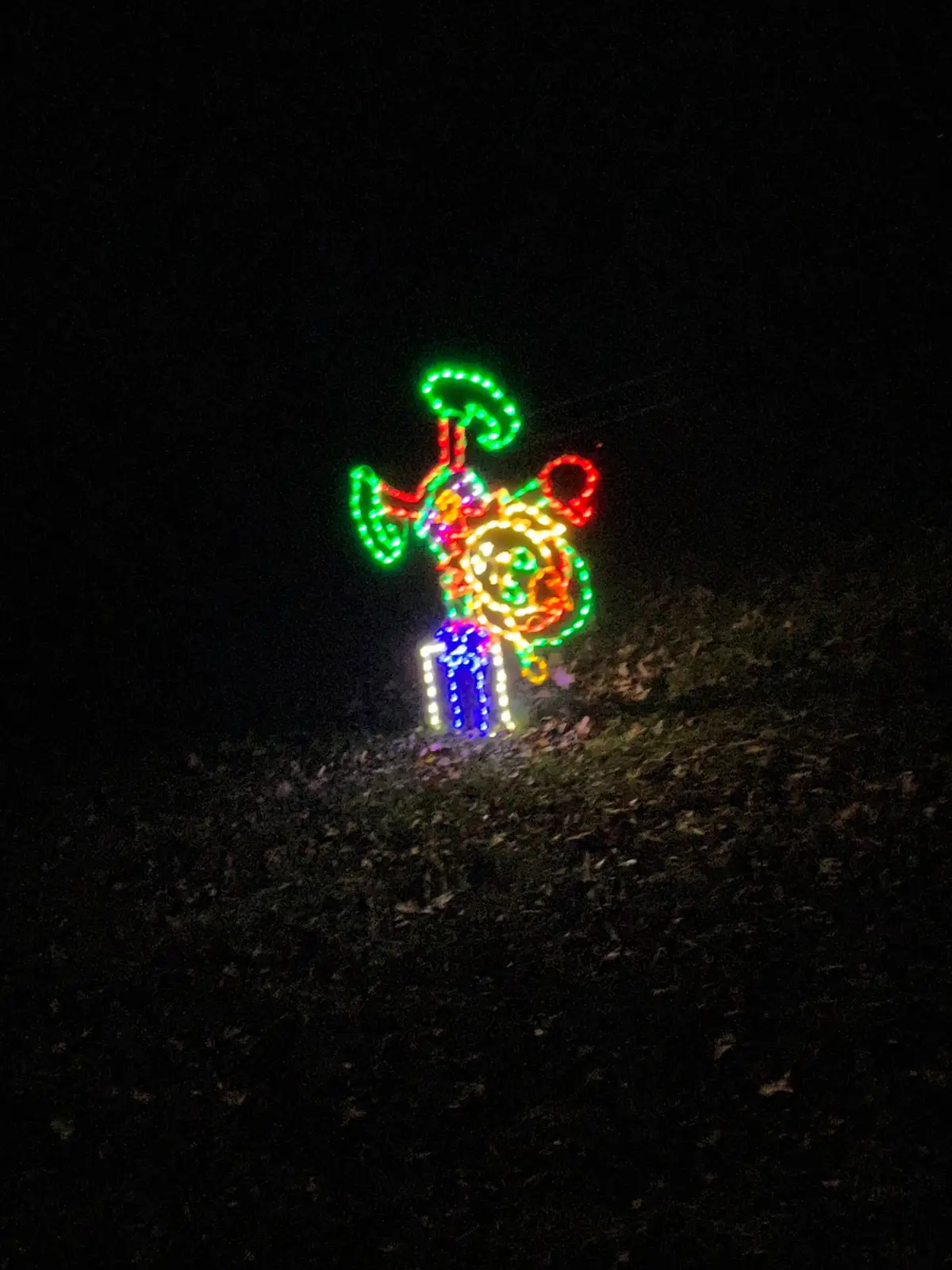
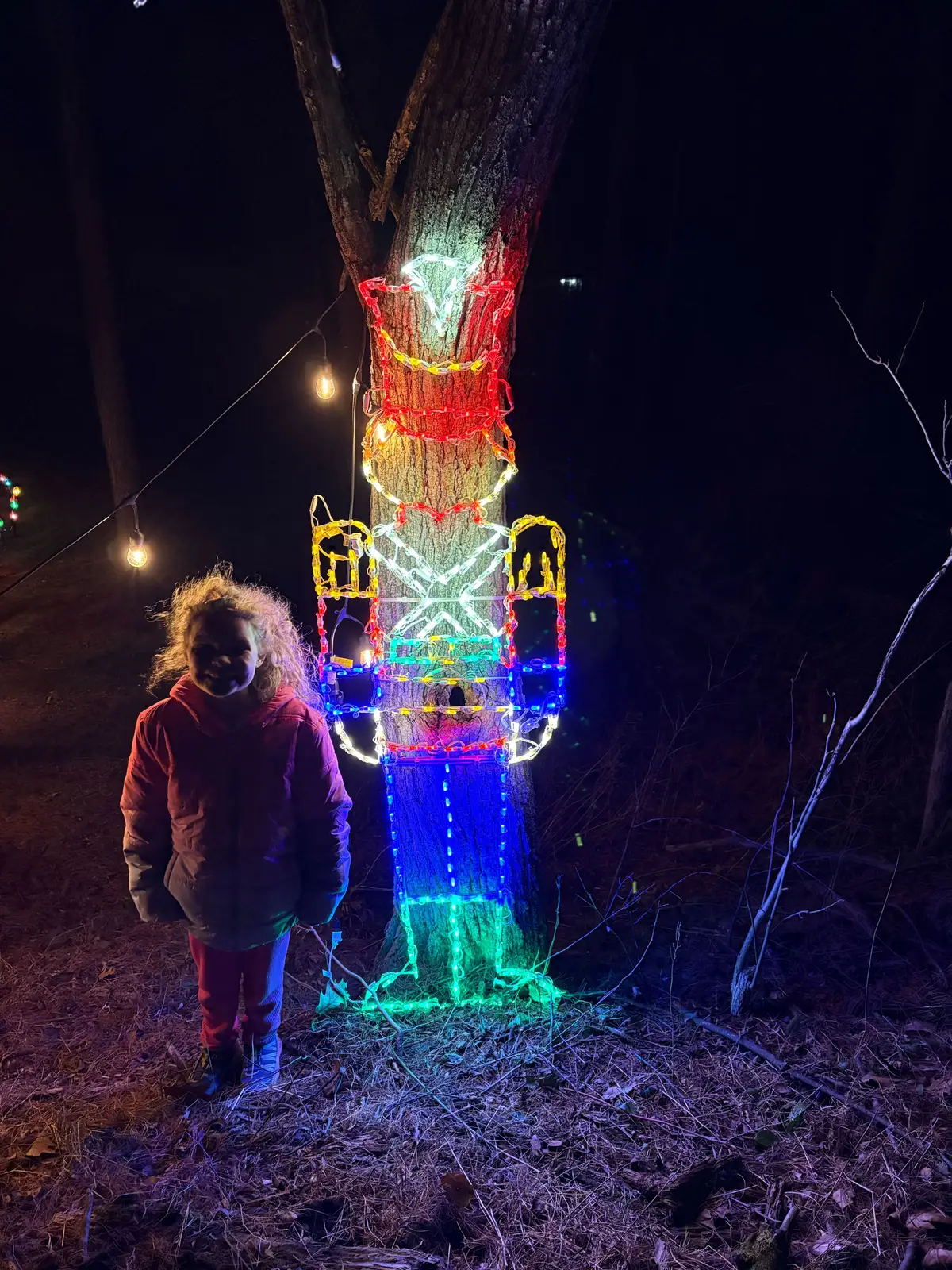
Track and trestle lighting sets the scene; wireframe figures give riders something specific to look for. A nutcracker or an elf figure placed beside the line reads as a landmark on the ride, the kind of thing a rider photographs and posts.
Placement matters as much as the figure itself. A nutcracker tucked where a railbike briefly slows on a curve gets seen and photographed; the same figure jammed against a straightaway most riders pass at a steady clip barely registers.
These are a different install than the RGBWW track system, standalone figures placed along the route rather than mounted to a structure, and they get scoped as part of the same design and install visit rather than a separate project.
The trestle and the depot are the anchor shots
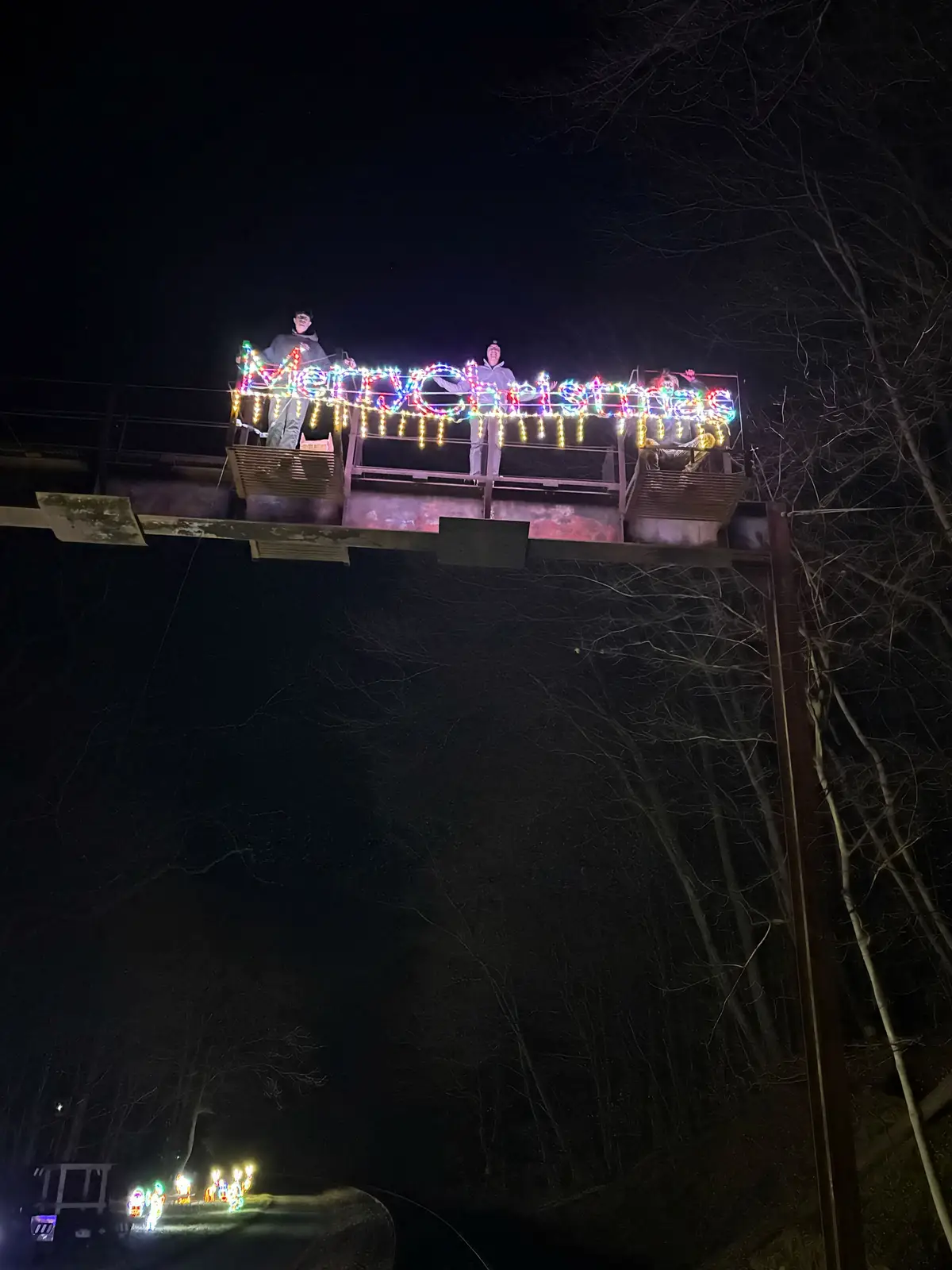
A trestle lit for Christmas night rides is the single most useful marketing image a railbike operator has, the shot that goes on the homepage and the holiday flyer. A lit depot sign works as the welcome moment at the start of the ride, the first thing riders see when they arrive.
Both get built into the design from the first site walk, not added later. Thraxel includes marketing photos and 4K video of the finished install as part of the standard scope, so operators leave with usable content, not just a lit route.
The depot doubles as the loading point for most routes, which means it is also the first thing a family sees while waiting to board. A warm, well-lit depot sets the tone for the ride before a single railbike leaves the platform.
Building toward the date without rushing it
Operators book the season between January and June, which for a December event means committing well before summer ends. Design, install and commissioning all need real time, and a trestle install coordinated around an operating schedule takes longer than a single-night job.
A route with a tunnel or a trestle takes longer to scope than a straight track-side run, so the earlier end of that booking window matters more for operators with those structures than for a simple depot-and-track build.
A mid-season check ahead of the December peak catches a dark pixel or a loose run before the busiest weekend of the year finds it first.
The install itself, particularly trestle and tunnel work, often happens in the fall, which puts it on the same calendar as an operator's own shoulder season. Scheduling that work while trips are lighter avoids competing with the operator's own daytime bookings.
Getting a Christmas railbike lit
AJ runs railbike and rail-tourism projects directly and can be reached at 240-730-4064. The conversation starts with a route walk and a render, the same process outlined at thraxel.com/blog/lighting-a-rail-route-for-tourism/.
Waiting until November to ask about a December ride puts the whole timeline at risk. The operators running this successfully since the 2025 season, including Tracks and Yaks in Frostburg, Maryland, started the conversation months earlier.
For an operator weighing whether the season justifies the build, the trip-by-trip math behind a lit night ride is broken out separately at thraxel.com/blog/railbike-night-rides-revenue-math/.