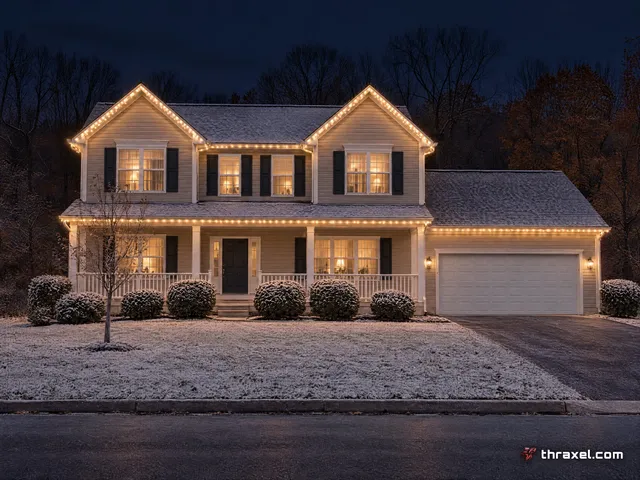
Straight answer
Are permanent lights visible during the day?
Not in any way that reads as lighting. The track is color-matched aluminum, fastened tight to the fascia or trim line, so in daylight it looks like a strip of house trim rather than a light fixture. It has passed every HOA Thraxel has worked in.

What is actually mounted to the house
The visible part of a Thraxel install is a low-profile aluminum track, not bulbs on a string. It sits tight against the fascia, soffit or trim line, and it is color-matched to the surface it is mounted on before install day.
Inside the track are individually addressable RGBWW pixels sealed in IP67 marine-grade silicone. That housing is what protects the electronics, and it is designed to sit flush enough that shadow lines and reflections do not draw the eye during the day.
There is no bulky junction box or exposed controller visible from the ground either. The controller itself is typically mounted somewhere out of sight, so what a passerby actually sees at noon is a slim strip of trim color, nothing that reads as equipment.
Why color matching matters more than people expect
A track that is the wrong shade against white siding or dark brick is the single biggest reason a permanent system reads as visible in daylight. Thraxel matches the track color to the fascia or trim during the design phase, before anything is cut or mounted.
On a white two-story home, that means white track against white trim. On a stone or dark-brick colonial common around Armstrong and Butler County, the color match shifts accordingly. The goal on every job is the same: from the sidewalk, you see your house, not a lighting product.
Where the track goes and why it disappears
Track typically follows the eaves and roofline, soffits, columns and fascia, plus landscape zones like pool decks, docks and fence lines where relevant. Each of those surfaces already has a natural trim line for the track to hide against.
Because the track is a fixed, tight-mounted strip rather than a loose strand, it does not sag, shift in wind, or catch light at odd angles the way seasonal C9 lights sometimes do when left up out of season. That stillness is part of what makes it read as architecture.
- Color-matched aluminum track, not exposed bulbs or wire
- Mounted tight to fascia, soffit, column and trim lines
- Has passed every HOA Thraxel has worked in
What this means for HOAs and daytime curb appeal
Because there is nothing obviously decorative to see by day, permanent lighting tends to be the easier system to get approved in HOA neighborhoods, compared with seasonal displays that come with a visible presence and a removal deadline.
It also means the system never looks out of season. A home does not carry a visibly unlit Christmas display into February, because there was never a visible display to begin with, just trim that happens to light up after dark.
For homeowners in a community with strict architectural review, that distinction tends to matter to a board more than the marketing language around it. Nothing to see is an easier sentence to approve than a description of a lighting product.
How to check it on your own house
The only real way to judge daytime visibility is to see the track color-matched against your actual siding, which is part of what the free on-site consultation covers. Thraxel measures your rooflines and picks the track finish before quoting anything.
You will also get a design mock-up of your specific house within 24 hours, showing both the daytime look and the lit result at night. Request one at thraxel.com/quote/ to see it against your own trim before deciding.