Install day
What actually happens the day the crew shows up
You do not need to be home, but most people are. Here is exactly what happens between the truck pulling in and the final walkthrough, so install day is not a mystery.

Before anyone touches a ladder
By install day, the design decisions are already made. The crew arrives with the design mock-up from your consultation and works from that plan instead of improvising on your roofline, which is a big part of why the job moves fast.
The truck carries the exact materials your house needs, sized off the measurements taken during the free consultation. There is no separate trip to source extra clips or a missing length of track.
You typically get a rough time window ahead of the visit rather than an exact minute, since ladder work and travel between homes both depend somewhat on the previous job and the weather that morning.
If your schedule that day is tight, mentioning it ahead of time helps. The office can usually give a narrower estimate for when the crew expects to arrive, even if an exact minute is never guaranteed on any outdoor job.
Meet the crew
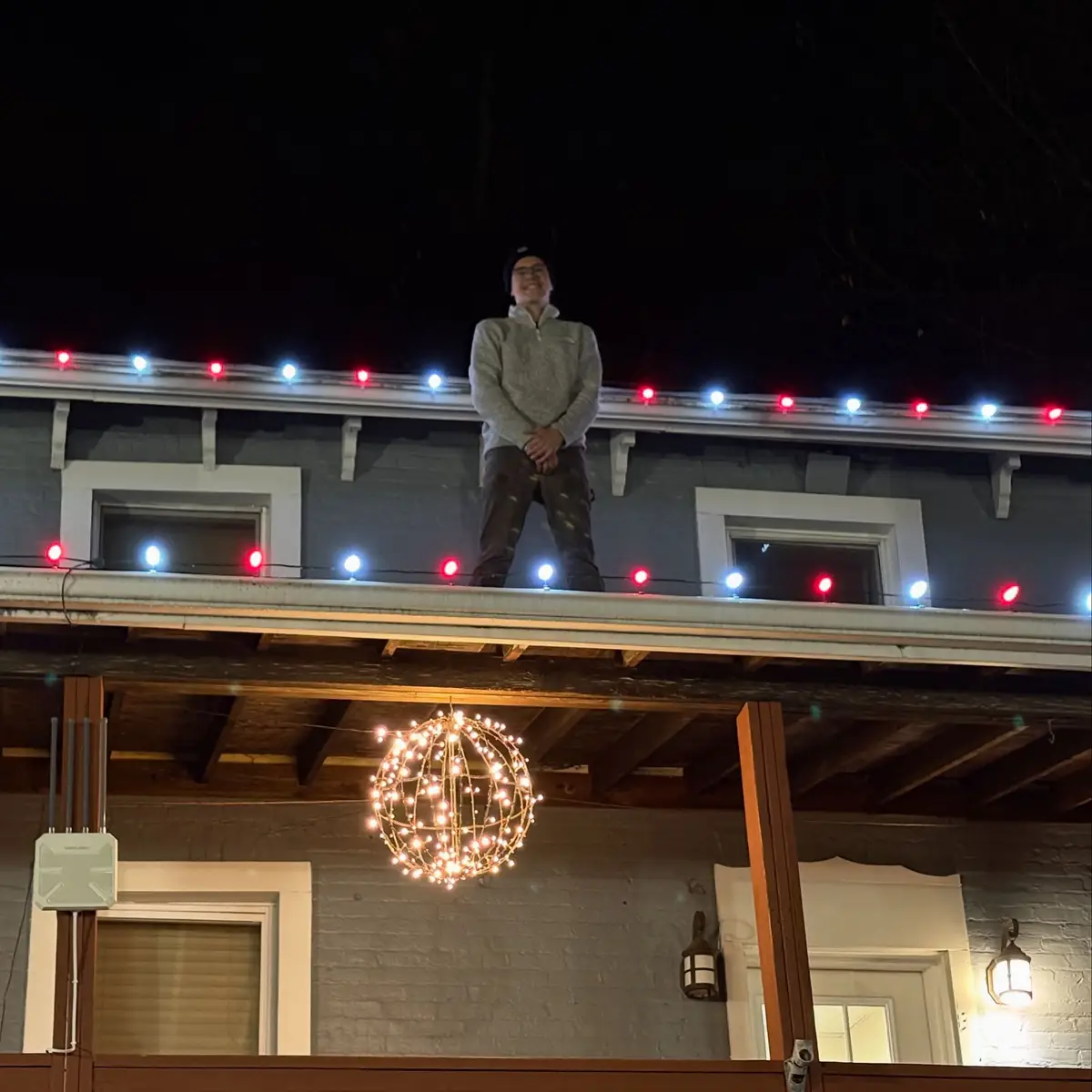
Our seasonal installers go by the Elves, and it is not just a name on paper. They show up in costume, play Christmas music while they work, and treat the job like the holiday it is decorating for, not just another service call.
Underneath the costumes it is a serious install crew, not a novelty act. Full PPE is standard, and the same attention to ladder safety and wire routing applies whether the crew is joking with a homeowner's kids or working a steep two-story pitch.
It also tends to be the part of install day neighbors remember most. A driveway full of Christmas music and a crew in costume is a fairly visible way to spend a Tuesday afternoon on a residential street, and it is not unusual for a passing neighbor to ask for a card.
How the crew moves through your property
Work usually starts at the roofline, since that is the longest continuous run and the anchor for the rest of the design. From there the crew moves to porches, columns and any windows or doors included in the plan.
Trees get wrapped last, since that work is done at ground level and does not compete with ladder access to the house. Cords are routed to stay clear of walkways and away from anywhere snow gets shoveled.
Connections are checked as each section finishes rather than all at once at the end, so a loose plug or a bulb that did not seat properly gets caught and fixed while the crew is still on that part of the roofline.
The crew installs only when weather permits, which sometimes means a job planned for a Tuesday morning shifts a few hours if rain moves in. That decision is about safety on the ladder, not convenience.
What you do not need to do
You do not need to be home, though most homeowners are for at least part of the day. You do not need to move outdoor furniture, though clearing an obvious path to the roofline helps the crew move faster.
You do not need to test anything yourself. That is the last step, and it happens with someone from the crew standing next to you, not after they have already left.
You also do not need to have the design decisions fully settled by the time the truck arrives, since those were already worked out at the consultation stage and confirmed in the design mock-up you approved beforehand.
The walkthrough before the truck leaves
Every install ends with a walkthrough. The crew runs through the design with you, confirms every section lights correctly, and shows you how to control the display from your phone before anyone packs up.
If anything looks off during that walkthrough, it gets fixed on the spot, not scheduled for a follow-up visit. Questions about scenes, timers or specific sections of the display all get answered while the crew is still standing there.
This is also a good time to ask about anything you noticed during the install that you were curious about, whether that is how a specific section was routed or why a particular clip type was used on your trim.
Questions people ask on the driveway
Homeowners often ask whether they can request a change on the spot, like adding a section that was not in the original design. Small adjustments can sometimes be made in the moment, though anything significant is usually better handled as a follow-up so it can be priced and scheduled properly.
Kids and pets are common enough on install days that the crew is used to working around both. A dog that would rather stay inside during the visit and come out for the reveal afterward is a normal request, not an inconvenience.
After install day
The season's in-season maintenance coverage starts the moment the crew drives away. If a bulb fails or a line gets knocked loose over the next several weeks, that is covered, not billed. Details on that coverage are at thraxel.com/blog/christmas-lighting-in-season-maintenance/.
If you have not booked yet and want to know what leads up to this day, see thraxel.com/blog/how-long-does-christmas-light-install-take/, or start with a free consultation at thraxel.com/christmas/.
Around Pittsburgh and Cranberry Township, install days often draw a bit more foot traffic simply because of denser neighborhoods, but the process on the ground is identical to a rural property outside Kittanning. The crew, the costumes and the walkthrough do not change based on the street.