February scenes
A Valentine's Day scene for the house, not just the dinner table
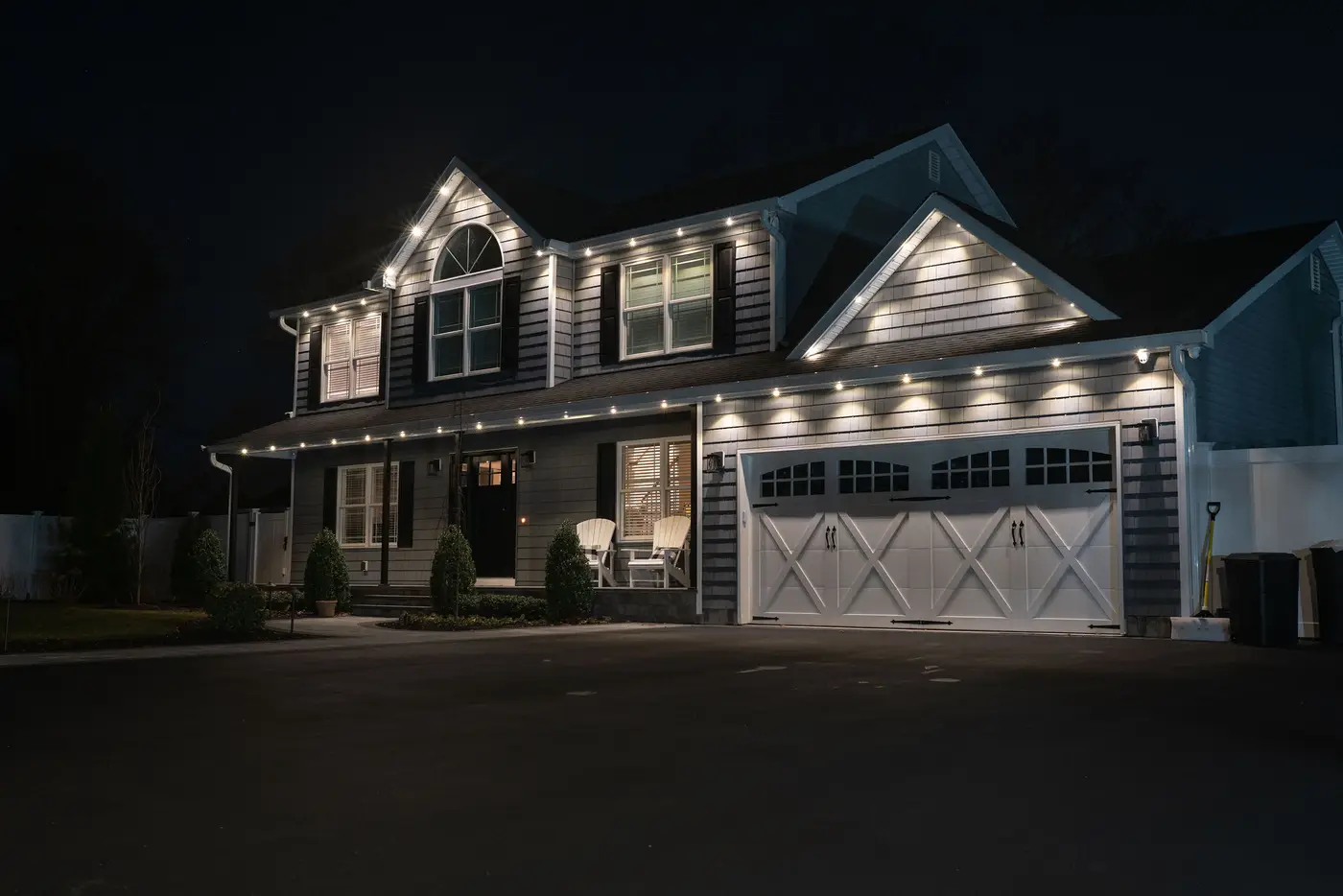
Valentine's Day is one of the named scenes on a Thraxel permanent system, and it is the one that surprises people the most. Red on the peaks, a soft pink along the eaves, warm white on the porch. Here is how the pink actually gets made and where it looks best.

Why February needs a scene at all
Nobody buys permanent lighting for Valentine's Day. People buy it for Christmas and the Fourth, and then somewhere in the second week of February they open the app, see the Valentine's scene sitting there, and tap it out of curiosity. Then it stays on for a week.
The reason it works is timing. Christmas lights are down. The snow is gray. Sunset in Western PA is around 5:30 in mid-February, so the house is dark through dinner. A little red and pink on the roofline is the only color on the street, and it costs nothing extra to run. The system is described at thraxel.com/permanent/.
It is also a low-effort gesture. Nobody has to hang anything, and if the other person hates it, it is gone in one tap.
Red, pink and the trouble with pastels
Red is easy. Every pixel has a red diode, and a saturated red at moderate brightness looks rich against brick, stone or dark siding. Pink is the hard part, and it is where the difference between RGB and RGBWW shows up.
An RGB-only strip makes pink by running red high with a touch of blue, and the result tends toward magenta. Thraxel pixels add a dedicated 2700K warm-white diode, and blending that white into red is what produces a softer, rosier pink that reads as Valentine's instead of neon. The technical side is laid out at thraxel.com/blog/rgbww-vs-rgb-explained/.
Our usual recipe is deep red on the peaks and gables, soft pink on the horizontal eaves, and the porch in plain warm white so the front door still looks like a front door.
- Classic: red peaks, pink eaves, warm white porch
- Quiet: warm white roofline with red on the columns only
- Bold: alternating red and pink blocks with a very slow fade
- Landscape: pink uplights on a bare tree, house in warm white
Where it looks best
Dark siding, brick and stone carry pink well. The color has something to sit against. On white or cream siding, pink at full brightness can wash the whole wall and the house starts to look like a bakery. On those homes we keep the roofline in red and warm white and put the pink on the landscape zone instead.
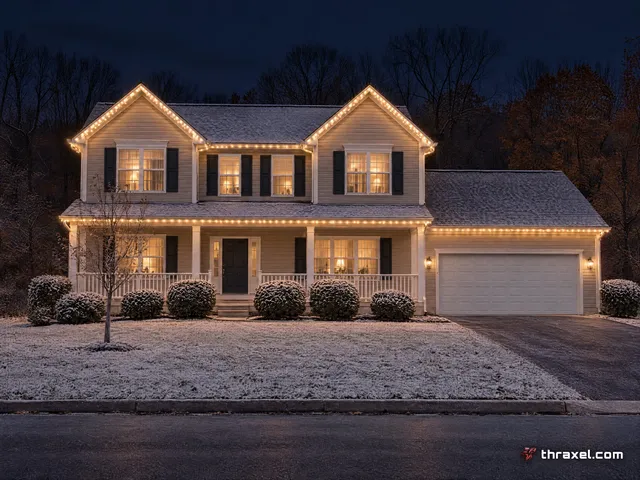
Columns and porch posts are the best spot for a small dose of color on a colonial. A red column beside a warm-white door is restrained and obvious at the same time. Butler and Indiana are full of brick colonials that suit this exactly.
Two-story homes with a strong front gable get the most out of a red peak. The eye goes there first, and the rest of the roofline can stay soft.
Dinner at home: patio and firepit zones
A surprising number of Western PA couples skip the restaurant and eat at home on the 14th, partly because every table in town is booked and partly because it is February and nobody wants to drive. If the property has a patio, firepit or covered porch on its own lighting zone, that is where the scene does its real work.
Firepit lighting in a dim red with the roofline in pink behind it is a good setting, and it costs nothing to set up if the landscape zones were part of the original install. Path lights stay warm white so nobody trips carrying plates. The landscape side of what we do is at thraxel.com/landscape/.
If you did not zone the patio at install, it can be added later. The controller handles more zones than most homes ever use.
Keep it subtle and the HOA stays quiet
Valentine's is not a holiday where anyone expects a light show, so the winning move is restraint. Brightness at 40 to 60 percent. No chases. A slow fade between red and pink at most. The house should look intentional from the street, not like a sale sign.
HOA boards in our footprint have not raised an issue with color scenes, because the track is color-matched to the fascia and effectively invisible in daylight, so there is nothing new on the house to approve. The scene is a setting on hardware that was already accepted.
One week is about right. Turn it on around February 8, leave it through the weekend after the 14th, then go back to Everyday Warm.
Set it once and reuse it every year
Scenes are saved, so the version you like this February is the version that comes back next February. The one you built in year one gets used in year ten, along with Halloween, Christmas, July 4th and Game Day.
Everything begins with a free on-site consult and a render of your actual house within 24 hours. Email hq@thraxel.com or use the form at thraxel.com/contact/ and ask to see the Valentine's scene on the render alongside warm white. It is a small ask and it makes the decision easier.