Sun damage
UV, fading and how long outdoor LEDs really hold their color
Winter gets the blame, but summer sun does more long-term damage to outdoor lighting than ice ever will. Ultraviolet light breaks down plastics, yellows lenses and shifts colors. Here is how the materials in a permanent system are chosen to slow that down, and what still ages.

What UV does to outdoor lighting
Ultraviolet light breaks chemical bonds in plastic. On a cheap light string that shows up as a wire jacket that turns chalky and brittle, a bulb cover that yellows, and a clip that snaps in your hand by the second season. The damage is cumulative, so a product that looks fine in year one can fall apart in year three without any single bad event.
A south-facing roofline in Western Pennsylvania gets a full summer of direct sun, and the eave is one of the hottest surfaces on the house by August. Dark trim colors absorb more heat and accelerate the process. That is the environment a permanent system lives in for the half of the year nobody thinks about.
The trouble with UV damage is that it is invisible until it is not. Nothing dims, nothing flickers, and then a jacket cracks at a bend and water gets in. The winter failure was actually caused in July.
Why the housing is silicone and not PVC
Silicone is one of the few common polymers that holds up to sustained UV without yellowing or going brittle. It stays flexible across a wide temperature range, which is why it is the standard jacket for marine and outdoor electronics. PVC is cheaper and fine indoors, but it chalks and stiffens in sunlight.
Thraxel pixels are encapsulated in an IP67 marine silicone jacket. The same seal that keeps meltwater out in January keeps the diode and its circuit protected from the UV that would otherwise age the housing. Salt testing, borrowed from marine hardware, is part of the same durability standard.
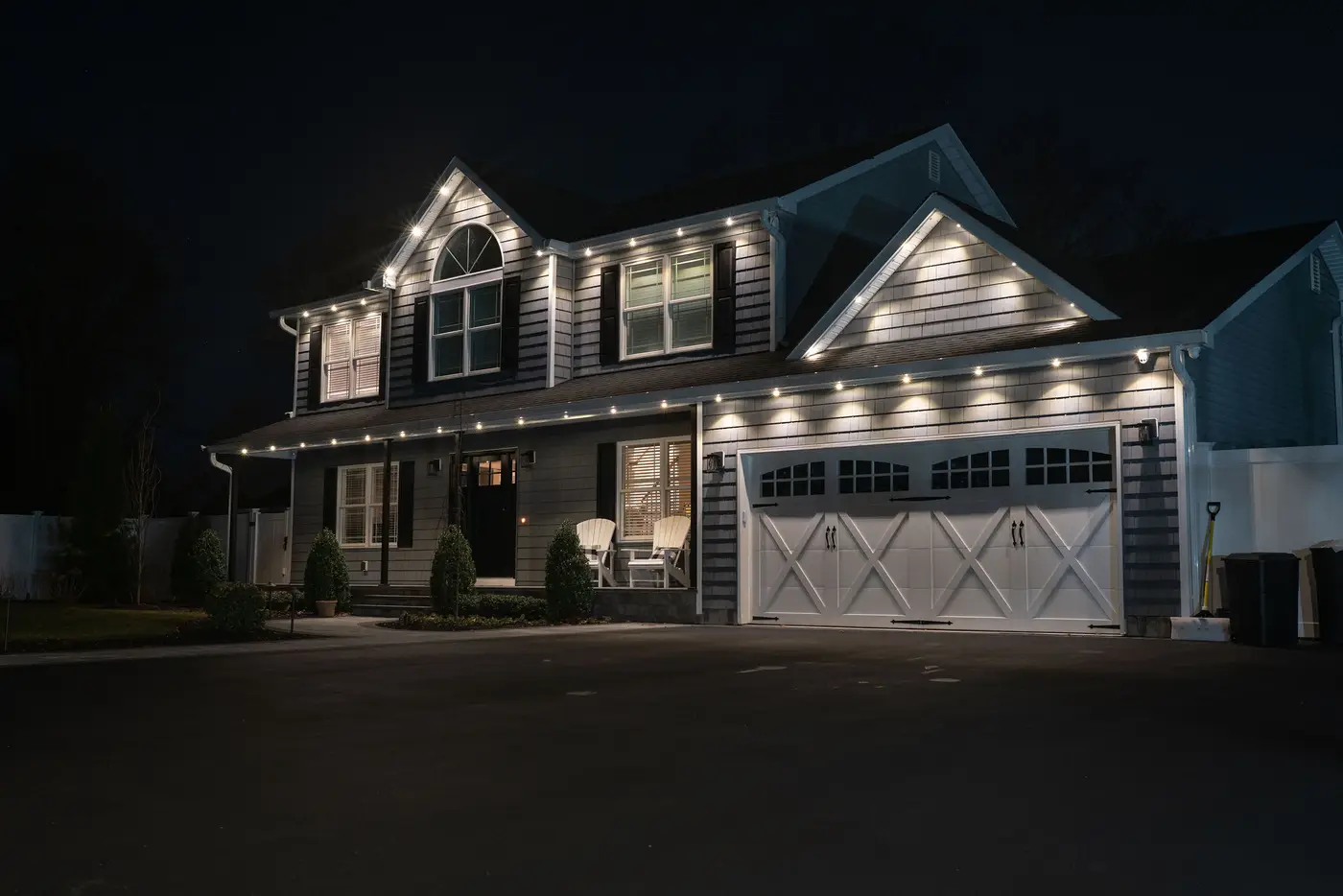
The diffuser face on the track matters too. It sits recessed inside the aluminum channel, so direct sun hits the track edge rather than the lens for most of the day. That geometry was chosen for daytime invisibility, but it also shades the part of the system most sensitive to UV.
Does the track fade?
The track is aluminum, color-matched to the trim at the time of install. Aluminum does not rust and does not become brittle in sun. Any finish will shift slightly over many years of direct exposure, the same way your trim paint and your siding do, and because the track is mounted tucked against that same trim, it ages alongside it rather than against it.
In practice the track is the least visible part of the system by day. Homeowners in Cranberry Township and Wexford with HOA architectural committees chose it for exactly that reason, and the committees signed off. A finish that is not noticeable from the sidewalk on day one is not going to become noticeable by fading a shade over a decade.
If a section of track ever needs to be swapped, it can be. The system is modular, and one length of channel comes off without disturbing the rest of the run.
LEDs dim, they do not burn out
An incandescent bulb has a filament that fails all at once. An LED has no filament. Over a long life it gradually produces less light, a process called lumen depreciation, and the decline is slow enough that most people never notice it in a roofline application. We will not print a lifespan in hours here because we cannot verify one for your roof, your sun exposure and your usage.
What we can say is what the design does about it. Every pixel in a Thraxel system is individually addressable, so a single unit that fails or drifts is diagnosed on its own and replaced on its own, typically the same day. You do not scrap a run because one diode aged faster than its neighbors. The mechanics of that are explained at thraxel.com/blog/individually-addressable-pixels-explained/.
Heat is the main driver of LED aging, and these pixels run cool. Each one draws roughly 0.3 watts, and a typical 168-LED installation running six hours a night uses about $52.80 in electricity per year. Low power means low heat, which means slower decline.
- No filament, so no sudden burnout
- Gradual dimming rather than failure
- Individually addressable, so one aged pixel is replaced alone
- Roughly 0.3 W per pixel keeps operating temperature low
Color shift and the warm-white question
Color is where aging shows up first on a cheap RGB system. Those strips fake white by mixing red, green and blue, and if the three diodes age at different rates, the white drifts toward pink or green over time. The mix was slightly off on day one and it gets worse.
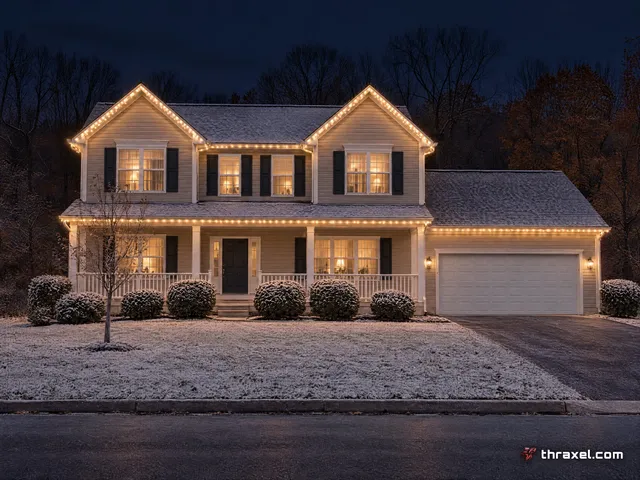
Thraxel pixels are RGBWW, which means a dedicated 2700K warm-white diode sits alongside the color diodes. Warm white comes from a single source rather than a blend, so there is no mix to drift. On the Everyday Warm scene, the roofline looks like warm white because it is warm white. The difference is laid out at thraxel.com/blog/rgbww-vs-rgb-explained/.
The 16 million colors are still there for Halloween, the Fourth and game day. They just are not doing the job of pretending to be white on an ordinary Tuesday.
What is covered and what we see in the field
Parts are warranted for 3 years and labor for 1 year. Fading, cracking or a pixel that drifts out of spec inside that window is a warranty item. Beyond it, the modular design means repairs are per pixel or per track section, never a full replacement.
The pieces of a permanent install that age fastest in our experience are not the pixels. They are accessories left in the sun: an unprotected controller enclosure, a cable tie that was not UV-rated, an outdoor outlet cover. We specify UV-rated ties and protected enclosures for that reason, and it is worth asking any installer the same question.
For a look at the full system and how the parts fit, start at thraxel.com/permanent/. If you want it on your own roofline, Tyson runs every quote, and Thraxel can be reached at 724-859-4390.