Outdoor evenings
Patio lighting ideas that hold up past sunset in Western PA
A patio only earns its keep after the sun goes down. The right lighting plan turns a slab of concrete or pavers into the room your family actually uses from May through October, and sometimes longer.

Start with three layers, not one fixture type
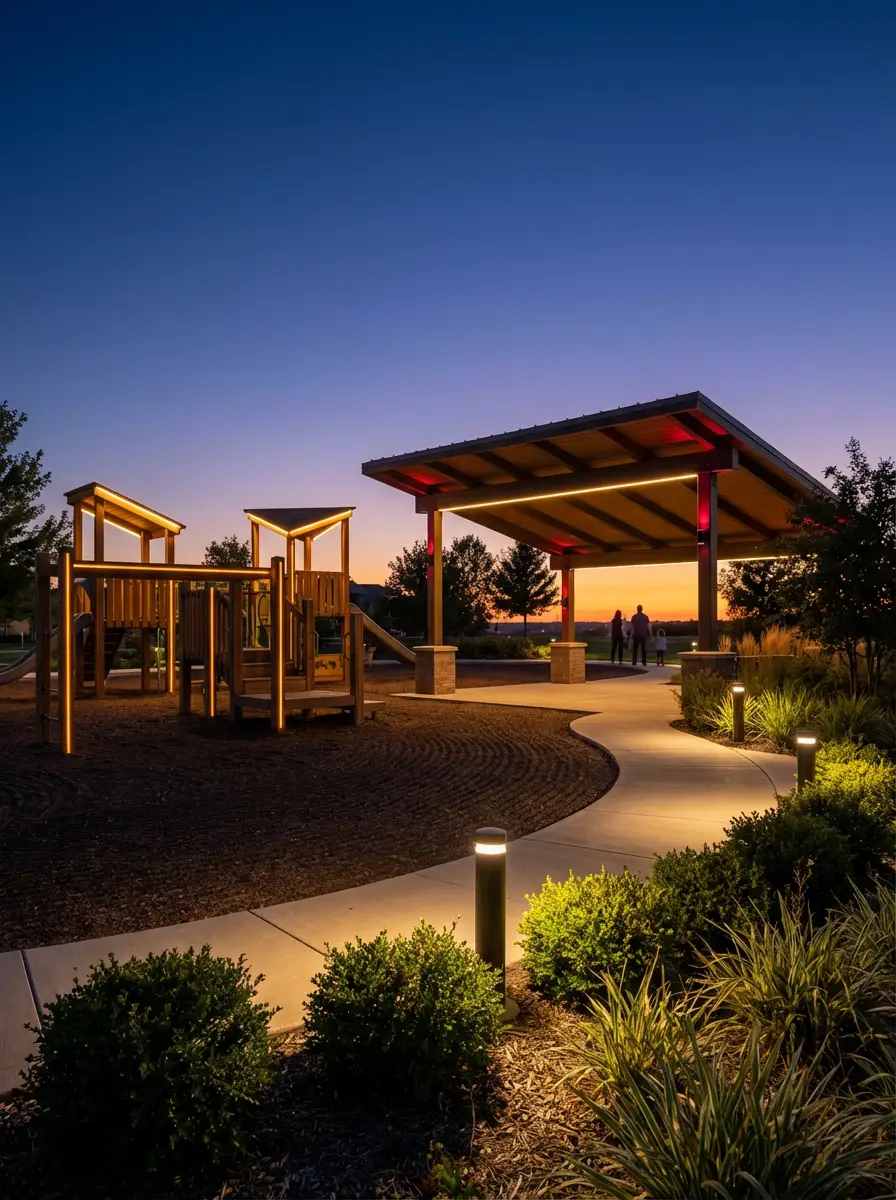
A patio that looks good after dark almost never relies on one kind of light. We build most projects around three layers: path or step lighting so people can move safely, low uplighting on anything with texture like a stone wall or a planted bed, and a soft wash over the seating area itself.
Skip the layering and you get one of two problems. Either the whole space is flat and shadowless under a single porch light, or it is dark everywhere except one harsh floodlight aimed at the grill. Layering fixes both.
Every fixture we place runs warm white as the default and can shift into color for a specific night, whether that is a graduation party or the Fourth of July. The system sits on an astronomical timer, so it comes on at dusk and off at a set hour without anyone touching a switch.
Lighting the seating area
Downlighting from a nearby eave, pergola beam or tree branch reads more natural on a patio than a string of bulbs strung overhead, though string lighting still has its place for a party look. The goal is soft light on faces and table tops, not a spotlight in anyone's eyes.
For patios attached to the house, we frequently tuck fixtures into the soffit above the seating zone and pair them with a lower path light run along the transition from lawn to pavers. That combination keeps the eating and lounging area evenly lit without a single glare point.
- Soffit or eave downlights over dining and lounge zones
- Low path lights along steps and paver transitions
- Uplights on a feature wall, chimney or specimen tree
Materials that survive a Western PA patio
Anything mounted at ground level on a patio takes splash from rain, hose water and the occasional dropped drink. Thraxel landscape fixtures use IP67 marine-grade silicone housing on 16-gauge wire, the same components rated for dock and pool installs, so a patio near a grill or a firepit is well within spec.
Winter matters here too. Freeze-thaw cycles heave pavers and loosen anything shallow. Our crews run wire below the frost-affected zone where the layout allows it and secure fixtures so a shifted paver in March does not mean a dead light in April.
What it costs, roughly
We do not publish Thraxel prices because every patio is a different size with a different fixture count, and the quote is free after a walk-through. National industry estimates commonly put installed landscape fixtures somewhere between roughly $150 and $400 apiece, with your final number shaped by fixture count, trenching distance and transformer sizing.
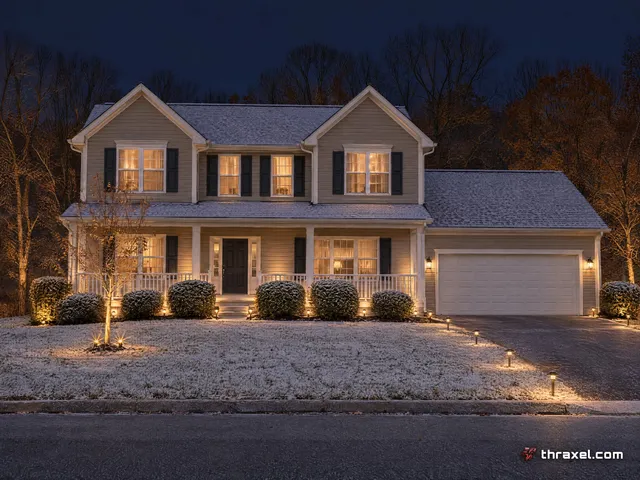
One residential project we point homeowners to for scale ran 3 zones and 68 fixtures across more than 1,000 feet of wire at 330 watts total. Most patios need a fraction of that, but it shows how a whole-property plan scales versus a single patio zone.
Design ideas by patio type
A covered patio with a low roofline does well with recessed or surface-mounted downlights tucked out of sight during the day. An open paver patio without any overhead structure leans more on ground-level uplighting and path lights since there is nothing to mount to overhead.
Raised patios with a retaining wall are a natural spot for horizontal accent lights set into or against the wall face, casting a wash down the stone rather than a hot spot on it. If the patio steps down toward a yard or a pool, that transition is exactly where step lighting earns its cost.
A small urban patio tucked between a house and a fence line benefits from a completely different scale of fixture than a sprawling paver patio on a half-acre lot. We generally use fewer, softer fixtures on a tight space, since a small footprint amplifies any glare or overly bright point far more than an open yard would.
Fire features change the lighting math
A firepit or an outdoor fireplace on the patio becomes the brightest, warmest point in the space once it is lit, which means surrounding fixtures should generally run dimmer so the fire stays the visual anchor rather than competing with a row of equally bright path lights nearby.
For patios without a fire feature, we lean harder on warm-white fixture temperature to get a similar cozy effect, since a cooler-toned light reads sterile next to furniture and landscaping in a way a warmer tone does not.
Either way, the same app controlling the rest of a property's lighting handles the patio zone too, so dimming the surrounding fixtures for a fire-lit evening is a setting change, not a rewiring job.
Keeping it running
Every Thraxel landscape system can be paired with an annual preventive maintenance visit and an ongoing service plan, so fixtures get checked, aimed and cleared of mulch or leaf buildup before each season starts rather than after a homeowner notices a dark corner.
A free on-site consultation is the starting point for any patio plan, and Tyson personally handles design through install for every job in the footprint. Text or call 724-859-4390 to get a layout sketched for your patio.