Paths and steps
Path and walkway lighting: spacing, height and where it actually goes
A path light exists to do one job first: keep someone from tripping in the dark. Everything after that, the spacing, the fixture style, the warm glow along a driveway, is what makes it look good while it does that job.

Safety comes before style
The first question on any path job is where someone could actually get hurt: a step down, an uneven flagstone, a spot where a walk narrows near a retaining wall. Those points get lit first, before a single fixture goes in for looks.
Once the hazard points are covered, the rest of the run fills in for consistency, so a walk does not go from lit to dark to lit again in a way that confuses the eye at night.
This matters more for guests than for homeowners themselves. A resident learns a walkway's quirks over time without thinking about it, but a visitor walking it for the first time in the dark, arriving for a party or dropping off a package, has no such advantage.
Spacing that actually works
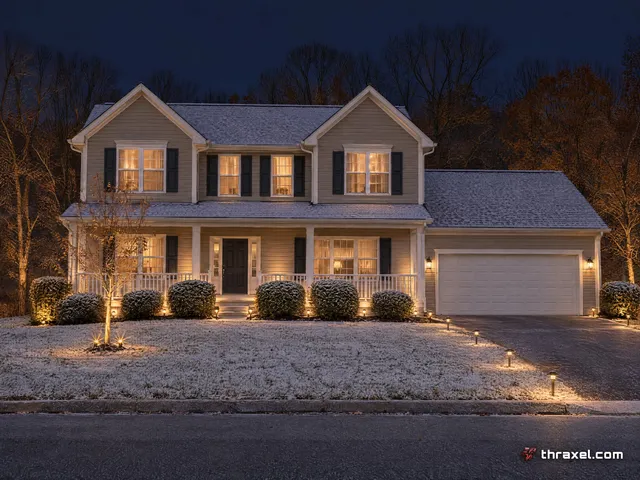
Too many path lights in a row looks like a runway. Too few and the gaps between fixtures create dark patches that defeat the purpose. Most walkways land somewhere around one fixture every 6 to 10 feet, staggered rather than lined up in a perfectly straight row.
Wider driveways and longer approaches use fewer, taller fixtures spaced further apart, since the goal there is defining the edge of the drive rather than lighting every inch of pavement.
Fixture height plays into spacing too. Lower, closer-to-grade fixtures need tighter spacing to avoid dark gaps, while taller bollard-style fixtures throw light further and can be spaced more generously without leaving a visible dead zone between them.
- Narrow garden paths: closer spacing, lower fixture height
- Front walkways: moderate spacing, staggered left and right
- Steps and grade changes: a fixture at every change, no exceptions
- Driveways: wider spacing, taller fixtures to mark the edge
Warm white almost always wins here
Path fixtures are functional lighting first, so warm white is the near-universal answer. It reads clearly against concrete, pavers, mulch or grass without the color-shifted look that some RGB fixtures produce at lower brightness.
That said, a driveway or entry sequence sometimes gets a scene change for a holiday or an event when it is tied into a larger property system. The path stays the constant while the mood around it changes.
Glare control matters as much as color temperature. A fixture that shines directly into a walker's eyes rather than down onto the path defeats the purpose regardless of color, which is why shielded, downward-focused fixtures are the standard choice for this zone.
What trips people up in Western PA specifically
Frost heave moves fixtures. A well-placed light in October can tilt a few degrees by March once the ground has gone through several freeze-thaw cycles. Annual preventive maintenance catches that before a fixture is aimed into a hedge instead of the path.
Steep driveways and stone steps, common on older Armstrong and Butler County properties, need more attention to grade changes than a flat suburban lot. Those are exactly the spots where a fixture earns its cost by preventing a fall, not just adding curb appeal.
Snowplowing and shoveling also put path fixtures at risk if they sit too close to a cleared edge. A design that accounts for where snow actually gets pushed keeps fixtures from getting clipped every winter by a plow blade or a snowblower chute.
Getting a plan built
A walkthrough maps every hazard point, every grade change and the full length of run before pricing anything. National industry estimates commonly run roughly $150 to $400 installed per fixture, and a typical front walk runs somewhere between six and a dozen fixtures depending on length.
Text or call Thraxel at 724-859-4390 to get a free consultation on the calendar, or start at thraxel.com/quote/ if you would rather submit details online first.
Longer driveways and multi-building properties sometimes benefit from a phased approach, lighting the entry sequence first and extending further down the drive in a second phase once the first section is in and proven out.
Fixture styles and how they change the feel
Low mushroom-style fixtures throw a soft downward pool of light and disappear into a bed by day, a common choice for garden paths that wind through plantings. Bollard-style fixtures stand taller, mark a straighter line, and work well along a driveway or a more formal front walk.
Recessed step lights, set directly into a riser or a retaining wall, are the cleanest option for stairs specifically, since the light source itself stays out of sight and only the pool of light on the tread below is visible.
Mixing styles across one property is normal. A formal bollard line down the driveway and softer mushroom fixtures along a garden path can both belong on the same job, since each fixture style is chosen for the specific job it is doing, not for matching every other fixture on the property.
Material finish matters too, since a fixture that looks sharp in a catalog photo can clash badly with an existing exterior. Bronze and dark aluminum finishes tend to disappear into a bed by day across most Western PA color schemes, while brighter or reflective finishes draw more attention than most homeowners actually want during daylight hours.
A property with a long approach off a rural road, common in parts of Armstrong and Indiana County, sometimes benefits from a distinct entry marker, brighter or taller than the rest of the driveway run, so a visitor unfamiliar with the property can find the turn-in at night without slowing to a crawl.