Winter mechanics
What freeze-thaw cycles actually do to landscape lighting over a Western PA winter
Western PA does not get one hard freeze and stay frozen. It swings above and below 32 degrees repeatedly all winter, and every swing moves the ground a fixture is set into, a little at a time.

What freeze-thaw actually is
Freeze-thaw is exactly what it sounds like: soil moisture freezes and expands, then thaws and contracts, over and over across a winter. Western PA's climate produces a lot of these cycles compared to regions that just get one long, steady freeze and stay there until spring.
Each cycle is small on its own, a fraction of an inch of ground movement. Across a full winter, and across several winters, that adds up to real, measurable shifts in anything set into soil rather than mounted to a hard surface.
A single Armstrong County winter can swing through freezing dozens of separate times between November and March, especially in a season with a lot of on-and-off snow rather than one long stretch of steady cold. Each of those swings is another small movement in the ground.
How it affects a fixture set in the ground
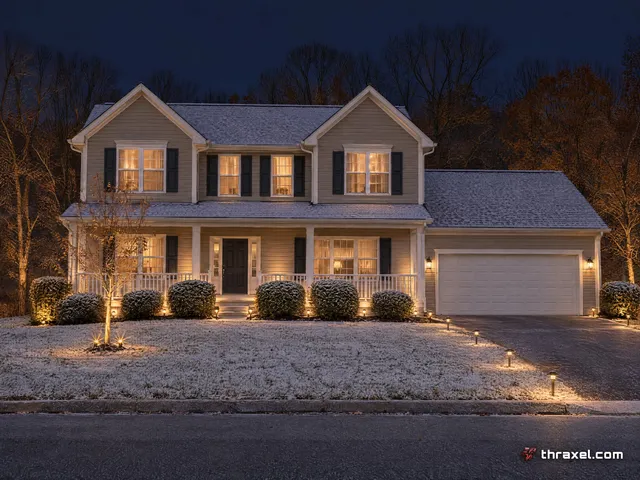
A spike-mounted or ground-set landscape fixture rides along with whatever the ground around it does. As soil heaves and settles through repeated cycles, a fixture aimed perfectly at a tree canopy in October can drift a few degrees by the time spring arrives.
Wire runs buried at shallow depth can also shift slightly, which is one reason proper burial depth and connection quality matter more in a freeze-thaw climate than in a region with steadier winter ground temperatures.
Soil type plays a role too. Clay-heavy soil, common in parts of the region, holds more moisture and tends to heave more dramatically than sandier, well-drained ground, which means the same fixture can behave differently depending on exactly where on a property it sits.
What holds up better
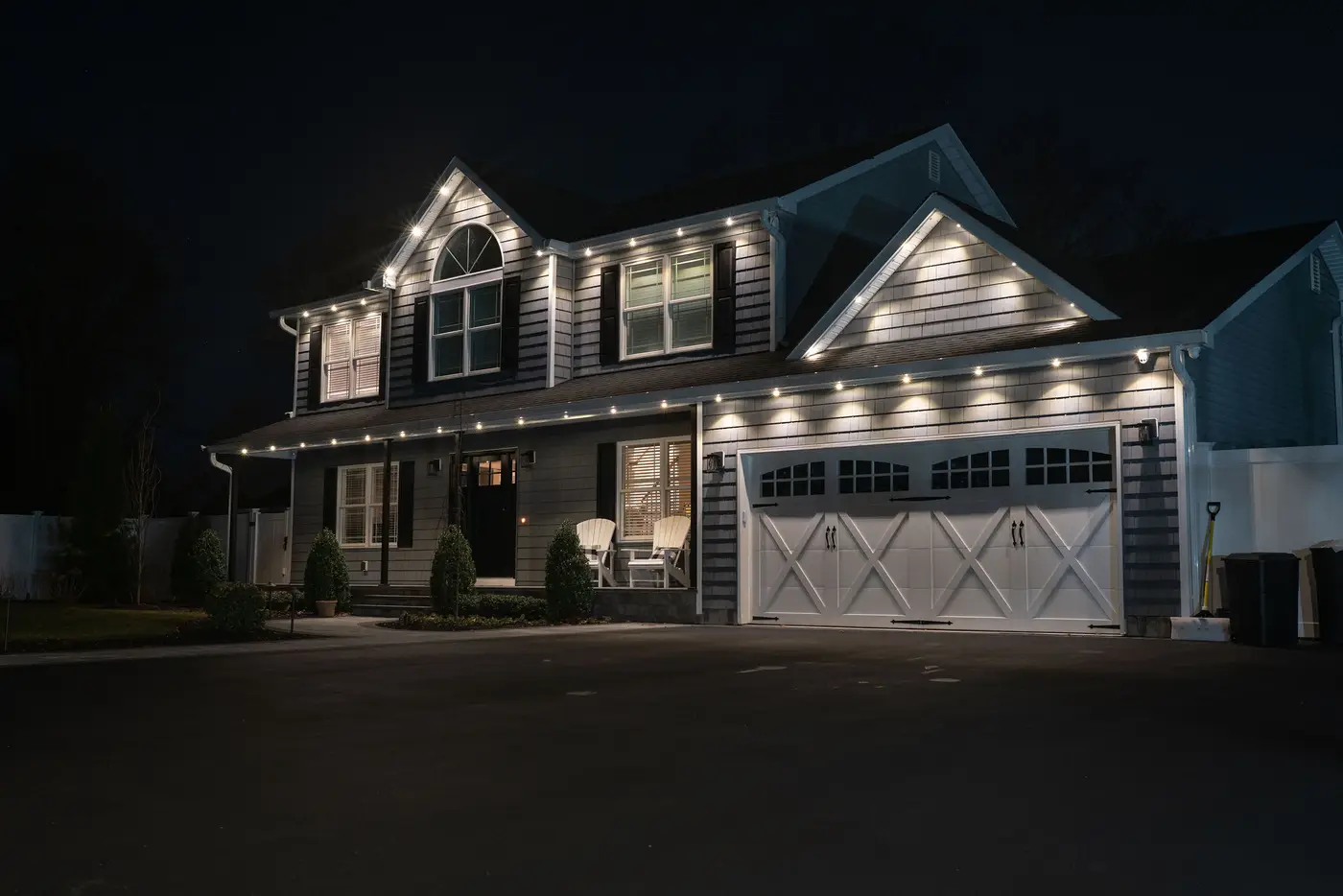
Fixtures mounted to a hard surface, a wall, a facade, a piece of hardscape, do not move with the soil the way ground-set fixtures do, which is part of why permanent roofline lighting on color-matched track sees essentially no aim drift compared to landscape fixtures in a bed.
For ground-set landscape fixtures, proper initial depth and stable mounting reduce how much a freeze-thaw cycle can move things, but nothing fully eliminates the movement in a climate that swings through freezing this many times a season.
A properly set fixture with a wider base and a deeper anchor point resists tipping better than a thin spike pushed shallowly into loose mulch, which is part of why installation technique matters as much as the fixture itself.
- Wall or hardscape-mounted fixtures: minimal freeze-thaw movement
- Ground-set fixtures in beds: most exposed to seasonal drift
- Wire runs at shallow depth: worth checking after a hard winter
- Fixtures near a driveway or walkway: extra exposure from plowing and salt runoff
Why annual maintenance exists because of this exact problem
This is the core reason Thraxel offers annual preventive maintenance on landscape systems specifically. A single check each year resets any fixture that has drifted, checks connections that shallow ground movement could have loosened, and catches the small stuff before it becomes visibly wrong from the street.
It is a different maintenance rhythm than permanent roofline lighting needs, precisely because roofline track is not exposed to soil movement the way a bed full of ground-set fixtures is. See thraxel.com/blog/landscape-lighting-maintenance-plans/ for what a visit actually covers.
A system that goes unchecked for three or four winters in a row often needs a more thorough reset than one checked annually, since small, individually minor shifts compound into a noticeably different aim pattern than what was originally designed.
What to do about it
If a landscape system has gone through a winter or two without a check, a maintenance visit is worth scheduling before assuming everything is still aimed the way it was originally designed. Small drift is easy to fix and easy to miss until it has compounded over multiple seasons.
Text or call Thraxel at 724-859-4390 to get a system checked, or ask about it on your next consult.
Spring, once the last real risk of a hard freeze has passed, is generally the best window to schedule this kind of check, since it comes after the season that causes the movement in the first place.
How this differs from what permanent roofline lighting faces
It is worth being clear about what freeze-thaw does not affect. Permanent roofline lighting, mounted to color-matched aluminum track on the fascia, does not experience ground movement at all, since it is never in contact with soil in the first place. Its winter durability concerns are more about ice load, wind and housing integrity than shifting position.
That is a genuinely different failure mode than a landscape fixture faces, and part of why the two systems get discussed separately even on properties that have both. See thraxel.com/blog/will-permanent-lights-survive-pa-winter/ for how the roofline side of that question is handled.
Homeowners weighing a full-property lighting plan sometimes assume all outdoor lighting faces the same winter risks. It does not, and understanding which zone faces which risk is part of what a thorough consult walks through before any installation happens.
A property with both systems installed together often gets its maintenance scheduled to reflect that split too, a lighter roofline check focused on physical damage and connections, alongside a more involved landscape check focused on aim and ground movement from the winter just passed. Knowing that split ahead of time helps set realistic expectations for what a single visit will and will not cover, and makes it easier to budget for both zones as one combined annual line item rather than two separate surprises.