Timing matters
The best time to light a new-construction home is before you unpack
A house under construction has no landscaping, no finished driveway and often builder-grade trim that has not been touched since installation. That blank slate is actually the ideal moment to plan permanent lighting, not a complication to work around.

Why timing beats architecture on a new build
Most of the posts we write about home styles focus on roofline shape, gables, dormers, porch columns. A new-construction home usually has a fairly conventional roofline compared to an older Victorian or a converted farmhouse. The bigger variable is timing, not shape.
Getting on the schedule before or right after closing means track goes up before landscaping crews are trenching cable lines through the yard, before a final coat of paint or stain goes on the trim, and before the driveway sees its first full season of use.
Homeowners who wait a year or two to add lighting are not doing anything wrong, but they are usually working around finished landscaping and settled sod that a pre-move-in install never has to think about.
There is no penalty for waiting either. A new-construction home lit two or three years after closing goes through the exact same consultation, render and install process as one lit before move-in. The only real difference is whether the crew is working around an established yard or an empty one.
Coordinating around the builder's schedule
Fascia and trim need to be fully installed and, ideally, in their final color before track goes on, since color-matched aluminum is fitted to the actual finish, not a placeholder. That usually means waiting until the builder's exterior work is complete, even if interior punch-list items are still open.
We coordinate the on-site visit around that milestone rather than a fixed closing date, since builder schedules shift. A quick text with an updated completion estimate is usually enough to get the visit rebooked.
Some homeowners reach out during the framing or drywall stage, well before exterior trim exists, just to get a general sense of scope and pricing range. That is a reasonable time to start the conversation, even though the actual on-site measuring visit still has to wait for finished trim.
What a typical new-build roofline needs
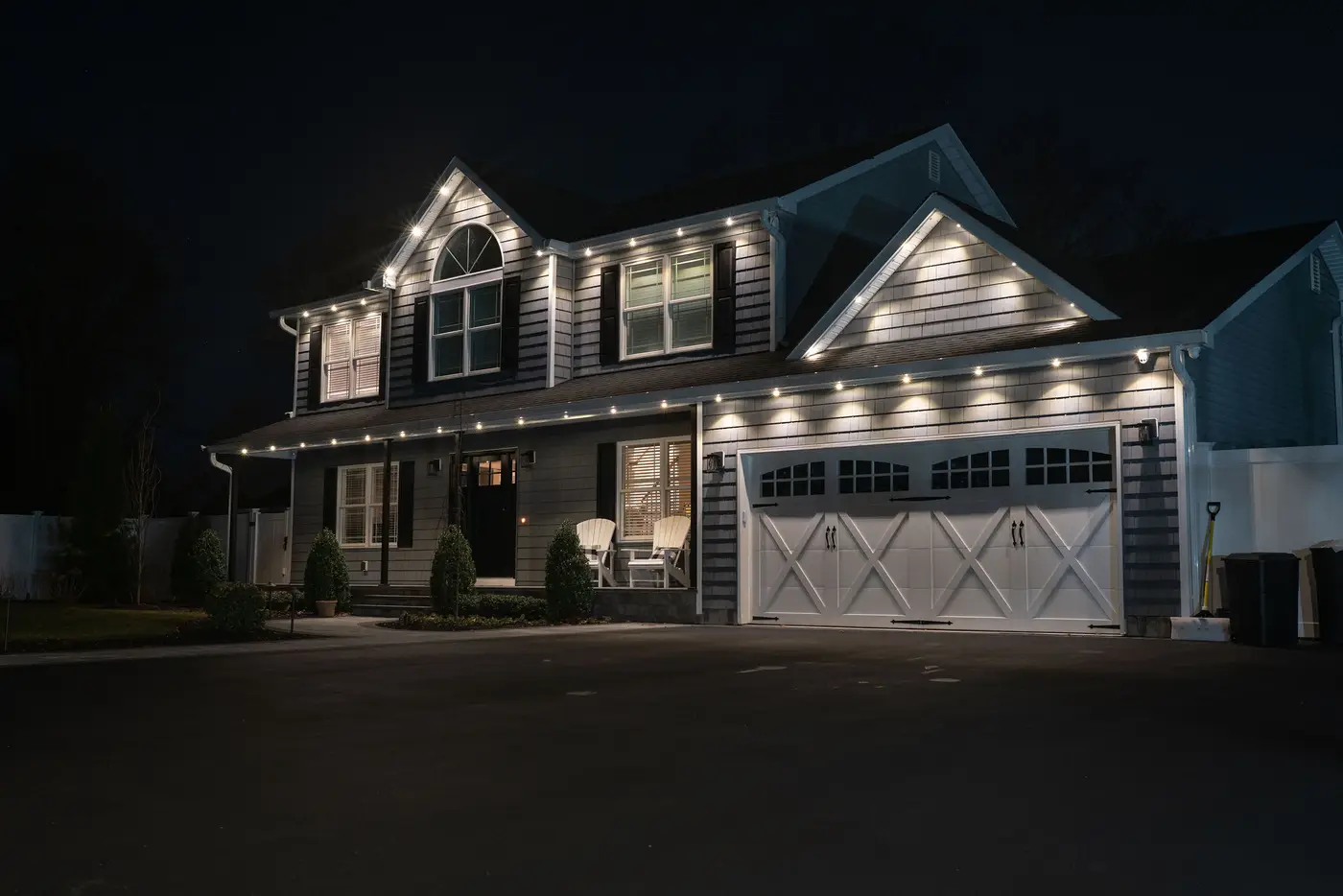
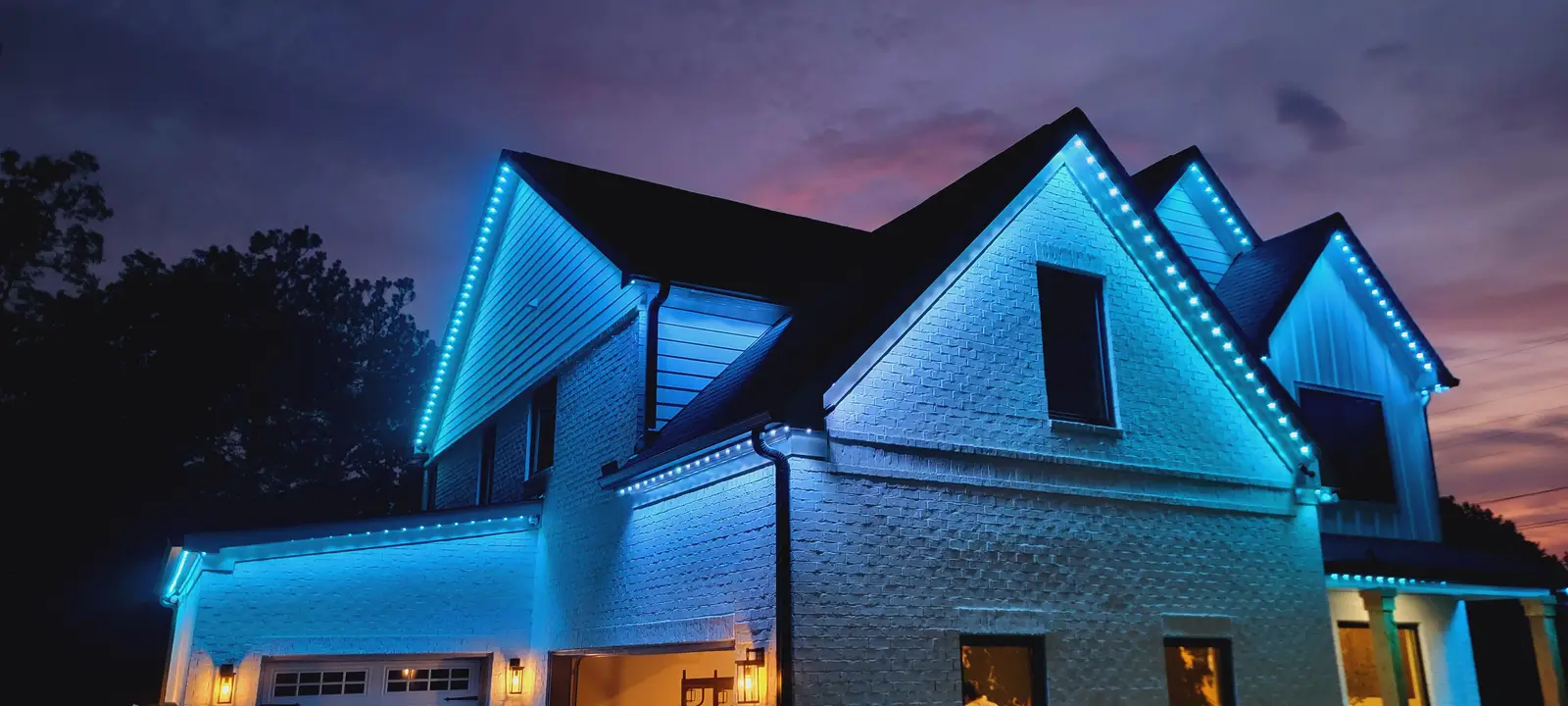
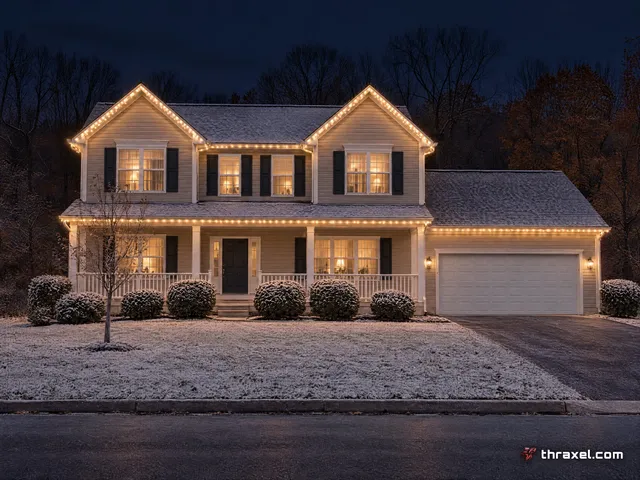
New construction in this region tends to fall into a handful of common shapes: a modern farmhouse gable, a traditional two-story colonial line, or a craftsman-influenced ranch, and the zone planning follows whichever of those shapes the specific house is built as.
The one thing new construction adds that older homes usually do not is a genuinely blank landscape bed, which makes planning a combined roofline and landscape lighting package in one visit more straightforward than retrofitting an established yard.
- Roofline and eaves, planned off final trim color
- Garage returns and porch columns, per the specific floor plan
- Landscape bed uplighting or path lighting, planned before sod or plantings go in
New developments and HOA review
A lot of new construction sits inside a new development with an active HOA or architectural review board, sometimes with rules still being finalized as the neighborhood fills in. Because color-matched track disappears by day, it has generally been one of the easier exterior additions to get approved.
It has passed review in every HOA Thraxel has worked in. Where a development's review process is still new or informal, we recommend checking with the builder or HOA board before install day regardless, covered generally at thraxel.com/blog/how-to-get-hoa-approval-for-exterior-lighting/.
Financing a new build's exterior alongside a mortgage
Buying new construction usually means a lot of exterior costs land in the same window, landscaping, a fence, a driveway sealcoat, sometimes a deck. Adding permanent lighting on top of that list is a real budget question, not an afterthought, and we treat it that way during the quote conversation.
The 0% APR financing available for qualifying buyers, up to 24 months, is specifically useful in this window, since it lets a new homeowner spread the lighting cost alongside other move-in expenses rather than pulling it from a single upfront budget already stretched across several projects.
We do not push financing as the default option, some homeowners prefer to pay outright, but we make sure it is part of the conversation given how common it is for new-construction buyers to be managing several exterior projects at once.
What we skip on a new build
We do not install before exterior trim and siding are finished, even for an eager homeowner, since mounting to unfinished or temporary surfaces risks damage during the remaining construction work. The wait is short and worth it.
We also do not assume landscaping plans that have not been finalized. If a homeowner is still deciding on bed layout, we plan the roofline zone first and schedule the landscape zone as a second visit once beds are set.
We do not run cable in a way that would need to be dug up if a driveway extension or a patio pour is still on the builder's punch list. Confirming the full scope of remaining exterior work before wiring anything underground avoids a redo down the line.
Getting a new build on the schedule
The free design mock-up works the same way on new construction as on any home, built from an actual photo of your house within 24 hours, once exterior trim is in place. Financing at 0% APR for up to 24 months is available for qualifying buyers, which some new homeowners use to bundle the install into their broader move-in budget.
Text Thraxel at 724-859-4390 once your builder gives a completion date for exterior trim, and we can pencil in the on-site visit around it.
Most new-construction installs finish in one to two days, similar to a comparable resale home of the same style, since a modern roofline shape rarely adds extra complexity to the actual mounting work beyond a normal consultation.