Doing the math
How many lights does a roofline need? Fewer than you think, placed better than you expect
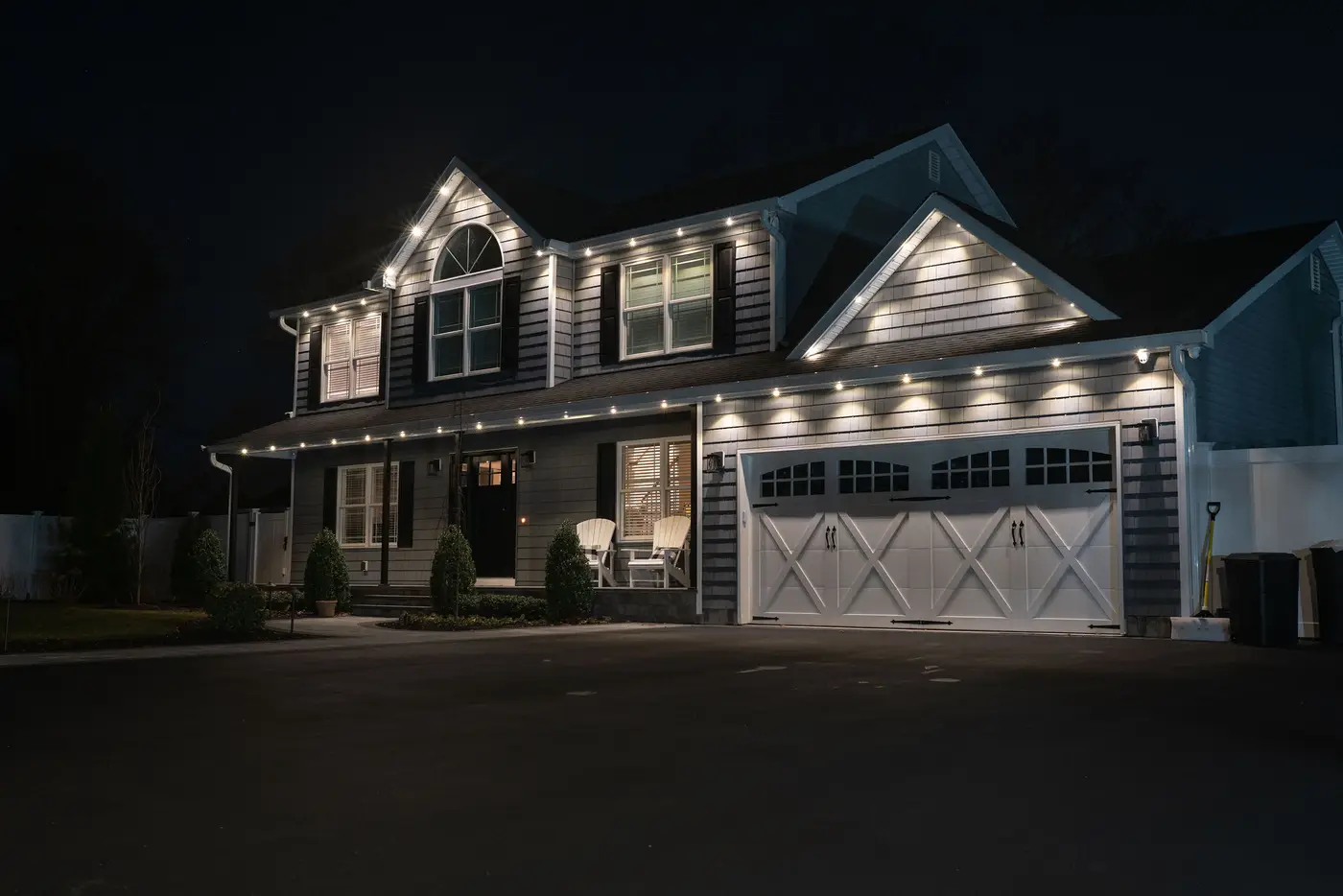
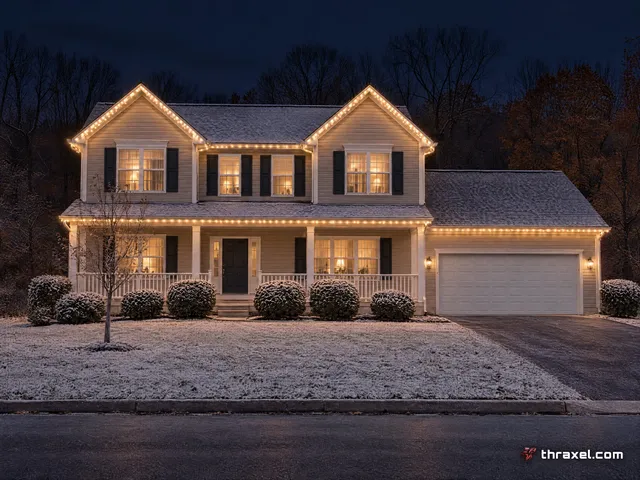
The count comes from the length of your roofline and the fixed spacing of the pixels in the track, and the render shows you the exact number before install. A typical Thraxel home runs around 168 LEDs. A big Erie colonial ran 312 feet of roofline across six zones.
The honest answer: we measure, we do not guess
There is no correct number of lights for a roofline in the abstract. There is a correct number for your roofline, and it comes from two inputs: the linear feet of fascia we are tracking, and the fixed pixel spacing inside the track. Multiply one by the other and you have the count. The free consult measures the first, the product sets the second, and the 24-hour render shows the result.
For reference, a typical residential install we quote lands around 168 LEDs. That is the figure behind our energy estimate of about $52.80 a year at six hours a night. A large two-story with wings, dormers and a detached garage can run well past that, and a single-story ranch can come in under it.
What adds to the count
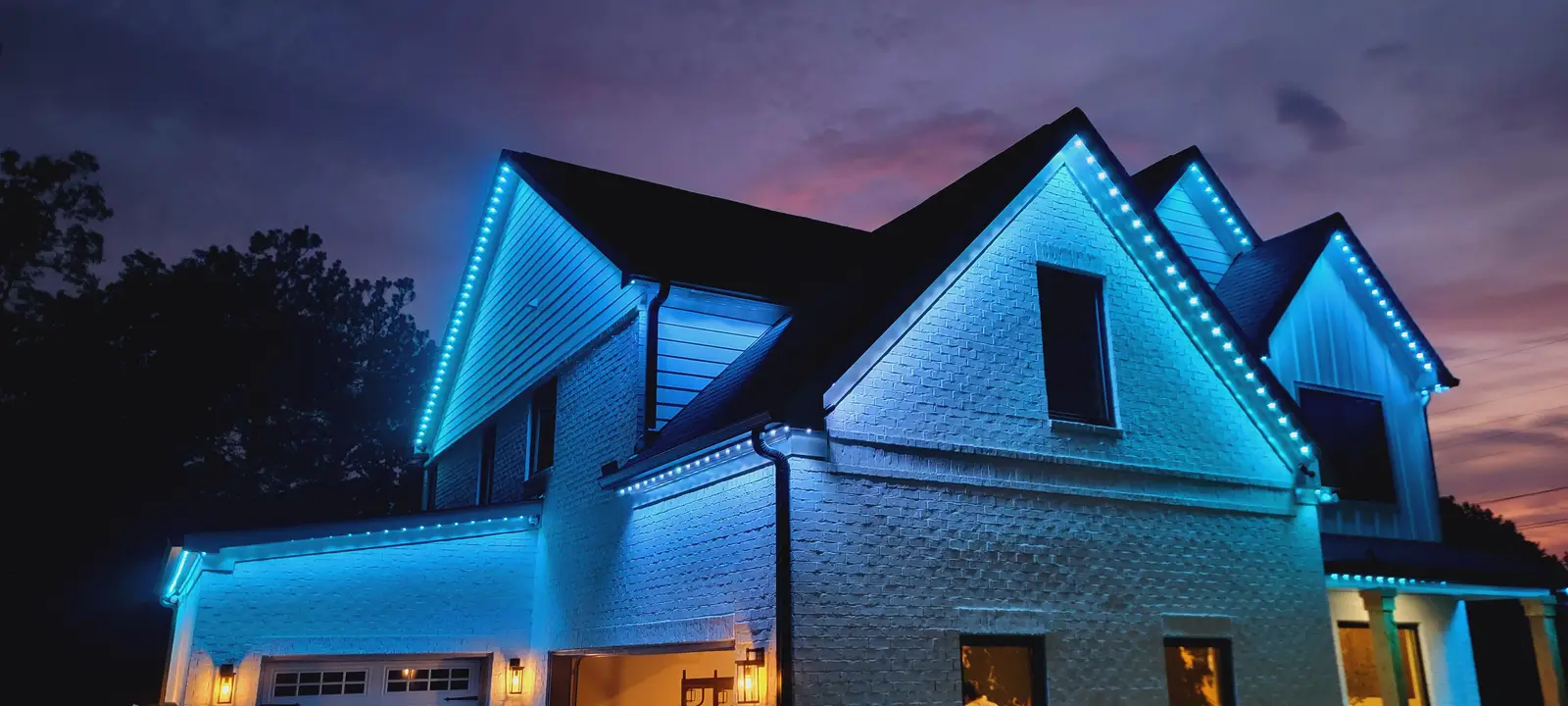
Linear feet is the main driver, and it is not the same as the footprint of the house. Every peak, gable return and dormer adds run. A brick colonial in Butler with a simple front-facing roofline is short. A split-level in Lower Burrell with three roof planes facing the street is longer than it looks from the curb.
Then there is scope. Do you want the front elevation only, or the full perimeter? Do the soffits, columns or the fence line get tracked? Each is its own zone with its own pixel count. That Erie colonial with 312 feet of roofline was six zones, which is what let the owner light the front in warm white and the peaks in color independently.
- Front elevation only: the smallest count and the most common starting point
- Full perimeter: roughly doubles the run on most homes
- Peaks, dormers and returns: each one adds feet you do not see from the street
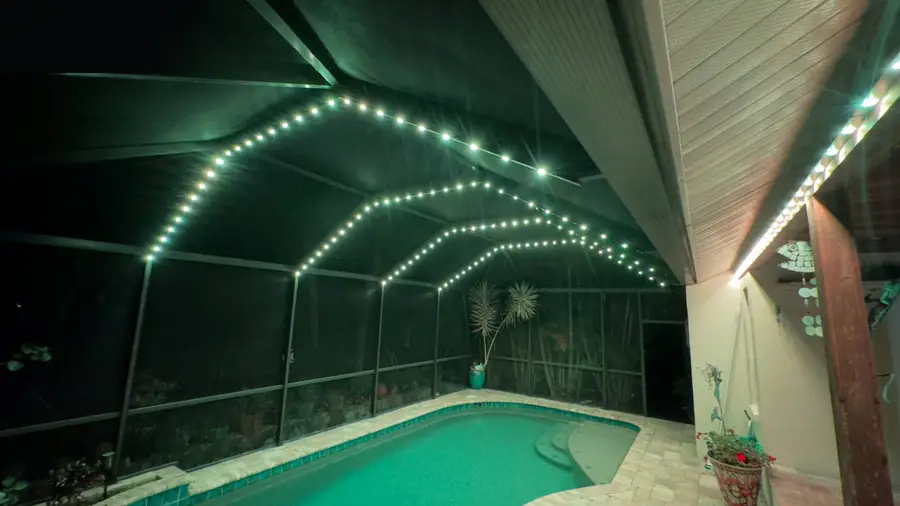
- Extra zones: columns, soffits, fence line, dock, pool house
Why more is not better
People sometimes ask for the lights to be denser, thinking brighter. On a roofline, that usually reads worse. The goal is a continuous even line of light, not a runway. Because the pixels sit at fixed spacing inside the track, the line is already even. Doubling the count doubles the cost and adds glare without adding beauty.
Brightness on our system is set in the app, not by cramming pixels. If a warm-white scene is too strong for a quiet street in Fox Chapel, you dim it. If a Halloween scene needs punch, you push it. Same hardware, different setting.
What the count means for the bill
Each RGBWW pixel draws roughly 0.3 watts. So a 168-pixel run is around 50 watts when everything is lit, and the yearly electricity cost at six hours a night is about $52.80. Double the count and you roughly double that figure. It stays a small number even on a big house.
What we will not do is print a Thraxel price per pixel or per foot. Every property differs, which is why the quote is free. For a rough sense of scale, national industry estimates for permanent roofline lighting commonly fall between roughly $20 and $50 per linear foot installed, and your property will differ, which is why we come measure. More on that at thraxel.com/blog/what-drives-permanent-lighting-cost/.
How the render settles it
After the consult you get a design mock-up of your actual house within 24 hours, built from the measurements the crew took on site. It shows where the track runs, how many zones, and the look at night. The pixel count is fixed by that drawing, so the number you approve is the number that goes on the house.
If the first render is more than you want, we trim scope, front elevation only, or fewer zones. If it is less, we add. Most homes install in one to two days regardless, because the crew cuts and mounts track to the plan rather than improvising on the ladder.
Get your number
The only way to know how many lights your roofline needs is to have someone measure it who measures rooflines for a living. The consult is free, the demo case comes along, and the render arrives inside two days. Request it at thraxel.com/quote/ or see the spec first at thraxel.com/permanent/.
Every 16xxx ZIP is on our daily route, so if you are near thraxel.com/areas/butler/ or anywhere in Armstrong County, scheduling is quick. Thraxel takes the call or the text at 724-859-4390.