Who to hire
Handyman vs lighting installer: what changes when you hire the specialist
A good handyman will hang the strands you bought and charge fairly for the afternoon. A lighting installer sells the design, the hardware, the insurance, the warranty and the phone call in December. Here is where the line sits and when a handyman is still the right call.

Two different hires
Hiring a handyman for lights means you supply the product and the plan, and you pay for labor. Hiring a lighting installer means the installer supplies the design, the product, the mounting method, the crew, the insurance certificate and the follow-up, and you pay for the outcome. The handyman is cheaper because you are buying less.
That is not a knock. Handymen fix the things nobody else will touch and most of them are worth every dollar. The question is which parts of a lighting job you want to own yourself.
What a handyman does well
Availability and price. A local handyman in Monroeville or Greensburg can often come this week, hang the strands you already own on a one-story porch, plug them into a timer and be gone in two hours. For a modest display that lives on a railing and a few shrubs, that is a fine deal.
They also do the odd stuff. Running a new exterior outlet, replacing a rotten fascia board before the real install, moving a downspout that blocks a run. We have recommended handymen for that prep work more than once.
- Fast scheduling, hourly or flat labor
- Fine for a porch, railing or single-story front
- Useful for prep work an installer does not do
What changes with a lighting installer
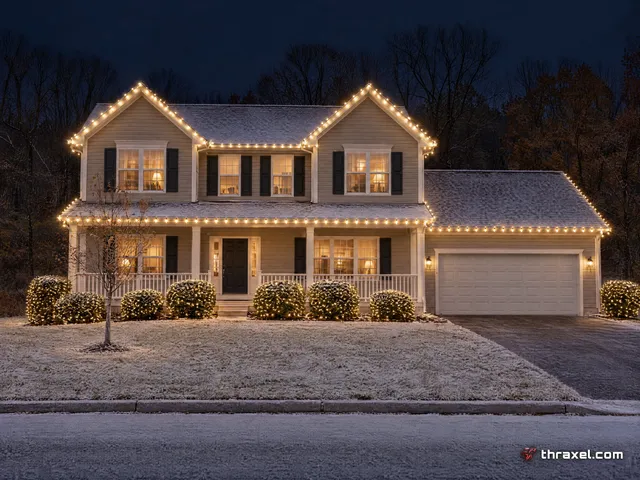
Design. Before anyone climbs, we render your actual house so you approve the roofline, the peaks, the columns and the color before a clip or a track goes up. A handyman hangs what you point at.
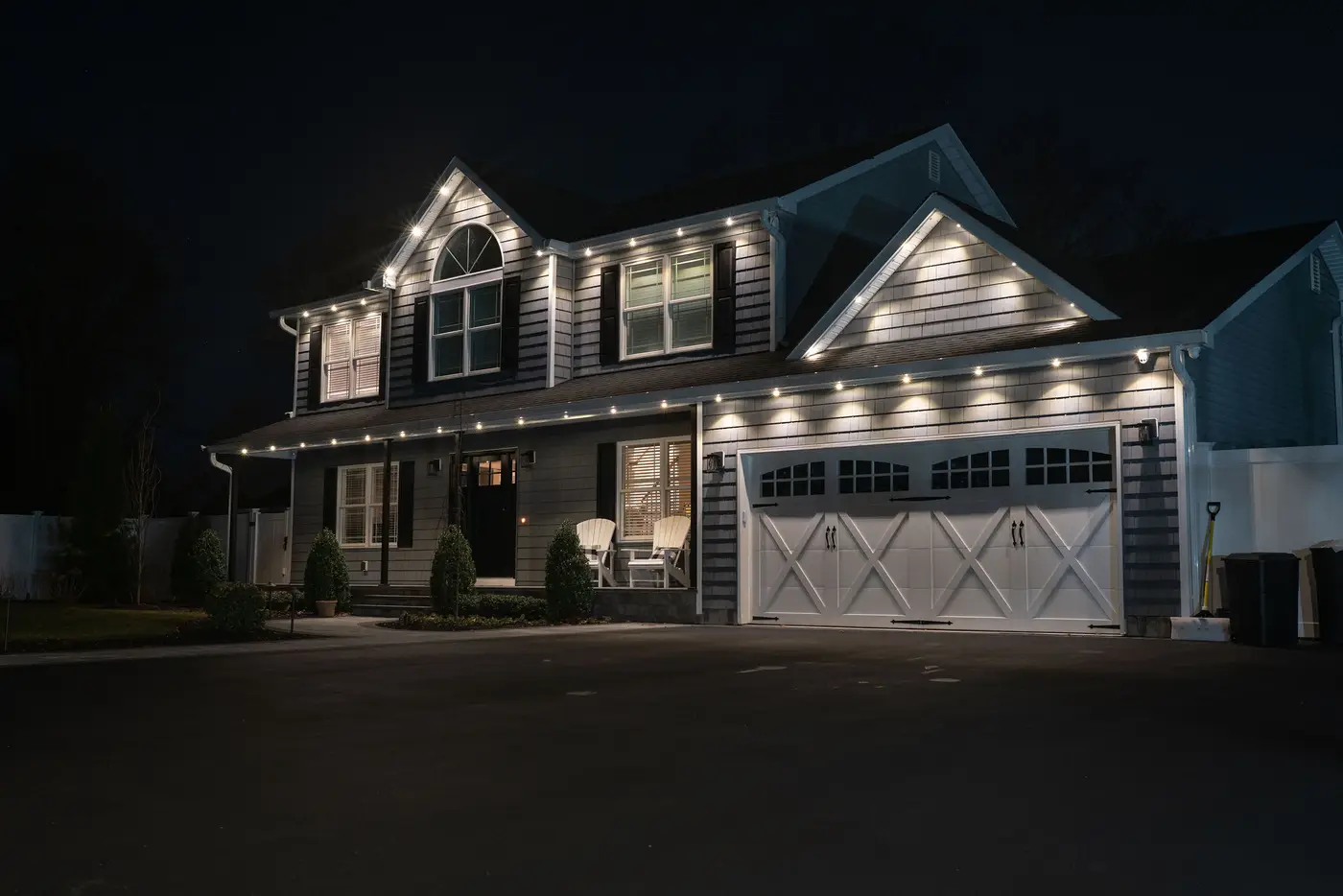
Hardware. Installers carry commercial-grade product: LED C9 with the right clips for seasonal work, or RGBWW pixels in IP67 silicone on 16-gauge wire inside color-matched track for permanent work. All of it UL, ETL and CUL certified. What a handyman hangs is whatever came in the box from the store.
Certification and insurance. Our crews hold the manufacturer-required install certifications, and the company is fully insured, which matters the moment a ladder slips or a screw finds a wire. The liability piece is spelled out at thraxel.com/blog/insured-installers-and-your-liability/.
Warranty and service. Seasonal work gets a 24 to 48 hour no-charge repair response all season and a January 4 takedown with storage. Permanent work gets 3 years on parts and 1 year on labor. A handyman's job is done when the truck leaves.
The mistakes that separate the two
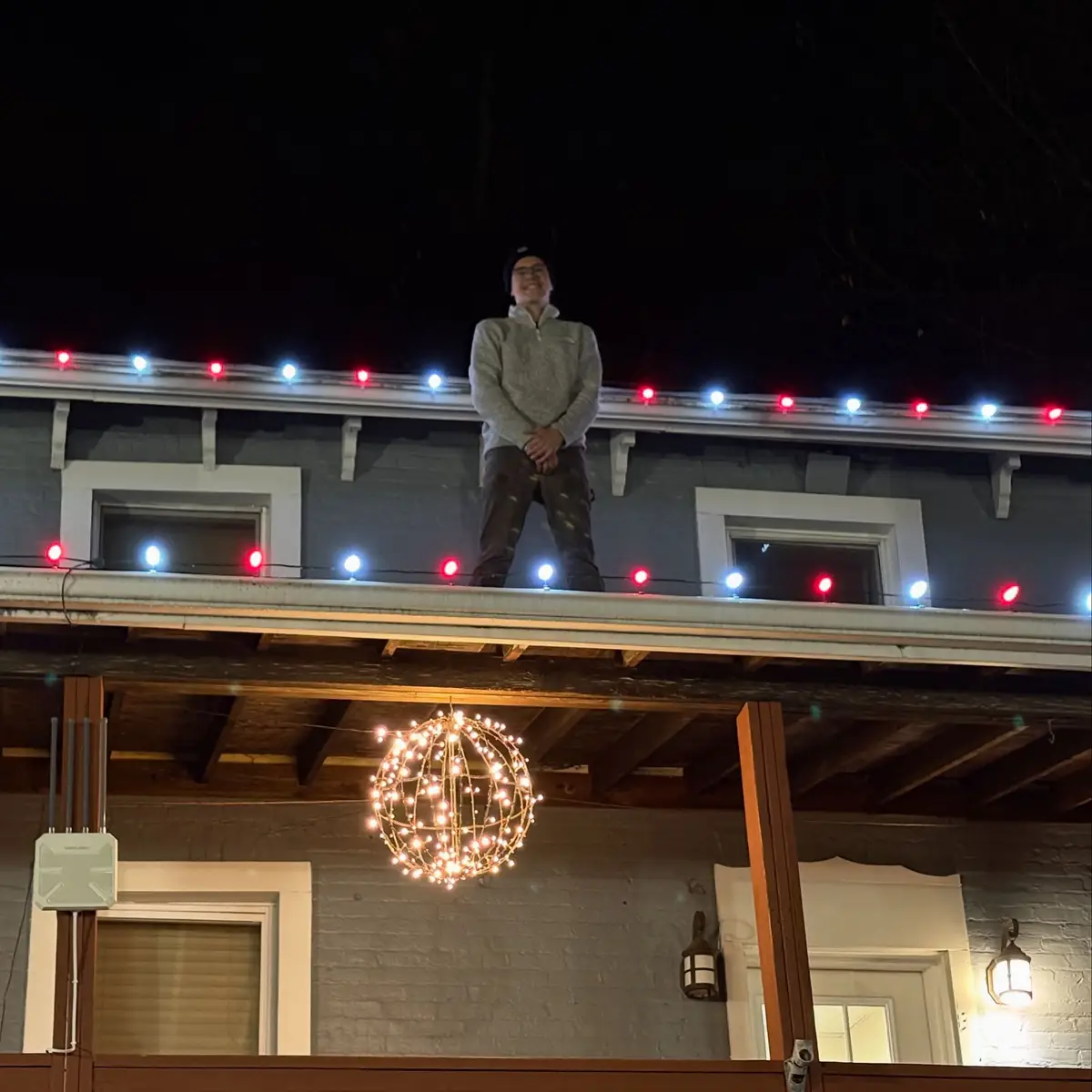
The failures we get called to fix have a pattern. Staples through wire insulation. Drywall screws through the fascia. Strands daisy-chained past their rated load into an outlet with no GFCI. Clips on the wrong edge so the ice takes the whole run in January. None of that comes from bad intent. It comes from doing a specialty job with general tools.
Roof damage is the expensive one. Walking shingles in cold weather cracks them, and the leak shows up in March. Our post at thraxel.com/blog/roof-damage-from-diy-lights/ covers what to look for. An installer works from the eave and the ladder, not the roof surface, and knows which fasteners are allowed on which material.
Permits are the quiet one. Landscape and permanent lighting can touch electrical and township rules. We handle the paperwork before the ladders come out. A handyman generally does not, and neither will you until the inspector asks.
When the handyman is still the right call
Small, low and simple. If the entire display is a porch rail, a doorway and two shrubs, and the strands are new LED with GFCI on the outlet, a handyman is the sensible hire and we will say so on the phone.
Prep work. Fascia repair, a new outlet, gutter fixes, tree trimming that clears a run. Get that done first and the lighting install goes faster and cheaper.
Anything above one story, anything permanent, anything in an HOA, or anything you want someone to answer for in December belongs with an installer.
How to vet whoever you hire
Ask for the insurance certificate, in writing. Ask what fasteners go into the house and what happens to the holes. Ask who comes back when a section fails and how fast. Ask what the warranty says in years. For a permanent system, ask if the white is a real 2700K diode. If the answers are vague, keep looking.
Ours are on the free consult, with a render of your house back within 24 hours and a demo case on the driveway. Book at thraxel.com/quote/, or reach Thraxel directly at 724-859-4390 by call or text.