Ladder or crew
DIY vs professional Christmas lights: what you are really paying for
Hanging your own lights is cheaper on cash and more expensive in Saturdays, ladders and December failures. A professional install costs more up front and hands every one of those problems to someone else. Here is how to decide which trade you want to make.
The honest answer up front
Doing your own Christmas lights makes sense when the house is one story, the roofline is simple, and you actually enjoy the Saturday it takes. A professional install makes sense when the house is two stories, the roof is steep or icy, the family is short on weekends, or the last attempt ended with a trip to urgent care. Neither answer is wrong. They are answers to different questions.
We hang lights for a living in Armstrong County and the surrounding 16xxx ZIPs, so we have a bias. We also hung our own lights as kids on a ladder that should have been retired years earlier, so we understand the appeal. This post lays out what each route really costs, in money and in weekends, so you can pick without guessing.
What DIY gets right
The obvious win is price. A few boxes of big-box strands, a bag of gutter clips and an afternoon put a lit roofline on a ranch home for less than any professional service will charge. If the house is low, the ground is flat and the outlets are where you need them, you are done by dinner.
There is also control. You pick the bulb, the spacing, the color, and you can change your mind on a Tuesday night in December without calling anyone. Some families in Butler and Indiana treat the hanging itself as the tradition, cocoa and all, and no service replaces that.
- Best fit: single-story homes, simple rooflines, people who like the job
- Real cost: the strands, the clips, your Saturday, and the storage bin
- Weak spot: anything above the first floor, and anything that fails on December 20
Where DIY quietly costs more
The receipt is not the whole bill. Consumer strands tend to last a few seasons before sockets corrode or a section goes dark, so the purchase repeats. Staples and nails through wire insulation are the most common shortcut we see on homeowner installs, and they are also a fire and shock risk. Read thraxel.com/blog/christmas-light-safety-no-staples/ before you reach for the staple gun.
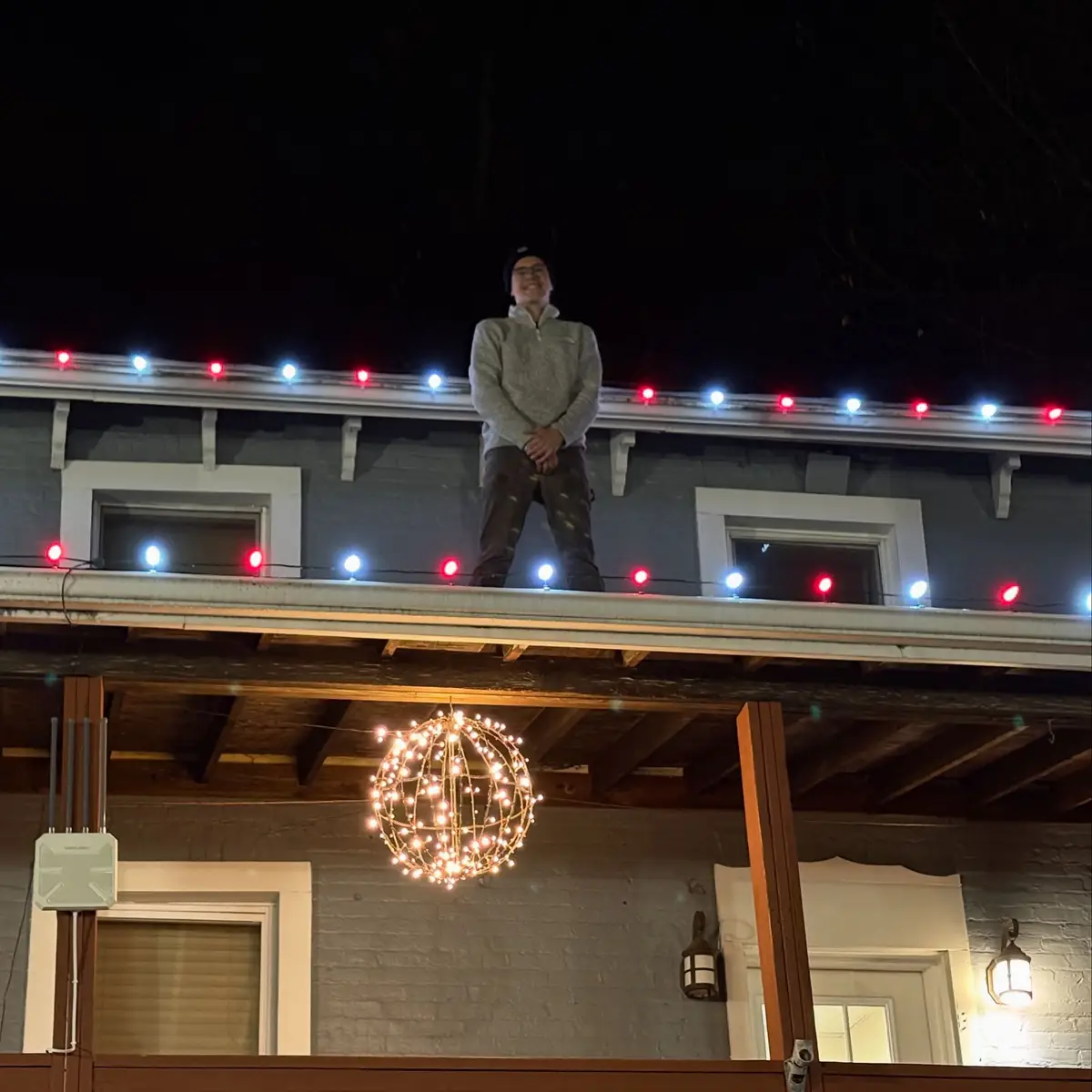
Then there is the ladder. Falls from ladders climb every year in November and December, and a two-story colonial in Greensburg with a frosted roof is exactly the setup that produces them. A hospital visit erases any savings from the lights, and it is the reason a lot of our customers switched after one bad year.
Last, the failure problem. When a strand dies on a homeowner-hung roofline in the middle of the season, you are the service department. You climb up in the cold, hunt for the dead section, and hope the replacement matches. Our post at thraxel.com/blog/hidden-costs-of-diy-christmas-lights/ walks through the numbers.
What a professional install actually includes
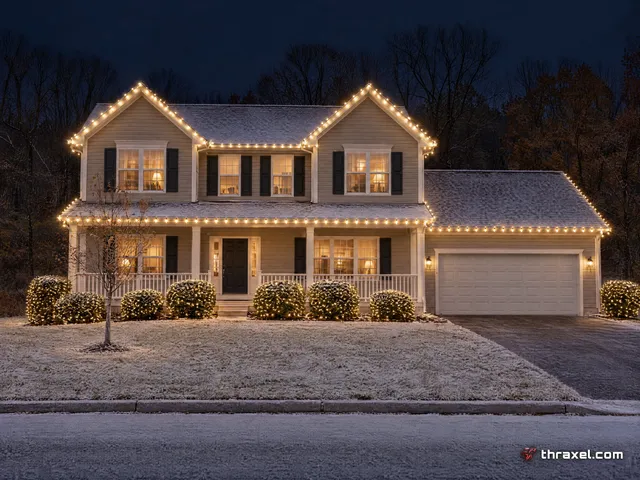
A real installer is selling a season, not a box of lights. With us it starts with a design and a mock-up of your specific house, so you approve the look before a single clip goes on. Installation happens when the weather allows it, by a crew we call the Elves, in proper PPE, and yes, in costume with the music playing.
The part that matters most is what happens after install day. If a bulb goes out, a squirrel chews a wire on the maple, or a section drops in an ice storm, we are back within 24 to 48 hours and it is covered. No charge. Takedowns begin January 4 as the weather allows, and everything is labeled, packaged and stored until next November.
You never touch a ladder, buy a strand, or hunt for a bin in the garage. The full seasonal program is described at thraxel.com/christmas/.
- Design and a render of your actual home before install
- Insured, certified crews using the right clips and PPE
- In-season repairs within 24 to 48 hours at no charge
- Takedown from January 4, then labeled storage
The money, without a Thraxel price tag
We do not publish our seasonal pricing here because a 40-foot ranch and a 300-foot farmhouse with six peaks are not the same job. What we can share is the national picture. Industry estimates for professional seasonal Christmas lighting commonly fall between roughly $2 and $6 per linear foot, or roughly $500 to $2,500 and up for a typical home per season. Your property will differ, which is why the quote is free.
Against that, DIY looks cheap until you total three or four seasons of replacement strands, clips, timers and cords, plus the time. For a small, simple house it still usually wins on cash. For a big or tall house, the gap narrows fast and the risk gap never closes.
How to decide in two minutes
Ask three questions. Is any part of the roofline above a single story? Is there anyone in the house who should not be on a ladder? Do you want someone else responsible when a strand dies in December? Two yes answers and you are a professional-install household.
If you land on DIY, do it safely: no staples, GFCI outlets, a spotter on the ladder, and stop when the shingles are wet. If you land on pro, book early, because the good November weekends in Western PA go first every year. Thraxel answers every call and text at 724-859-4390, or you can start at thraxel.com/quote/.