Spring scenes
Easter pastels on the roofline, and why most systems cannot do them
Lavender, mint, peach and baby blue are the colors people picture for an Easter scene, and they are the colors cheap RGB strips fail at. This post explains how a warm-white diode makes pastels possible, which homes carry them, and how to use spring blooms under the landscape lights.

Pastels are the hardest colors a roofline can do
A pastel is a color with a lot of white in it. Lavender is purple plus white. Mint is green plus white. Peach is orange plus white. An RGB-only pixel has no white to add, so it fakes it by running all three color diodes together, and the result is a washed-out, slightly gray version of the color that looks worse the dimmer you go.
Thraxel pixels are RGBWW, with a dedicated 2700K warm-white diode in every pixel. Blending that diode into a color is how a real pastel gets made. The purple stays purple and the white is actual white, so lavender reads as lavender from the sidewalk. The system page at thraxel.com/permanent/ has the specs.
This is the same reason our warm white is a true warm white. One diode does both jobs, and it is the diode most permanent systems leave out.
A spring palette that reads from the street
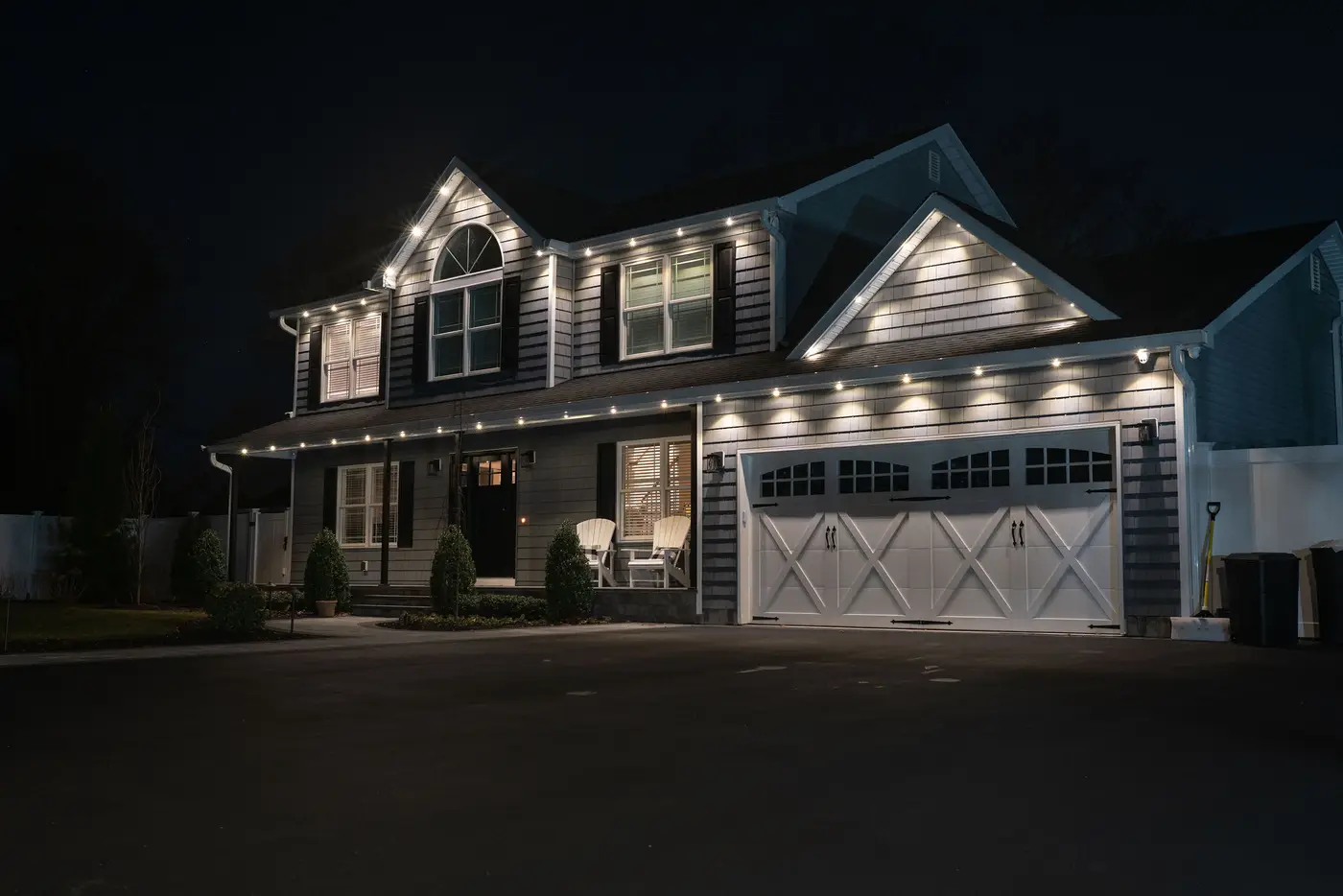
Pastels need contrast or they disappear. Our standard Easter scene alternates two or three of them in longer blocks along the eaves, lavender and mint being the most reliable pair, with the peaks in a soft peach so the top of the house has a warmer note.
Brightness runs higher than you might expect. A saturated color looks fine at 40 percent. A pastel at 40 percent turns to fog. We usually run spring scenes at 60 to 80 percent and let the softness come from the color, not the dimmer.
Motion should be almost nonexistent. A fade so slow you cannot tell whether it is moving is the right speed. Anything faster on pastel colors looks like a carnival ride.
- Standard: lavender and mint blocks, peach peaks, warm white porch
- Soft: warm white roofline with baby blue on the columns
- Garden: pastel landscape uplights on flowering trees, house in warm white
- Egg hunt: brighter pastel wash on the backyard zone for a dusk hunt
White houses, brick houses and where pastels land
Siding color decides whether the pastels go on the roofline or on the landscape. Dark siding, deep brick and stone give the colors something to sit against, and pastels along the eaves look deliberate there. Cranberry Township and Wexford have a lot of the darker-sided newer construction where this works well. See thraxel.com/areas/cranberry-township/.
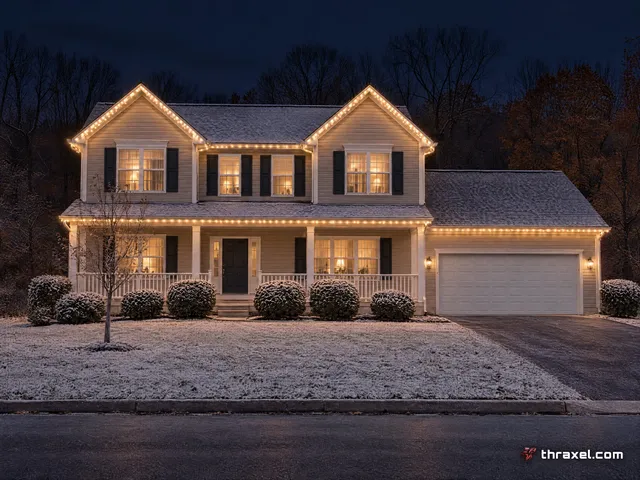
On white and cream homes, pastel roofline light reflects off the siding and turns the whole wall a faint pink or purple. Some people love that. Most do not. On those houses we keep the roofline in warm white and put the pastels on the landscape zone, where they light trees and shrubs instead of the wall.
Ranches with long low eaves take pastels better than tall colonials, because the color stays close to eye level and the blocks are easy to read.
Easter weekend timing
Easter moves around the calendar, landing anywhere from late March to late April. In an early year the scene competes with leftover snow. In a late year it lands in full bloom. Either way, turn it on the Thursday or Friday before and leave it through Easter Monday.
If the grandchildren are coming, the backyard egg-hunt setting is worth building. A brighter pastel wash on the patio and yard zone at dusk, warm white on the steps, and the front of the house in the softer roofline version. Everything is one tap from the phone in your pocket.
The morning after, Everyday Warm brings the house back to 2700K and nothing is left in the yard.
Spring landscape: blooming trees under uplights
Spring is the one season when the landscape zone can outperform the roofline. Redbuds, dogwoods, magnolias and flowering crabapples all bloom across Western PA between April and May, and an uplight under a tree in flower is one of the best things a lighting system does all year.
Keep the uplights close to warm white on a blooming tree. The blossoms bring their own color, and a pale pink dogwood under a lavender uplight turns muddy. Save the pastel colors for evergreens, stone walls and fence lines, where there is no natural color to fight. The landscape service is described at thraxel.com/landscape/.
If your system has color-changing landscape fixtures, the Easter scene can include them. If it has warm-white-only fixtures, they stay warm white and still look right. Timing for the season is at thraxel.com/blog/spring-landscape-lighting-season/.
Running it through May
Nothing says the pastel scene has to end on Easter Monday. A mint and lavender roofline at low motion is a pleasant spring setting on its own, and several customers leave it as their default until Memorial Day flips the house to red, white and blue.
The point of a permanent system is that these decisions are free. The pixels are already on the house, the electricity cost is about $52.80 a year for a typical 168-LED install running six hours a night, and a scene is just a saved setting.
For a free consult and a render of your actual house within 24 hours, ask Tyson to include the Easter scene next to warm white. He handles every quote himself at 724-859-4390.