Cranberry Township
Permanent lighting for Cranberry Township
Cranberry Township is one of the newest, fastest-growing parts of our Pennsylvania footprint, mostly newer construction inside active HOAs. That combination happens to suit permanent lighting well.

New construction, clean rooflines
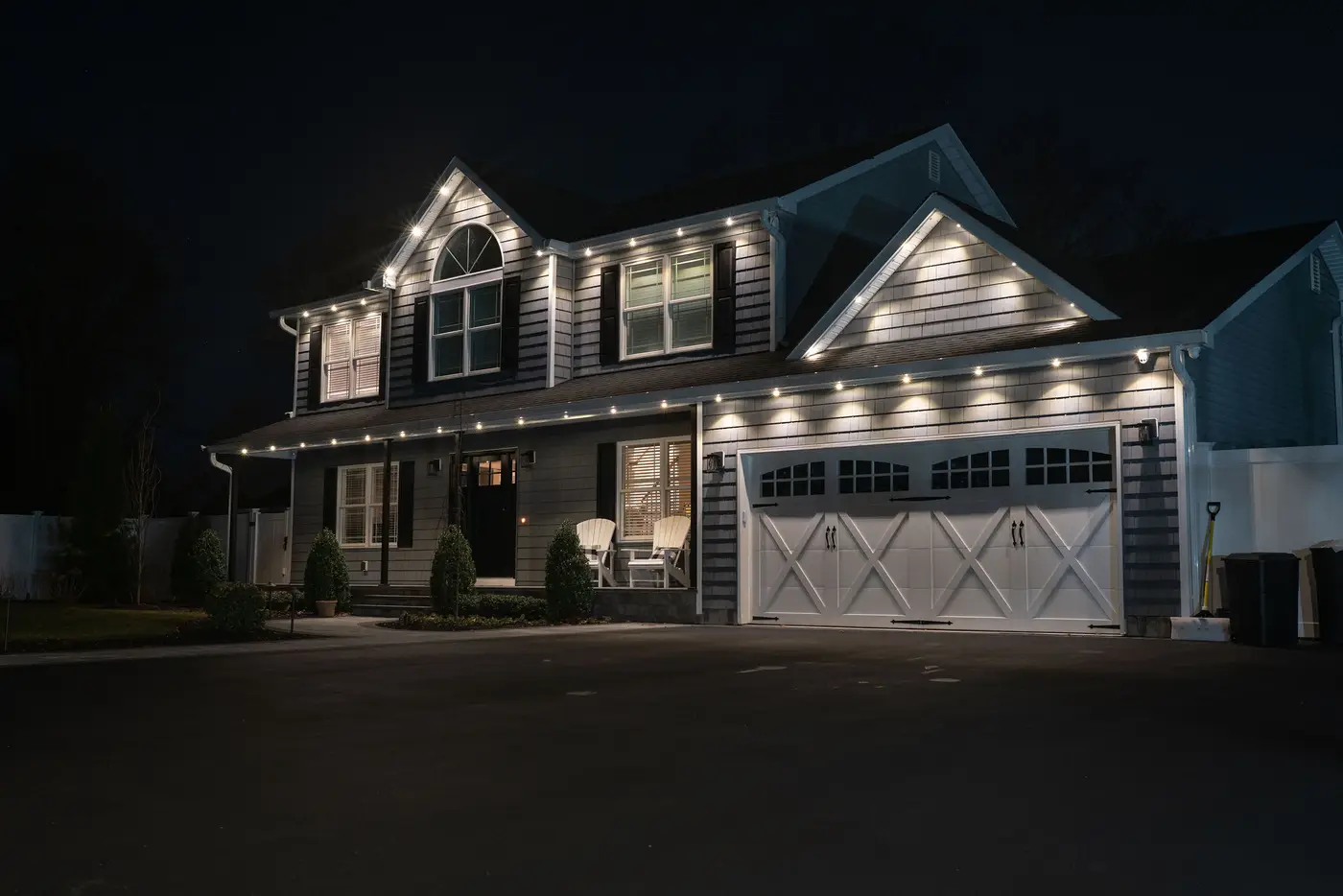
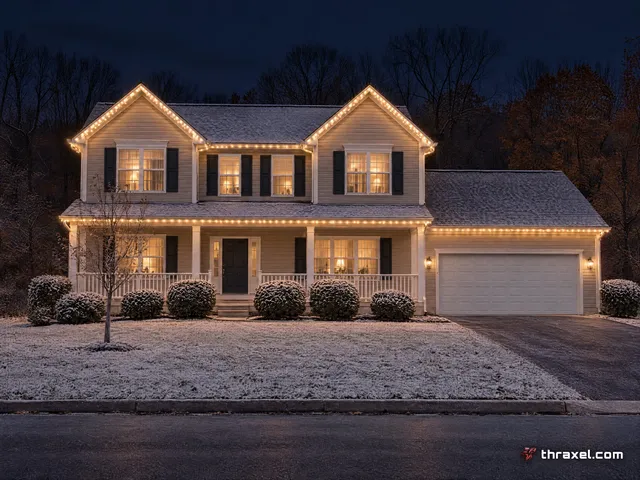
Most Cranberry Township housing is newer construction, built within the last two or three decades, which generally means straight rooflines, consistent trim, and fascia in good enough shape that color-matched aluminum track mounts cleanly and stays tight.
That is a different starting point than an older river-town home with decades of weathering on the trim. It usually means a quicker, more predictable install day, though every roofline still gets measured and mocked up before anything is cut.
The tradeoff is that newer subdivisions often repeat a handful of house models, which can make a roofline look generic once every home on the street has the same builder-grade trim. A custom-lit roofline, mapped to your exact fascia lines in the render, is one of the simpler ways to make a production-built home look distinct after dark.
Cranberry Township sits close to where I-79 meets the Pennsylvania Turnpike, which is part of why growth here has outpaced a lot of the rest of the county. New subdivisions keep pushing out along that corridor, and each one still falls inside the same free-consultation footprint as the older parts of the township.
HOAs are the deciding factor here
A large share of Cranberry Township is governed by a homeowners association, and lighting is one of the more common things a board has an opinion about. This is where permanent lighting has a real advantage over seasonal string lights: the track sits flush against the fascia and is effectively invisible by day, with nothing to remove by a deadline.
The system has passed every HOA Thraxel has worked in, and we walk homeowners through what to bring to a design-review board if their community requires sign-off. More on that process at thraxel.com/blog/hoa-rules-permanent-lighting-western-pa/.
Every install is fully insured and built from UL, ETL and CUL certified components, which covers most of the liability questions a Cranberry Township management company tends to raise before signing off on an exterior change.
- Nothing visible by day, no removal deadline to track
- Design mock-up doubles as a visual for board approval
- App-controlled scenes replace anything that would need physical decorations
What Cranberry households actually run
With newer homes and younger families, Cranberry Township consults tend to lean toward scene variety over a single look. Game Day in black and gold, a full Christmas scene from Thanksgiving through Epiphany, orange and purple for Halloween, and Everyday Warm the rest of the time are the common rotation.
The app also connects to Alexa, Google Home, Apple HomeKit and Control4, which fits the newer smart-home setups common in this part of the county better than an older analog system would.
Because each pixel is individually addressable, a Cranberry Township household running several scenes a month is not relying on one string of lights doing everything at once. Peaks, columns and soffits can each hold a different color or brightness within the same scene, which is where a lot of the design detail happens on a consult.
What it costs, in real ranges
Thraxel does not publish a flat number here, since roofline length and zone count swing the total from house to house, and the quote itself costs nothing. For context, permanent roofline systems commonly fall somewhere between $20 and $50 per linear foot installed under broad national industry estimates, though your specific property is what actually sets the price.
Once it is running, a typical 168-LED install used six hours a night costs about $52.80 a year in electricity, since each pixel draws roughly 0.3 watts. Financing at 0% APR for up to 24 months is available to qualifying buyers, which a lot of Cranberry households use for a single clean payment instead of a lump sum.
The install also carries a 3-year warranty on parts and a 1-year warranty on labor, so a newer Cranberry Township home is not adding a maintenance headache on top of a mortgage. In Thraxel's own tracking of recent residential projects, 58% generated at least one inquiry from a neighbor on the same street.
Nearby coverage
Cranberry Township sits close to Mars, Wexford and the rest of the fast-growing Route 19 corridor, and the same crew and the same install standards apply across all of it. If your development is a few miles from Cranberry proper, you are almost certainly still inside the service area.
See more on the broader HOA-heavy suburban footprint at thraxel.com/blog/pittsburgh-suburbs-hoa-lighting/.
Landscape lighting is a natural add-on once the roofline is done, since newer Cranberry Township lots often carry a patio, a paver walkway or a fresh landscape bed worth lighting the same season as the house. Astronomical timers keep everything on the same automatic schedule without a homeowner resetting anything by hand.
Starting the process
A free on-site consultation is the first step, and we bring the demo case, four live RGBWW strips on 128 LEDs, so you can run colors from the app before deciding on anything. The design mock-up of your specific home follows within 24 hours.
Request a quote at thraxel.com/quote/, and most Cranberry Township installs are finished in one to two days once the design is signed off.
A final walkthrough closes out the visit, covering scene selection and the app itself, so a Cranberry Township household leaves the driveway already comfortable switching between Everyday Warm and whatever scene fits that week rather than reading instructions later.
Text or call 724-859-4390 if talking through your specific development is easier than filling out a form, and Tyson will tell you plainly whether your street and your board are the kind of fit this system tends to do well in.