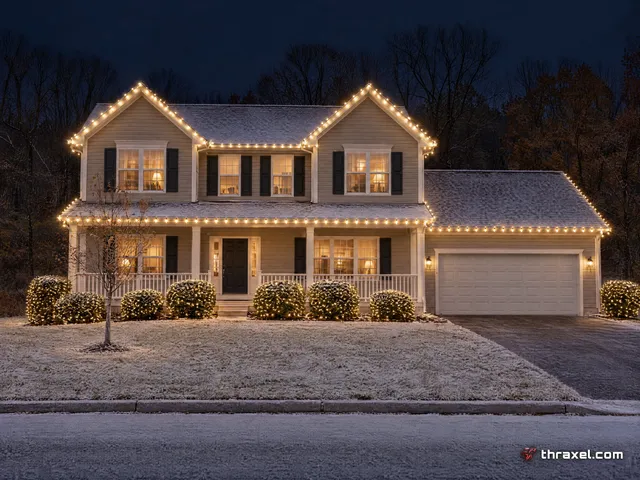
Porch detail
The roofline gets noticed from the street. The porch gets noticed up close.
A lit roofline reads well from across the yard, but a porch is what guests actually walk under. Column wrap and porch trim are the detail that separates a good display from a finished one.

Why the porch deserves its own design decisions
Roofline lighting is viewed mostly from a distance, from the street or a car passing by. Porch lighting is viewed up close, by anyone walking to the front door, which means the details actually get noticed rather than blurring into a single line of light.
That closer viewing distance is why a porch is worth planning as its own zone during the consultation instead of treating it as an afterthought once the roofline is decided.
It is also the part of the display that shows up in the most photos. Anyone taking a picture on the front steps during a holiday visit is standing right where the porch lighting does its work, not out at the curb where the roofline reads best.
A porch is also where a display gets judged by feel as much as by look. Warm light spilling across a doorway reads as welcoming in a way a distant roofline, however well designed, cannot quite replicate on its own.
For homes without a strong architectural roofline to begin with, a smaller ranch or cape cod for example, porch and entry lighting can end up carrying more of the overall visual weight of the display than the roof itself does.
This is one more reason to walk the whole exterior with the crew during the consultation rather than pointing only at the roofline. A porch that gets treated as an afterthought usually looks like one in the finished display.
A side or back porch used often in the evening deserves the same consideration as the front entry, especially for a household that spends more time entertaining out back than greeting guests at the front door.
What column wrap actually looks like
Wrapping a column runs lights in a spiral from base to top, which reads as a continuous glow rather than a series of individual strands. On homes with two or four columns flanking the entry, wrapping all of them together frames the front door in a way roofline lighting alone does not.
The same wrap technique works on porch railings and any decorative trim around the entry, extending the design down to eye level instead of stopping at the roofline overhead.
Spacing matters more on a column than it does on a long roofline run, since a column is viewed up close and any gap or uneven wrap is easy to spot. That is part of why porch detail is planned and priced separately from the roofline itself.
Column diameter and material change the approach slightly too. A slim wood column takes a tighter wrap than a wide stone or brick pillar, which is one more reason the design mock-up is built from your actual porch rather than a generic example.
Warm white or multicolor for a porch
Warm white on a porch tends to read as classic and understated, especially against stone or brick columns where a golden glow complements the material rather than competing with it.
Multicolor porch lighting brings more energy to the entry and pairs well with a home that is already running color elsewhere in the display. Neither choice is more correct than the other, and the design mock-up shows exactly how each looks on your specific porch before anything is installed.
A mixed approach is also common. Warm white columns with a single accent color, or multicolor railings under a warm white roofline, both give a porch its own identity without clashing with the rest of the house.
The front door itself is worth considering separately from the columns. A simple outline around the doorframe, discussed at the consultation, can tie the whole entry together without needing to be part of the column wrap at all.
- Warm white: classic, complements stone and brick
- Multicolor: matches a bolder overall display
- Column wrap: continuous glow, base to top
- Railing lighting: extends the look to eye level
Single-story porches vs two-story entries
A single-story porch is usually the fastest section of a project, since every element is reachable without a tall ladder. A two-story entry with taller columns takes a bit more time but produces a more dramatic result, since the wrap runs the full height of the entrance.
Either way, porch work is typically done after the roofline, since the roofline sets the overall tone the porch detail then complements.
Stone and brick homes, common throughout Butler and Armstrong County, tend to hold warm-white porch lighting especially well, since the light plays off the texture of the material rather than sitting against a flat siding surface.
Where porch lighting fits the bigger design
Porch and column detail is one of the choices discussed during the free consultation, alongside the roofline and any trees. See thraxel.com/blog/planning-your-christmas-lighting-design/ for how that full conversation works.
For homes with more architectural detail worth highlighting, thraxel.com/blog/roofline-christmas-lighting-design-ideas/ covers the roofline side of the same decision. Start with a consultation at thraxel.com/christmas/.
If the porch is the one section of the house you most want to get right, say so during the consultation. It changes nothing about the overall process, but it does help the crew know where to spend the extra attention on install day.
Porch detail also gets the same in-season coverage as the roofline. A column that goes dark or a railing wrap knocked loose over the winter is repaired within the same 24 to 48 hour window as any other part of the display.