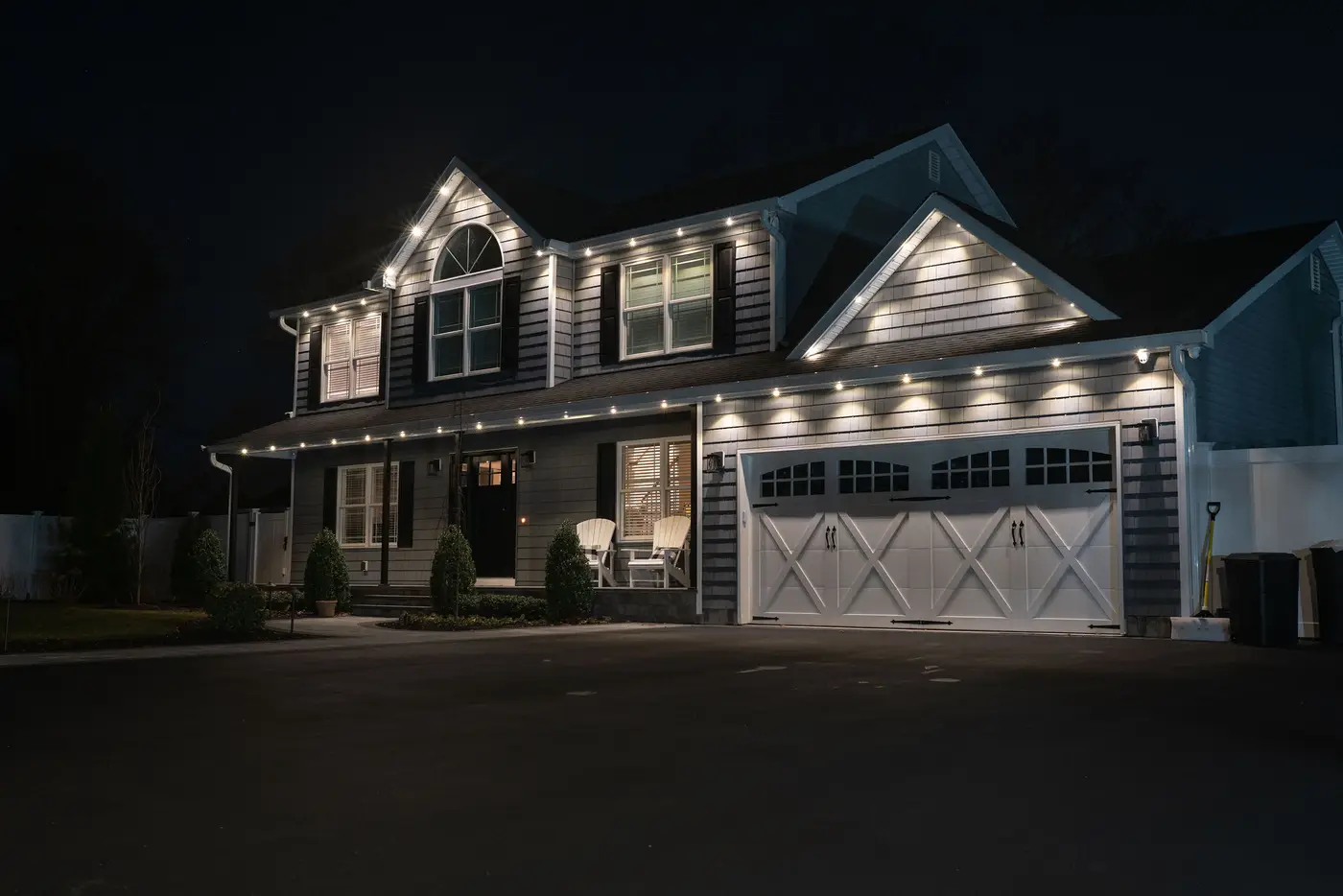
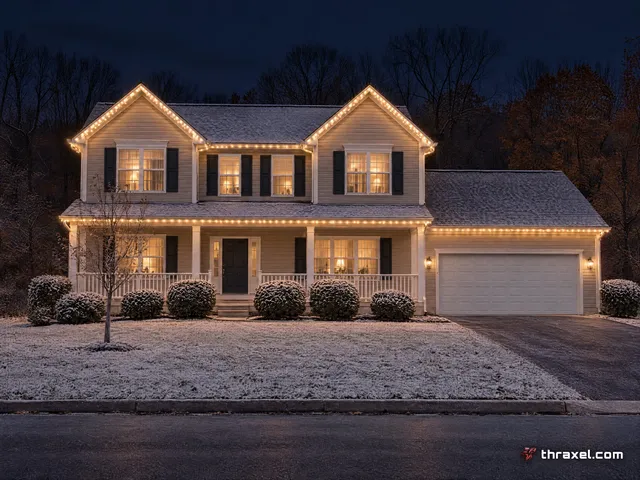
First snow
The first snow and the first lights of the season
In Western PA, the first real snow and the first lit roofline of the year tend to show up within a couple of weeks of each other. That overlap is not a coincidence, it is a scheduling problem every crew and every homeowner deals with the same way.

An early winter sets the clock
The hills and river valleys of Armstrong, Butler and Indiana counties see meaningful snow earlier than most people expect, sometimes before Thanksgiving. That reality shapes the entire holiday lighting calendar here more than any marketing push or store display ever could.
A roofline that is not lit before the first real snowfall risks staying dark for the season, since a ladder on an icy roof is not a job most homeowners or crews will take on, and the weather rarely gives more than a few days' warning before a hard freeze sets in.
Households further north and at higher elevation within the footprint tend to feel this earliest, since a difference of a few hundred feet in elevation or a location closer to the Great Lakes snowbelt can shift the first snowfall by a week or more compared to a lower-lying river town.
Why the timing crunch matters for install crews
Seasonal Christmas lighting installs happen only when weather permits, which in practice means a compressed number of usable days between Thanksgiving and the season's first hard snow event. That is part of why the good November weekends book up early, sometimes months ahead of the actual install date.
Once snow is on the ground and the roof is wet or icy underneath it, install work pauses. A crew already booked solid through that window has no flexibility left to squeeze in a late request, which is why waiting until the first cold snap to call for an install is one of the most common scheduling mistakes homeowners make.
Crews also build some buffer into their own calendars for exactly this reason, planning fewer jobs per week than the theoretical maximum so a weather delay in one week does not cascade into missed appointments for every household still waiting later in the season.
The emotional beat of a house lighting up before the snow
There is a specific kind of satisfaction in getting a display up before that first snowfall, watching it framed against a dusting of white for the first time. Families notice it, and it tends to be the moment neighbors comment that the season has officially started, more than any date on a calendar.
That first snow-and-lights combination photographs well too, which is part of why so many families make a point of taking pictures of the house the first morning it wakes up under a fresh dusting with the display already running.
Where a permanent system removes the whole problem
A permanent lighting system sidesteps the entire timing crunch, since the track and pixels are already mounted under the eaves before winter ever arrives. Switching to a holiday scene takes a tap in the app, not a weather window, a ladder or a crew booking months in advance.
That is one of the clearest, most practical advantages of the permanent system for anyone who has ever lost a weekend to a canceled install because a snow squall moved through Armstrong County a day early. Details at thraxel.com/permanent/.
Because the system is IP67 marine-grade and rated to handle ice, lake-effect snow and everything in between, an early snowfall that would derail a seasonal install schedule has effectively no impact on a permanent system's readiness.
Planning around the season's first snow
For anyone sticking with seasonal lighting, the practical move is booking early and not waiting for a specific date on the calendar, since the first snow in this region does not always respect the calendar either. The earlier a consultation happens, the more likely the install lands before winter does.
A free consultation and a design mock-up within 24 hours make it easy to see what a display will look like on a specific house well ahead of the crunch, which gives a household time to decide and get on the schedule before the weather makes that decision for them.
Households that have been caught by an early snow before tend to become the most reliable early bookers in following years, having learned firsthand what it feels like to watch a scheduled install get pushed back a week or more because a storm arrived earlier than the forecast suggested.
What an early snow actually does to a half-finished install
If snow arrives mid-install, a crew will typically finish whatever section can be safely completed and schedule the remainder for the next clear stretch, rather than leaving a roofline half-lit for weeks. This is one advantage of working with an established local crew that plans its own calendar with weather buffers built in, rather than a one-off or out-of-town operation with no flexibility.
For a homeowner, that means an early snow is rarely a total loss for a scheduled seasonal install, just a delay, and a good installer will communicate a revised timeline rather than leaving the household guessing about when the rest of the display will be finished.
This is also where a household's own patience matters. A finished roofline that arrives a week later than originally planned because of a well-timed weather pause is a far better outcome than a rushed install completed in unsafe conditions just to hit an original date.
The same window, from the other direction in January
The same weather logic runs in reverse a few weeks later. Takedowns beginning January 4 depend on similarly workable conditions, and a stretch of ice or a fresh snowfall in early January can delay a scheduled removal the same way an early snow delays an install in November. Homeowners who understand the November pattern tend to expect the January version too, rather than being surprised by it.
In both directions, the constraint is the same: safety on a ladder depends on a dry, stable surface, and Western PA's weather does not always cooperate with a fixed calendar date on either end of the season.