Off-season plan
What a lit rail route does for you outside December
Christmas gets the attention, but the same lighting system runs scenes across the rest of the calendar. Here is how operators use it in the off-season instead of letting it sit dark.
The off-season is most of the calendar
December gets the attention, but it is a few weeks out of a year. A railbike operator who only thinks about lighting for the holiday event is leaving the rest of the season's evenings, plus whatever quieter months surround it, entirely dark.
The same hardware installed for a Christmas push keeps working in February, June and October. Whether it earns its keep the rest of the year comes down to how an operator schedules the scenes already sitting on the controller.
Treat the lighting as fixed infrastructure with a flexible surface, closer to how a venue treats its own sound and lighting rig than how a homeowner treats a string of holiday bulbs. It stays installed and gets pointed at whatever the calendar calls for next.
Scenes built for months besides December
Beyond Christmas, the system supports Everyday Warm as a year-round default, Halloween for October, July 4th for the summer, and Game Day for whatever local team an operator wants to lean into. Valentine's Day and St. Patrick's Day scenes are also available on the same controller.
None of that requires new hardware once the initial install is done. It is a scene change from the app, which means an off-season event costs an operator planning time, not a new lighting build.
A Valentine's Day or a Game Day scene will not carry the same weight as a December launch, and nobody should expect it to. But it is a low-effort way to give a Tuesday-night trip in February something to look at beyond the standard warm-white default.
Off months are when maintenance actually happens
A mid-season check is timed to land before the busiest stretch of the operating calendar, but quieter months are also when any deeper maintenance gets scheduled, since it does not interrupt paying trips the way a repair during a booked weekend would.
An off-season lull is not wasted time for the lighting system. It is the window where anything found during a mid-season check gets fully addressed before the next peak.
Booking early protects more than the December date
The January-through-June booking window is usually framed around a Christmas launch, but the same window applies to an operator who wants a July 4th scene running well or a Halloween event that actually looks finished, not thrown together in September.
Design and install take real time regardless of which scene an operator cares most about. Booking early in the year protects every date on the calendar, not just the one in December.
What a lit route does for the brand between events
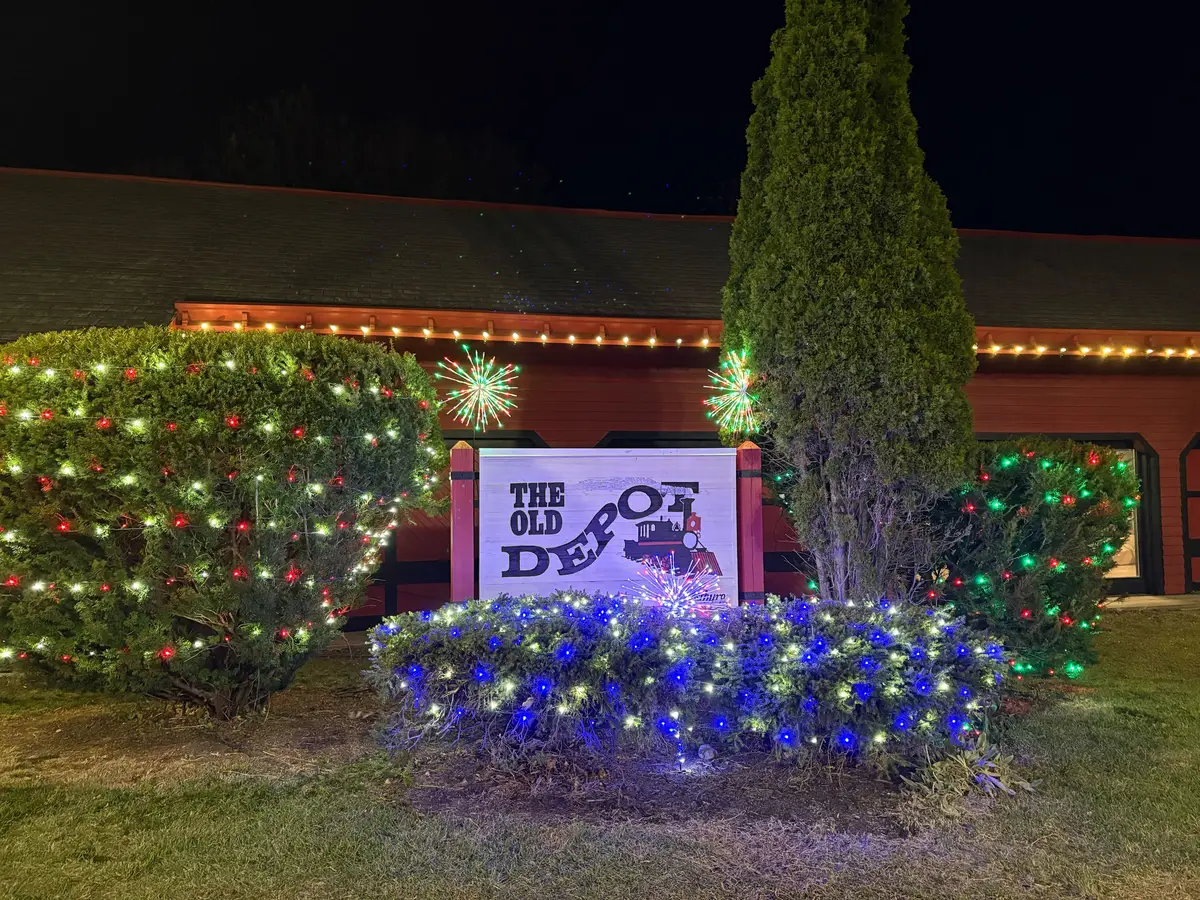
A depot sign lit through the off-season keeps the property looking active even on nights with no scheduled ride, which matters for an attraction that people drive past on the way to somewhere else. A dark, closed-looking property reads differently than a lit one, even when nothing is running that night.
That visibility is a quieter benefit than a sold-out December weekend, but it is the kind of thing that keeps a rail-tourism attraction top of mind year-round instead of only during its busiest month.
Planning next season while this one runs
The mid-season check is also a natural point to talk about expansion, another wireframe figure, a scene for a new event, lighting for a stretch of track that was skipped the first time around. It is easier to plan that mid-year than to squeeze it into a compressed fall install.
AJ handles these conversations directly at 240-730-4064, and thraxel.com/blog/railbike-lighting-season-timeline/ lays out how the rest of the calendar fits together with the off-season planning covered here.