For contractors
Quality control on lighting jobs, contractor to contractor
Most trade defects hide behind drywall or under siding. A lighting defect is lit up on a roofline after dark for everyone on the street to see. That visibility is why quality control on a lighting job has to happen before the crew leaves, not after a complaint call.

Why lighting defects are unusually visible
A gap in a gutter seam might go unnoticed for a season. A lighting defect shows up the first night the system runs, in a color or a dark spot anyone driving by can see. That changes the math on quality control: catching it before you leave the property is cheaper than catching it after the client calls, both in the return trip and in what the client thinks of the crew.
This is also why a final walkthrough matters as a distinct step, not just a formality. Walking the property with the client after install, with the system running, is the only real check that what was designed matches what actually got installed on the house.
Matching the install to the design
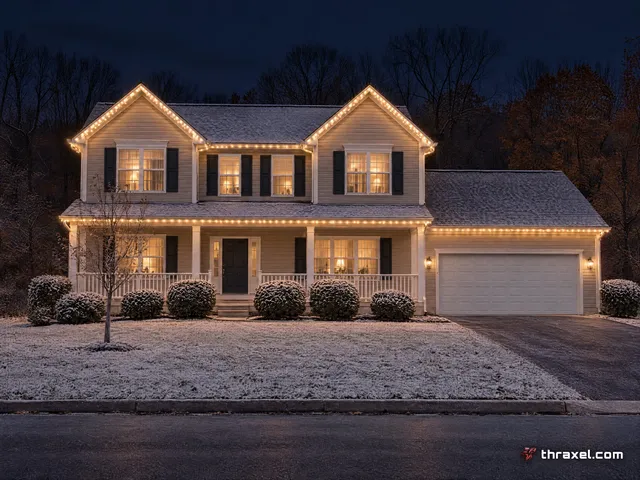
A design mock-up sets client expectations before a single fixture goes up. Quality control starts with checking the finished install against that mock-up, zone by zone, rather than assuming the crew followed it correctly simply because they usually do.
Discrepancies between a design and the finished install are far cheaper to fix while the crew and equipment are still on site than to schedule as a separate return trip a week later.
Testing before you leave, not after
Every zone should get powered on and run through its scenes before the crew packs up, not just spot-checked at the switch. Individually addressable pixel systems make this easier than older strand lighting, since a single failed pixel can be diagnosed on its own rather than forcing a whole section to be pulled and retested.
That same addressability is why same-day pixel replacement is realistic on a well-run job: the failure is isolated to one point instead of an entire run, so fixing it does not mean redoing work that was already correct.
- Power on and cycle through every scene before leaving the property
- Check zone by zone against the design mock-up
- Diagnose individual pixel failures rather than pulling whole runs
- Confirm app or controller connectivity on site, not remotely afterward
Mounting quality, not just electrical function
A system that lights up correctly but is fastened poorly is still a quality failure, just a slower one. Track that is not tight against the fascia, wire that is not properly secured, or fasteners that were never rated for outdoor exposure will show up as a callback eventually, usually after the first real storm.
Never using staples on wire runs is a basic standard worth holding to, since staples puncture insulation in ways that are not always visible immediately but create real fire and short risk over time.
Where the quality standard comes from
Component certification, UL, ETL and CUL marks, sets a baseline before installation quality even enters the picture. Starting with certified, commercial-grade product removes one category of failure before a crew ever climbs a ladder.
An approved Thraxel installer sourcing through thraxel.com/shop/ is buying the same certified component category Thraxel installs on its own jobs, which is one input into a quality standard, alongside a crew's own install discipline and final walkthrough process.
Consistency matters here too. A crew sourcing product from a single wholesale account job after job builds a repeatable process around one component set, rather than relearning quirks every time a different manufacturer's parts show up on the truck.
Handling the jobs that go wrong anyway
Even a careful install occasionally has a component fail later, whether from weather, a chewed wire, or a defect that did not show up during initial testing. How a crew handles that after the fact is as much a part of its quality reputation as the original install.
A crew that returns quickly, diagnoses the actual failure point instead of guessing, and fixes it without treating the client like an inconvenience protects its reputation more than one that never has a callback in the first place, because every crew eventually has one.
Building QC into your own process
A simple standard most crews can adopt quickly: no job is considered finished until every zone has been powered on, cycled through its scenes with the client present, and checked against the original design. That single habit catches the majority of the defects that would otherwise turn into a return trip.
Warranty coverage matters here too. Product backed by a real manufacturer warranty, rather than big-box strand lighting, gives both the crew and the client a real recourse if something fails after install, which is part of why sourcing quality product is inseparable from quality control as a whole.
Writing the checklist down, rather than relying on a lead installer's memory, also helps a growing crew stay consistent as more people rotate through jobs. A one-page checklist covering power-on, scene cycling, mounting inspection and client walkthrough is a small investment that pays off the first time it catches an issue before the crew leaves the driveway.
Why QC discipline protects the business, not just the job
Every callback costs a crew twice: once in the lost time returning to fix it, and again in the reputation risk of a client who now questions the quality of the original work. A strong quality control process is cheaper than either cost, even though it adds a few extra minutes to every job.
For a contractor building a lighting line inside an existing business, that discipline also protects the trust already built through your core trade. A homeowner who hired you for lighting because they trusted your roofing or landscaping work expects that same standard to carry over, and a sloppy install undermines both relationships at once.