Listing prep
What exterior lighting does for a home that is about to be listed
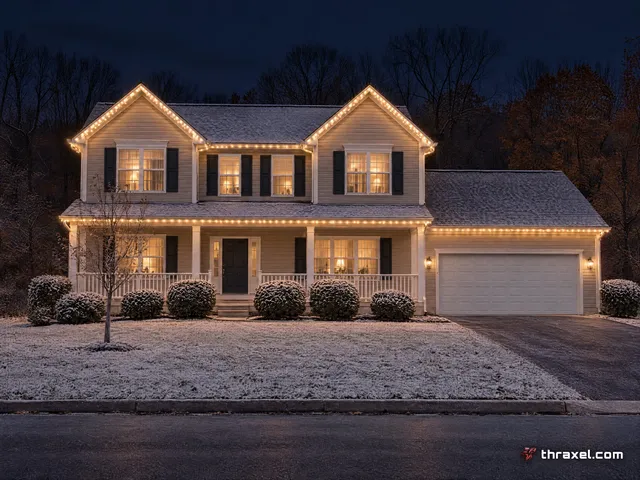
A listing photo taken at dusk with a lit roofline reads differently than the same house shot flat at noon. One Thraxel craftsman home with a 14-zone uplight package went on the market and sold over asking in four days, a single result, not a promise.

The showing window nobody plans for
Most buyers touring after a workday arrive after 5 p.m., especially from October through March when it is dark by 6. A home with no exterior lighting shows as a silhouette. A lit one shows as intentional, even if the interior tour is the same either way.
Agents scheduling back-to-back showings do not have time to set up temporary spotlights at each stop. A permanent system is already running, controllable from a phone, and does not depend on anyone remembering to flip a switch before a car pulls up.
Western PA daylight saving time shifts make this worse for fall and winter listings specifically. A listing that shows beautifully at a 4 p.m. appointment in September can show as a dark shape by the same 4 p.m. slot in November, right in the middle of a busy pre-holiday selling window.
One example, honestly framed
A craftsman bungalow we lit with a 14-zone uplight package, covering the facade, columns and landscape beds, sold over its asking price within four days of listing. We cannot claim the lighting alone did that. Price, condition, and the market that week all mattered too.
What we can say is the seller had twilight photography ready on day one instead of scrambling for a golden-hour reshoot, and every evening showing looked like the hero photo, not a dimmer version of it.
The seller in that case told us the biggest surprise was not the sale price, it was how many showing feedback forms specifically mentioned the exterior at night, something a daytime-only listing rarely generates on its own, and something no stager can promise from inside the house.
What actually shows up in listing photos
Individually addressable RGBWW pixels sit in color-matched track along the eaves, fascia and columns, invisible by day and running whatever scene fits the shoot at night, from a clean Everyday Warm wash to something bolder for a dramatic hero shot.
Because the system covers zones beyond just the roofline, a photographer can light the landscape beds, a front walk, or a pool deck the same evening without hauling in a single portable fixture.
A photographer working a lit exterior also spends less time on set. There is no equipment to hide from the frame and no temporary lighting rig to break down before the next listing on the schedule that day.
- Roofline and eaves for the classic twilight silhouette shot
- Landscape and facade zones for depth in wide exterior shots
- One 14-zone craftsman example that sold over asking in 4 days
What we tell agents who ask us to rush a listing
Permanent installs run one to two days once scheduled, but scheduling itself depends on the season and the queue, especially in the run-up to the holidays. If you have a firm listing date, get the free consultation early rather than the week before photos are due.
If timing does not work, seasonal lighting from thraxel.com/christmas/ or a landscape-only package can still cover the showing window without the full roofline commitment.
What a lit exterior costs versus what it does
National industry estimates commonly put permanent roofline systems between roughly 20 and 50 dollars per linear foot installed, and every property is different, which is why the on-site quote is free rather than a flat rate off a calculator.
For a seller weighing whether the spend makes sense on a home about to change hands, it helps to separate two questions: what the lighting does for the sale process itself, twilight photos, evening showings, and what it might do for the eventual appraisal or sale price, which is a separate, more speculative question.
0% APR financing for up to 24 months is available for qualifying buyers, which some sellers use to spread the cost if they plan to enjoy the system for a while before listing rather than installing it purely as a pre-sale move.
A three-year parts and one-year labor warranty rides along with the install regardless of who owns the house a year from now, which is a detail worth including in the listing description itself.
What agents miss when they wait too long to ask
The most common mistake we see is an agent bringing up lighting a week before the photographer arrives, when a full roofline install would have had plenty of runway if the conversation started when the listing agreement was signed.
The earlier ask is not just about scheduling. It gives the seller time to see the design mock-up, decide on scope, and budget accordingly instead of making a rushed decision under a photo-day deadline.
It also gives an agent something concrete to include in the listing prep checklist alongside the usual staging and photography line items, rather than treating lighting as an afterthought only a handful of sellers think to ask about.
Getting it done before your photographer shows up
A free on-site consultation comes first, followed by a design mock-up of the actual house within 24 hours, so you and your agent can see the exterior before a single piece of track goes up. Text or call Thraxel at 724-859-4390 to get a date on the calendar.
Details on the full permanent system, including zones and app control, are at thraxel.com/permanent/, useful to share with a seller who wants to understand the product before committing to a consult.
If the seller only wants the front-facing package for the listing period, say so during the consult. Scope, whether it is the full roofline or just the entry and columns, is decided property by property, not assumed from a default package.