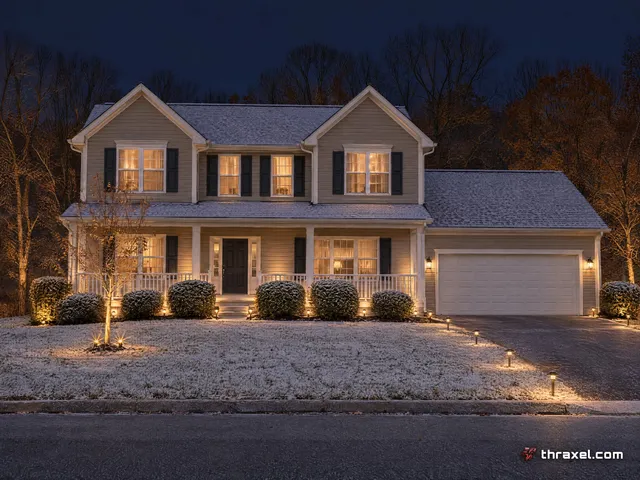
More outdoor hours
The real value of outdoor lighting is more hours outside, not just a prettier yard
Most homeowners think about landscape lighting as decoration first and function second. Flip that order and the case gets a lot more practical: lighting is what keeps a yard usable once daylight starts running out.

Western PA loses daylight fast
By late September, sunset in Kittanning and the surrounding counties is creeping toward 7 p.m. and dropping roughly a minute and a half a day from there. A yard, patio or deck that only gets used in full daylight loses real hours every week through fall, well before the weather itself turns unpleasant.
Lighting does not change the calendar, but it removes the hard stop that darkness otherwise puts on an evening. A firepit, a dinner on the patio, or kids playing in the yard can keep going past sunset instead of ending the moment the sky goes dark.
The habit of going outside changes first
Before it changes how long anyone stays outside, lighting changes the initial decision to go out at all. A dark patio door is an easy thing to walk past on a weeknight. A patio visibly lit and warm-looking through the same door is a much smaller ask, and that small difference in friction adds up over a season.
We hear this pattern often enough from clients that we consider it the real return on a landscape lighting investment, more than any single feature or fixture count. The lighting is not the point. The extra hour outside is.
Which zones actually extend usable time
Not every fixture adds usable hours the same way. A decorative uplight on a tree is nice to look at but does not change whether someone can safely walk across the yard. Path lighting, step lighting and lighting over an actual seating or activity area are what turn darkness from a stop sign into a non-issue.
We prioritize those functional zones first on any consult, then layer in accent lighting on features like trees, walls or a facade once the functional plan is solid. Both matter, but only one of them is doing the work of adding real evening hours.
- Path and step lighting for safe movement after dark
- Seating and activity zone lighting for patios, decks and firepits
- Accent lighting on trees, walls and structures for atmosphere
Automation removes the daily decision
An astronomical timer tracks actual sunset and sunrise for your property's location and adjusts automatically as the days shorten through fall and lengthen through spring. Nobody has to remember to flip a switch earlier in October than they did in July.
That matters more than it sounds like. A lighting system that requires a manual switch tends to get used less over time, simply because someone forgets, and the yard slowly reverts back to being unusable after dark. Automatic timing keeps the lighting doing its job without anyone thinking about it.
Extending into shoulder seasons, not just summer
The biggest gains in usable outdoor time actually happen in spring and fall, the months where daylight is shortest relative to comfortable temperatures. A well-lit patio in April or October gets used on evenings that would otherwise feel too dark to bother with, even when the temperature itself is fine.
Homeowners who add a full landscape system, not just a porch light, consistently tell us they are outside more often on weeknights specifically, since the barrier to stepping outside after work drops once the yard is lit and warm-looking rather than a dark unknown.
What this looks like in practice
A recent residential project we point to for scale covered 3 zones and 68 fixtures across more than 1,000 feet of wire at 330 watts total, lighting a full property from the driveway through the back patio. Most homes need far less than that to meaningfully extend usable evening hours, sometimes just a path, a patio zone and a couple of accent points.
A free on-site consultation is where we figure out which zones matter most for how your household actually uses the yard, rather than lighting everything evenly and hoping it helps. Text 724-859-4390 to get that conversation started.
Energy cost of running lighting more often
Using outdoor lighting more hours a week naturally raises the question of what it costs to run. A typical 168-LED permanent install running about 6 hours a night costs roughly $52.80 a year in electricity, since each pixel draws only about 0.3 watts. Extending that use into shoulder-season evenings does not meaningfully change that math.
That low draw is part of why we frame lighting as a genuine extension of usable time rather than a splurge. The cost of running the system more is small enough that it rarely factors into whether a household decides to spend an extra hour outside on a Tuesday in October.